
While protests across Paris made headlines, another protest of sorts took form in the 16th arrondissement, one against outside definition and confinement. At the Cité de l'architecture et du patrimoine, Kennedy Yanko’s first major Paris exhibition, “Ce qui nous rassemble (What Brings Us Together),” presented with Salon 94 and Norr Cohan, opened just the day before protests started, with pieces made to question first impressions and allow viewers to decide—or rather feel—what they will about the works.
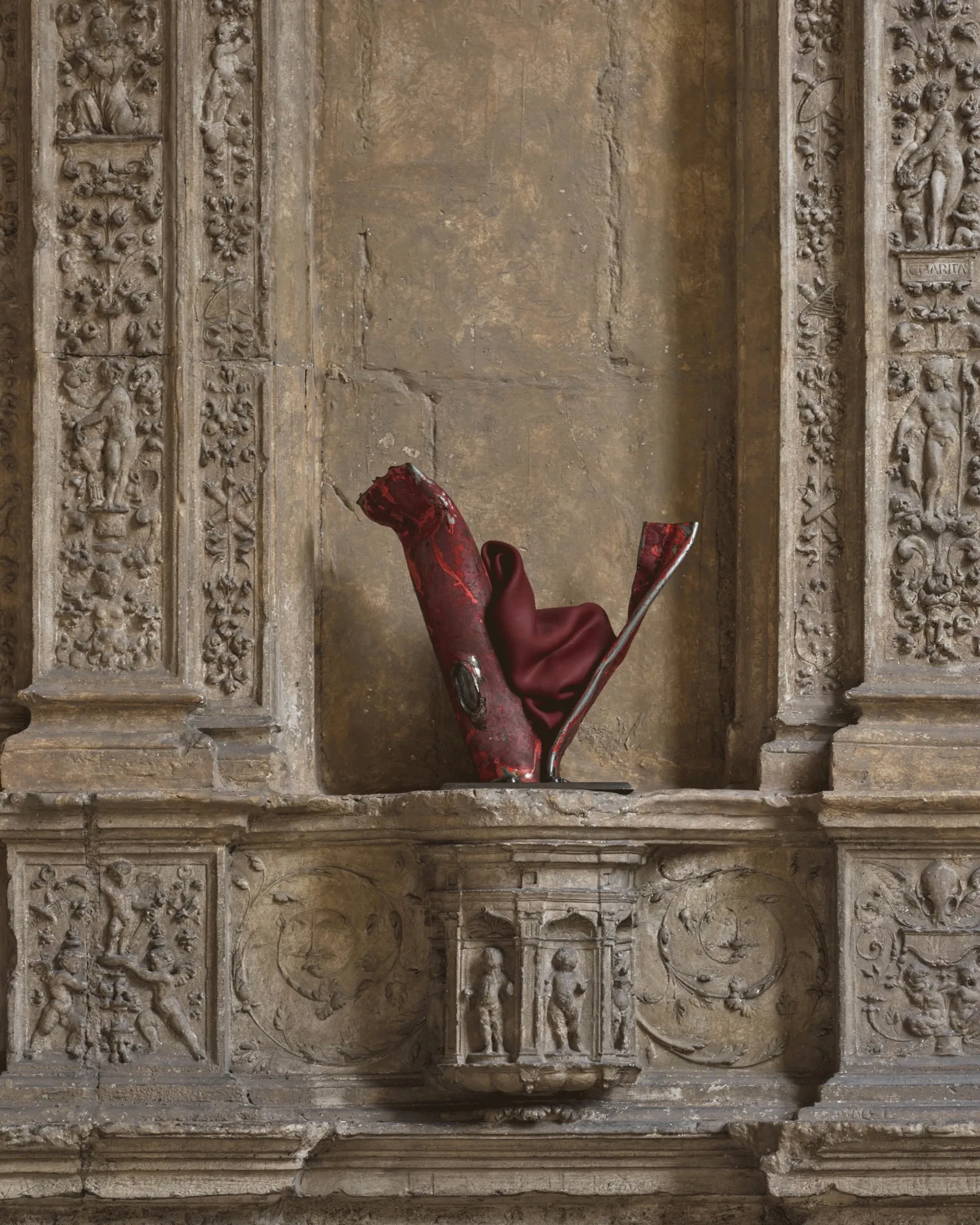
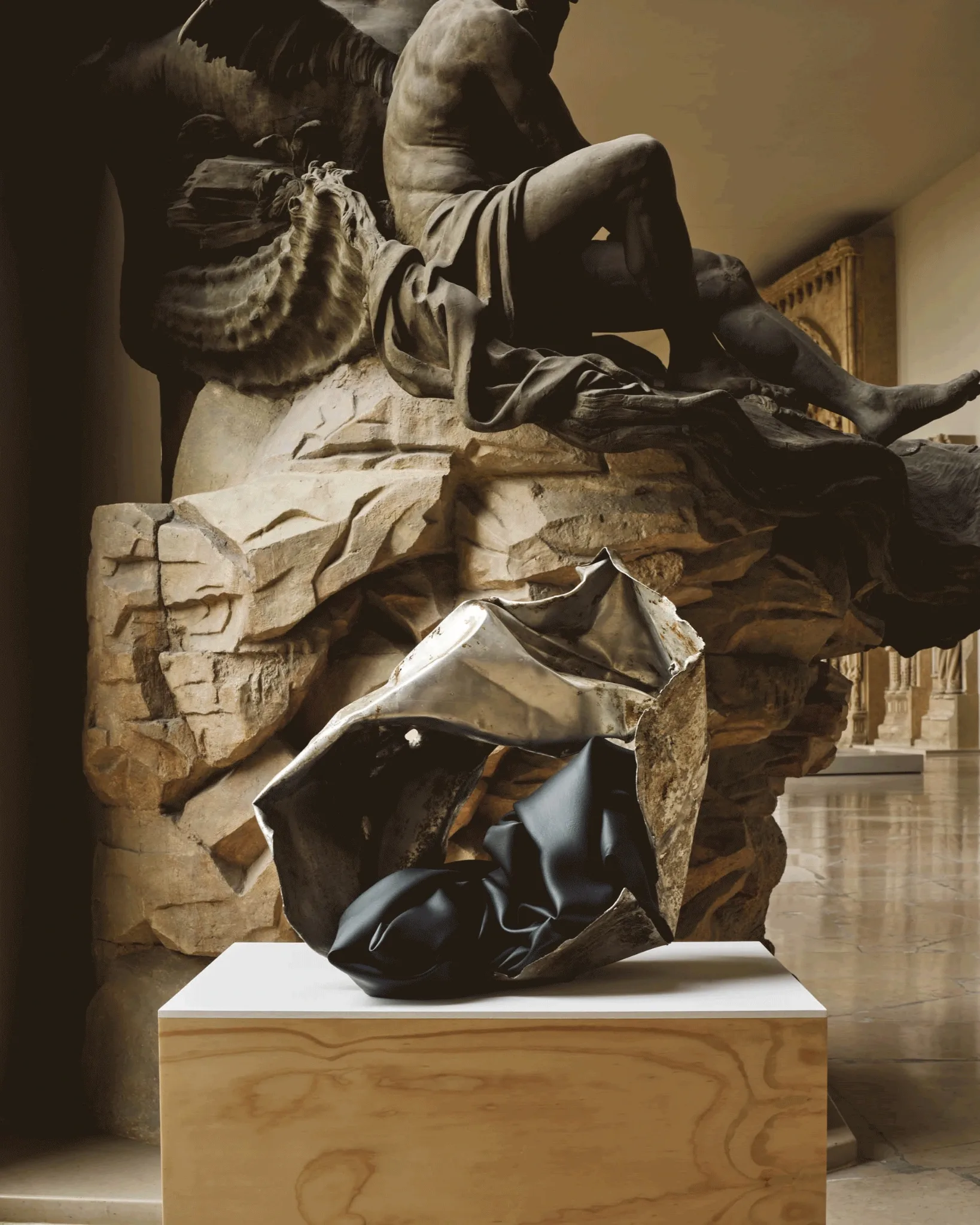
The American sculptor’s work has historically had this quality thanks to her use of found objects—often rough, discarded metal—and carefully poured paint skins that she’s developed over her career, referring to them as her “longtime friends.” Through her artistic process, Yanko removes any connotation from the metal she finds, whether it was a piece of machinery, a car part, or a bicycle chain, and turns them into delicate works without pretense.
“When I’m in the metal yard, you see something that used to hold a building up become fragile,” Yanko said at a discussion hosted at the museum the opening weekend. “I try not to use the words ‘masculine’ and ‘feminine.’ Is it soft? Is it hard? Is it heavy? Is it light? Is it flying? How is it standing?”
To prepare for the exhibition, Yanko stayed at a monastery in Bordeaux where she studied Mary Magdalene and her—removed—gospel in the Bible. The titles in the exhibition are derived from said gospel. Even further, Yanko referenced German abbess and mystic Hildegard von Bingen, who explored the psychedelic experiences of nature during the High Middle Ages. Raised as a Seventh-day Adventist, Yanko now finds spirituality in the making of abstraction, itself, referencing other artists with similar “psychedelic” results like James Turrell, Anne Truitt, and Mark Rothko.
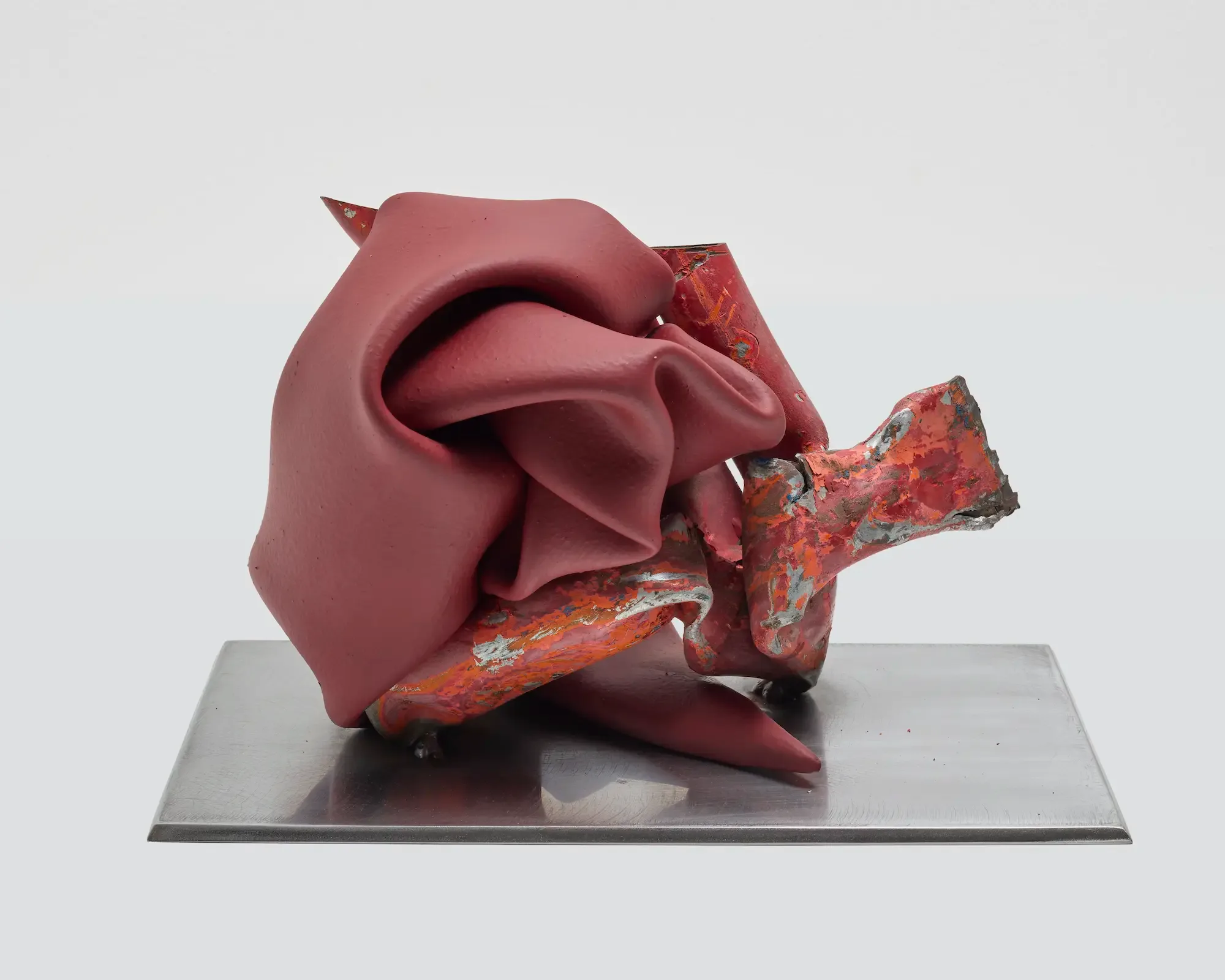
Kennedy Yanko, Hellion I, 2026. Paint skin and metal.
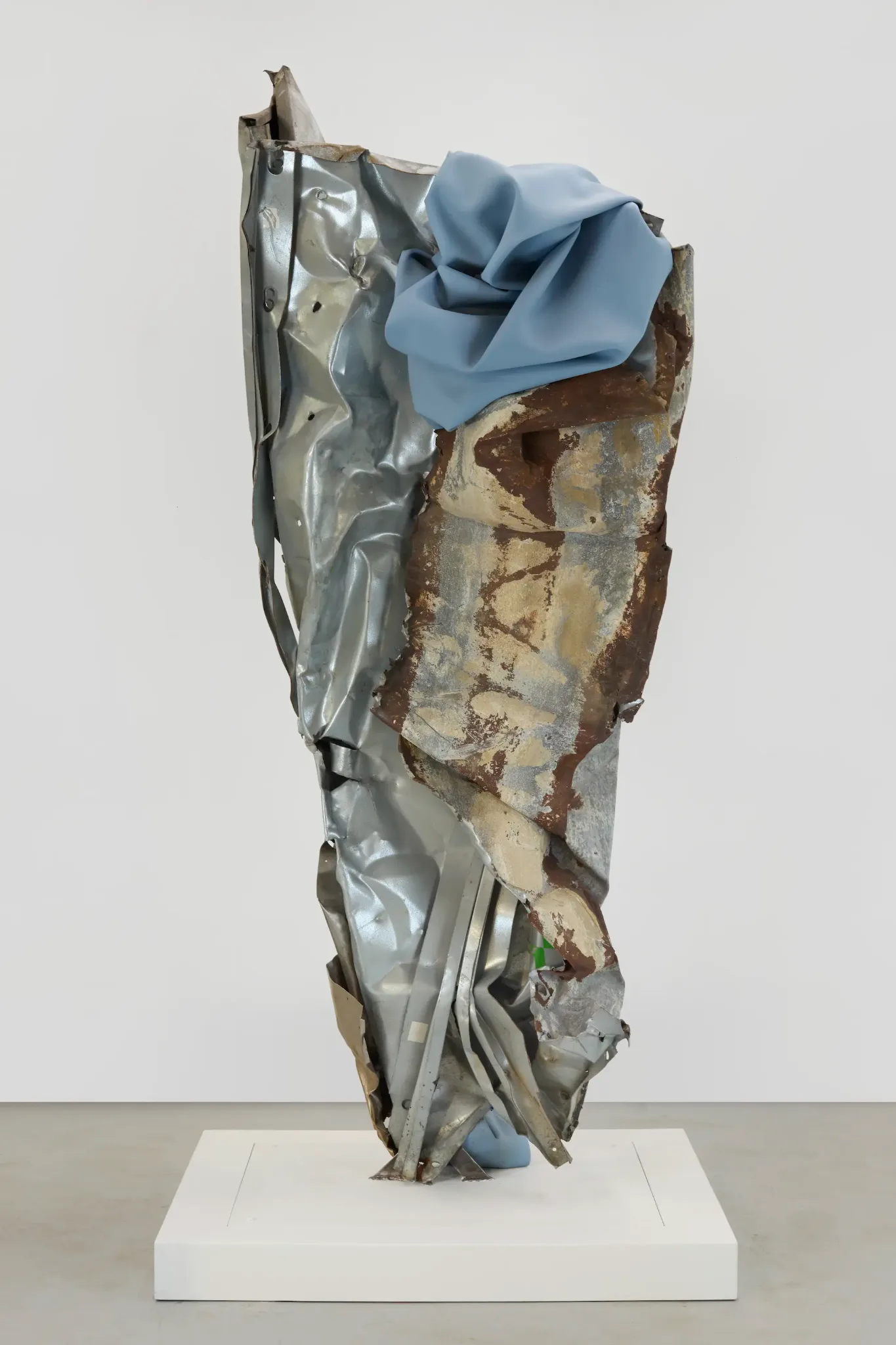
Kennedy Yanko, This love will carry me, 2026. Paint skin and metal.
“How can I make a metal have a vibratory quality of delicacy? How can I make it sing or hum?” Yanko said. “I’m asking the viewer to eliminate their immediate connotations and experience it as an essence, as it is.”
To Yanko, sculpture is a devotional practice just like any other. Pouring paint skins for a specific piece is a study in the metal—the layers of paint, the rust, the color tones present. It’s also a matter of patience and precision. For a piece like “The radical cypher,” Yanko calls it “hieroglyphic poetry, alien language, a composing note. I’m just beginning to understand [the paint skins].”
Yanko, who is also a featured artist in the 61st Venice Biennale, worked closely with Cite de l’architecture et du patrimoine curator Matthieu Poirier to carefully place her pieces in contrast with the existing artifacts on display at the museum. The juxtaposition highlights the contemporary quality of Yanko’s works but also adds context that in another setting, might become completely different to the viewer.
The work, “He loved her more than Us,” becomes a precious cradling gesture next to casted figures of saints. “This love will carry me” becomes a towering draped figure under an ornate archway, Christ-like with a light blue paint skin. “Intoxicated wisdom” oddly calls to mind Marcel Duchamp’s “Fountain” and at the same time, evokes its own sensuality according to Yanko.
“The obstacles are the conduit to our consciousness,” Yanko said of her process. “It doesn’t get better. It just is and it is and it is.”
“Ce qui nous rassemble (What Brings Us Together)” is on view at the Cite de l’architecture et du patrimoine until January 3rd.
Show details here.
In situ photography by Adrien Dirand


