
Seven years of vinegar and two years of shoyu sit behind the counter at Shota Omakase before a single piece of fish is ordered. Cheng Lin, the MICHELIN-starred chef and owner of the Williamsburg restaurant and a James Beard Award semifinalist who came up through Sushi Seki, Blue Ribbon, and ITO Tribeca, has built an Edomae program in which the fixed costs are measured in years and the variable ones arrive daily from Hokkaido, Ehime, and Fukuda. Most restaurants treat seasoning as consumable. Here it functions as capital, purchased long before there was a room to serve it in.
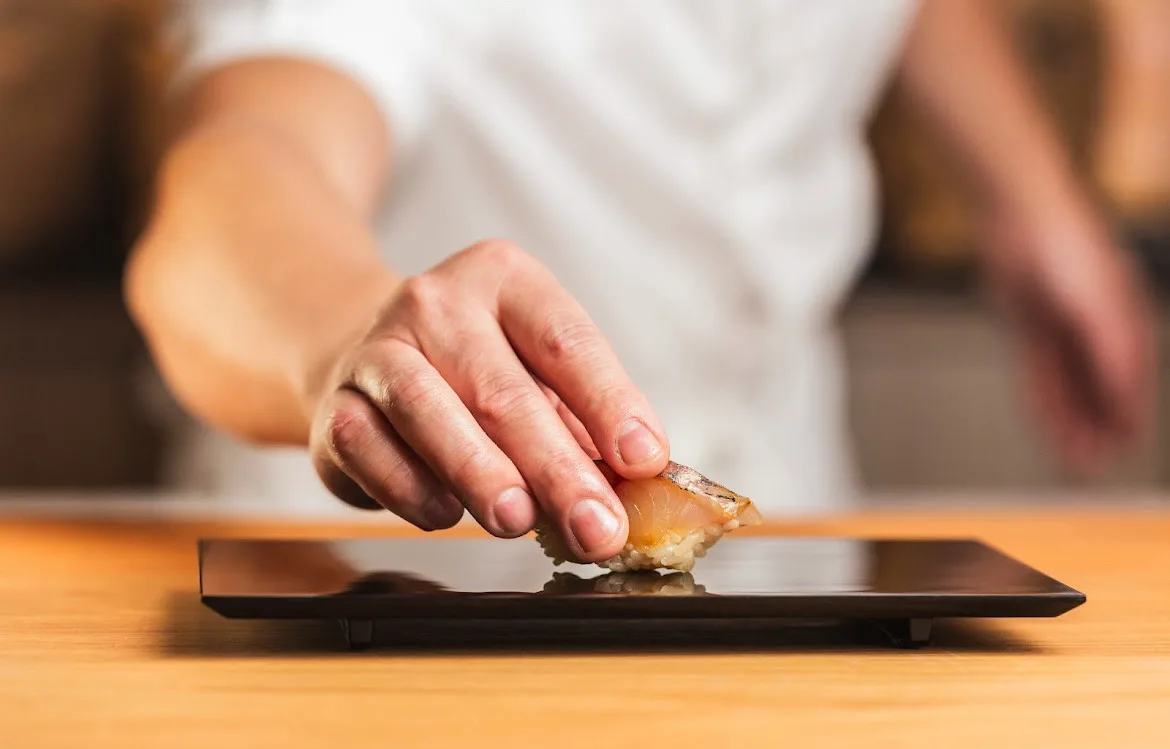
Rice selected from the mountainous terrain of central Japan behaves differently under vinegar than lowland grain does. Elevation brings wide swings between day and night temperature and cold, mineral-poor snowmelt water, conditions that slow ripening and produce a denser, higher-amylose grain. That starch structure is what allows shari to absorb seasoning without collapsing, and to hold its shape through the pressure of the itamae's hand and the heat of the guest's mouth. The choice of paddy is a texture decision made a season in advance.
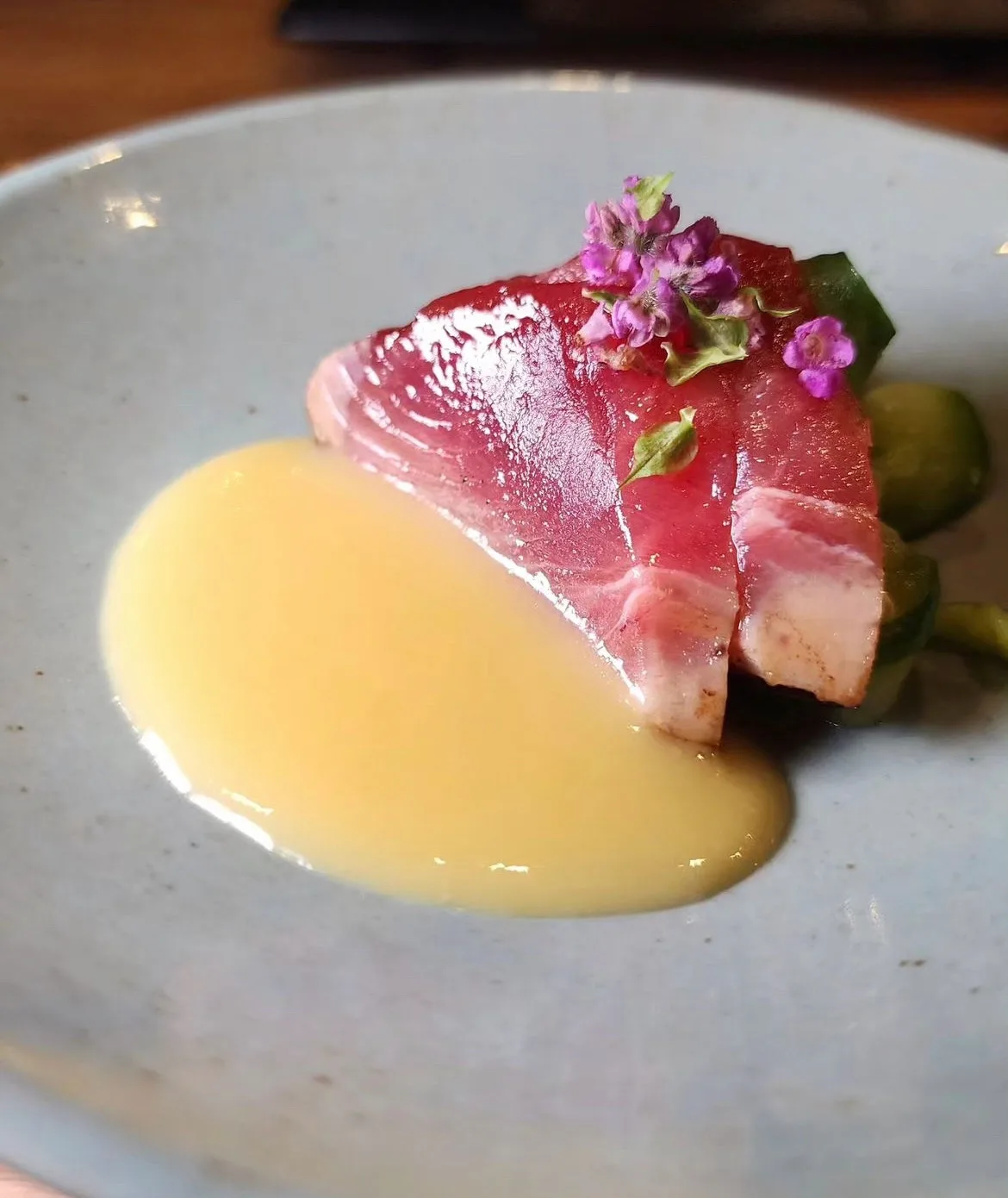
Extended aging changes vinegar in ways that are difficult to fake with volume. Rice vinegar held for seven years darkens, loses the sharp top note of acetic acid, and accumulates amino acids and glutamates through slow oxidation, arriving at something closer to the red akazu that Edo sushi stalls used before white vinegar became standard. Two-year shoyu goes through the same trade, converting raw saltiness into depth as its moromi continues breaking proteins into free amino acids. Both seasonings do the work that Edomae was invented to do. The style emerged in a city without refrigeration, where marinating, curing, and aging were the only means of holding fish for a day, and Lin's zuke akami and his insistence on traditional dispatch methods that halt the stress response in the muscle are that logic still operating rather than a nostalgic gesture.
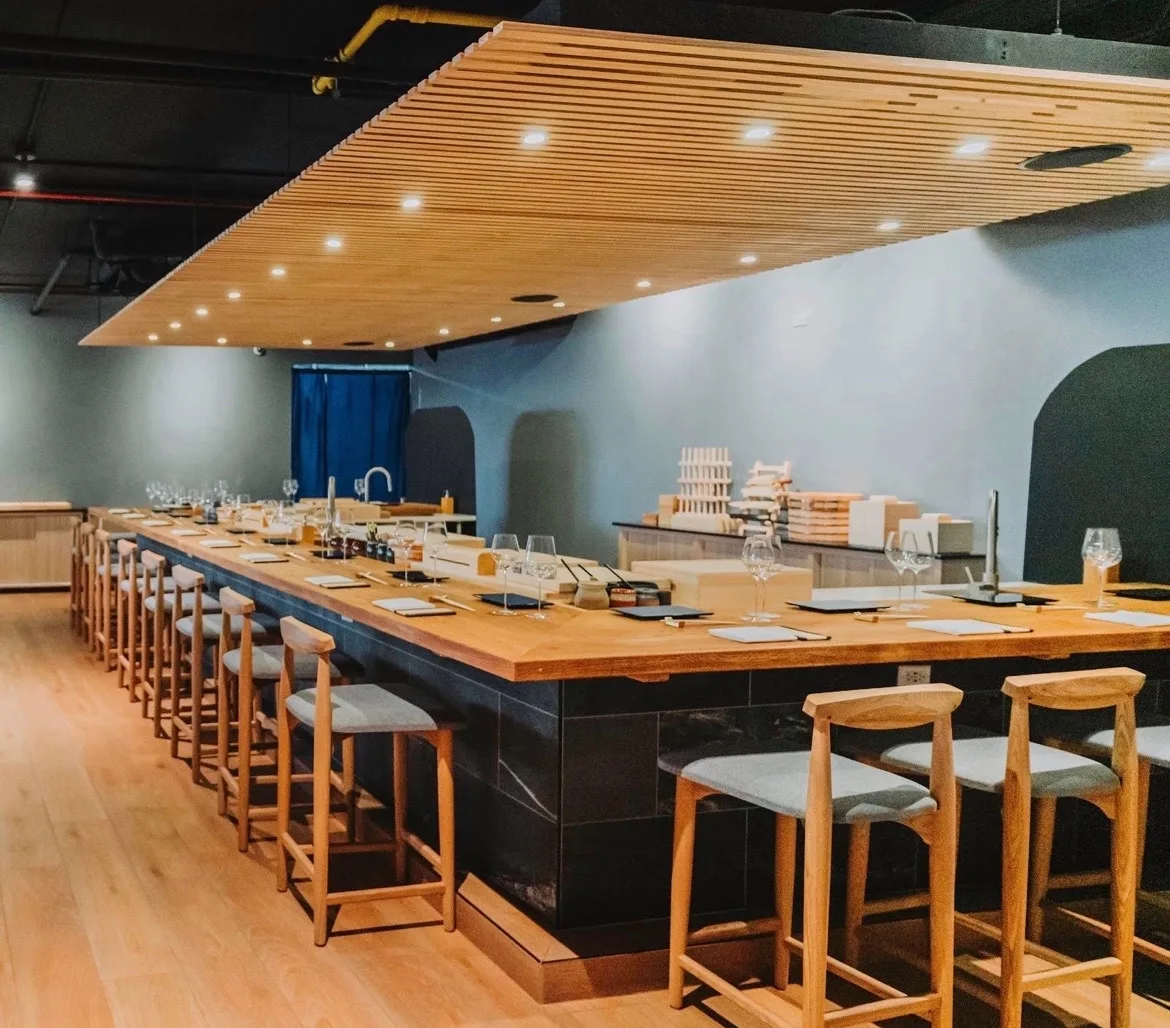
The counter carries the same argument in wood. Sushi began as street food sold from yatai stalls in 1820s Edo, where the ledge separating cook from customer was the entire building, and every omakase counter since has been a permanent version of that ledge. Lin designed the space himself, which is unusual and legible in the result. A wraparound bar in white oak defines the room, and almost nothing else competes with it.
White oak is a departure from the hinoki that traditionally faces a tsuke-ba. Japanese cypress is soft, aromatic, closed-grained, and left unsealed so it can be planed back when it stains, treating the counter as a surface under continuous maintenance. White oak is ring-porous, considerably harder, and high in tannin, and when quartersawn it shows the medullary ray figure that gives the plane its quiet movement. It tolerates constant wiping without the ritual of resurfacing, an American wood doing a Japanese job in Brooklyn.
Shota Omakase
50 S 3rd St, Brooklyn, NY 11249
Website


