
Take a mirror out of a gallery and put it in the middle of a lake. Is it still a design showpiece made of glass and steel? Or is it now something that exists beyond its own materiality?
Don't Call Me Collectible! marks the second edition of Vestigia, a design and contemporary art showcase in Tuscany redefining the parameters of ‘collectible design’ and how we engage with it. Curated in the gardens of Villa Marie, Vorno, this year's exhibition features a curation of objects that defy the often commercially oriented ‘collectible’ label through conceptual inquiry, studio craft and evolving research. Here, the Tuscan territory is not simply an open-air gallery or a picturesque backdrop. It is a central protagonist that shapes the works and reveals the artisanal ingenuity of the minds and hands that crafted them.
“This year at Vestigia, under the curatorship of Cosimo Bonciani, we are asking a broader question: what gives contemporary design its cultural value beyond rarity, exclusivity and commercial price,” shares designer and Vestigia co-organiser Costantino Gucci.
“This edition considers whether the word ‘collectible’ is really enough to describe the way our designers are working today. While people will always be attracted by the aesthetics and beauty of a design object, we are proposing a shift in attention to all the elements of the process that come before the finished object: research, experimentation, material exploration, craftsmanship, and even mistakes,” he adds.
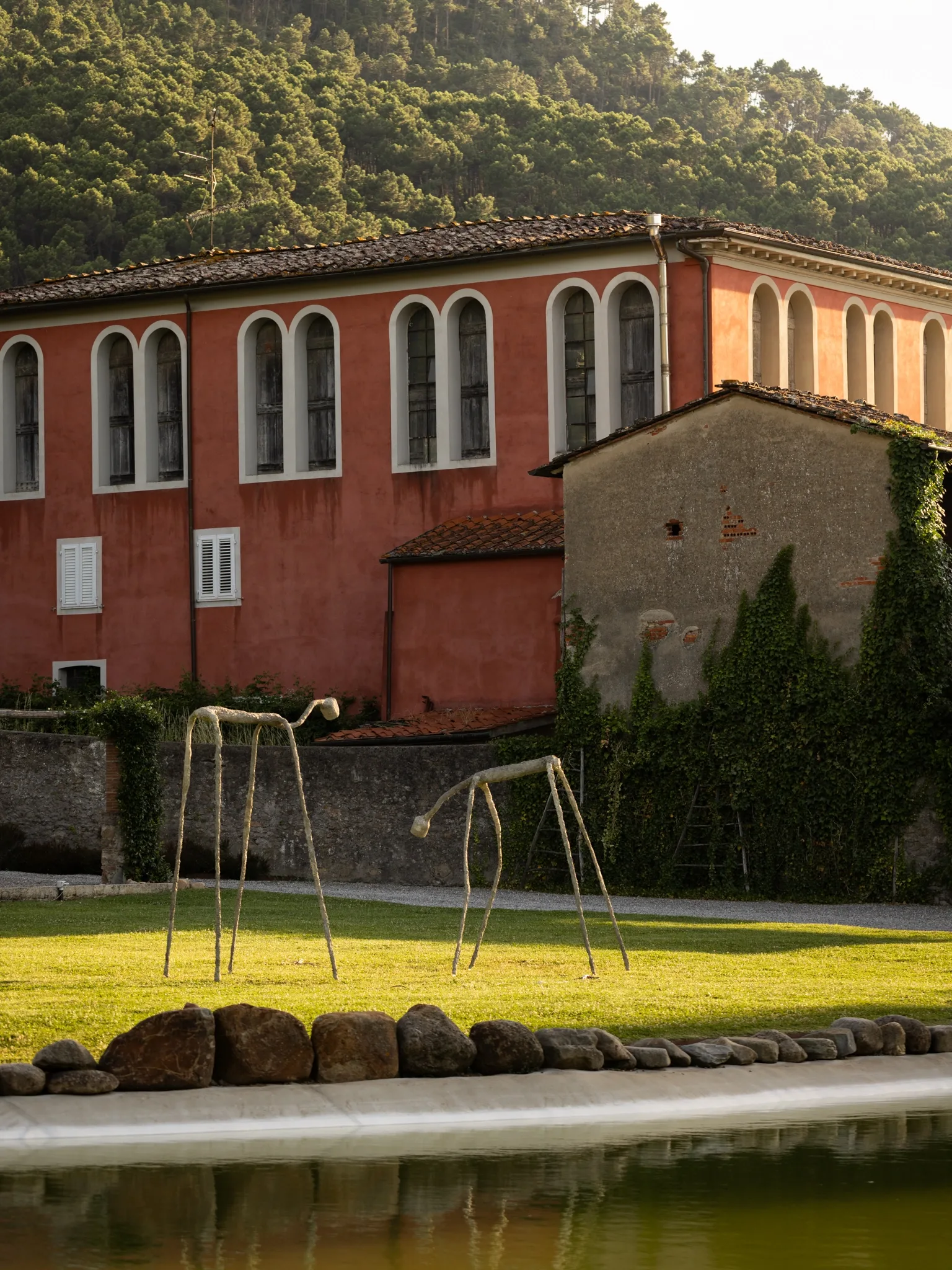
Jonathan Bocca’s site-specific installation, Silenti, curated in Villa Marie’s gardens.
As it turns out, a Tuscan sunset does wonders for illuminating the depth of research-driven design in motion: improbable geometries, material contradictions and travertine or styrofoam disguised as something else. It invites an intimate way of seeing that might usually be reserved for sculptural works of visual art rather than design objects. Then again, the lines are blurred at Vestigia.
Curated by Bunker Studio's Cosimo Bonciani and organised by Tuscan designers Jonathan Bocca and Costantino Gucci, Vestigia 2026 presents a line-up of works by Italian and international designers and studios, around half of which were created especially for the exhibition. Names from the region, including Bunker Studio, Duccio Maria Gambi, Tommaso Pardini, TIPSTUDIO, Costantino Gucci, Leonardo Cappellini, Francesco Maria Messina, Filippo Mannucci, Jonathan Bocca and Bloc Studios, are joined by designers from across Italy and Europe: Francesco Doria, ETEREO, Millim Studio, IAMMI, Nèeměsi, Shepherd Studio, Tommaso Spinzi, Moneyless, TERRÆSTUDIO and Older Studio among them. Other international exhibitors include Movimento Gallery, Jacob Egeberg, Laurids Gallée and Julius Iversen of Copenhagen-based multidisciplinary design studio TABLEAU.
“We had a very diverse representation of design practices, materials, and approaches to craftsmanship in the works exhibited this year. Many pieces, even those by international designers, were produced in and around Tuscany using materials from the region. This idea of ‘Toscanity’ is one of the reasons I started the project, and I think it's what makes Vestigia unique,” says designer and Vestigia co-organiser Jonathan Bocca.
The exhibition reminds us that collectible design assumes one meaning in a Milanese gallery and another entirely in the Tuscan landscape. In Villa Marie's gardens, visitors experience the objects with an emotional resonance not necessarily felt in a ‘white cube’ context: “Vestigia is extending the vision of collectible design beyond cities like Milan. It’s encouraging people to discover design research and materiality through a more intimate and authentic lens here in Tuscany, with its smaller towns and provinces, which are also hubs of design production,” Bocca adds.
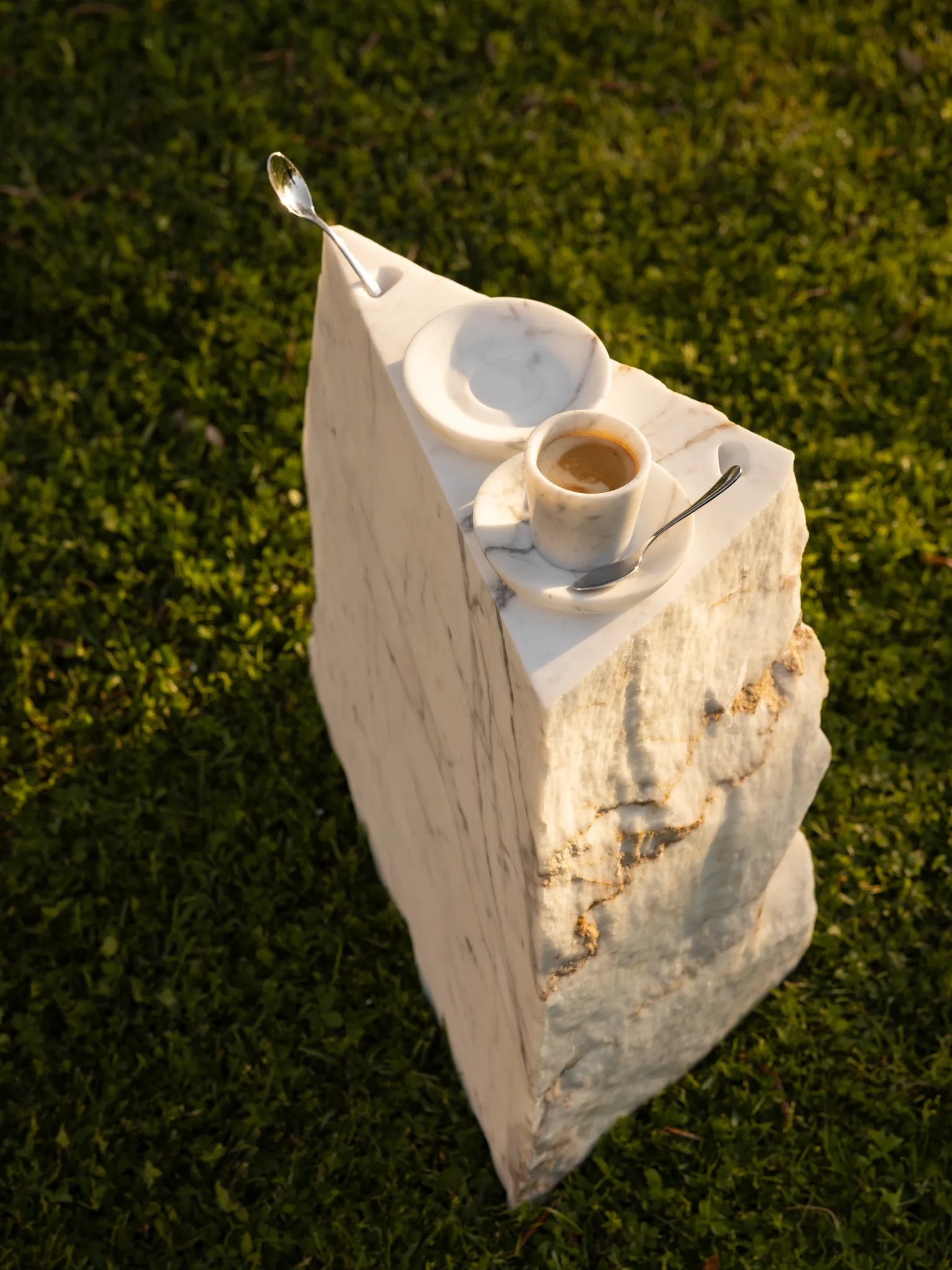
The Coffee Break by Francesco Doria
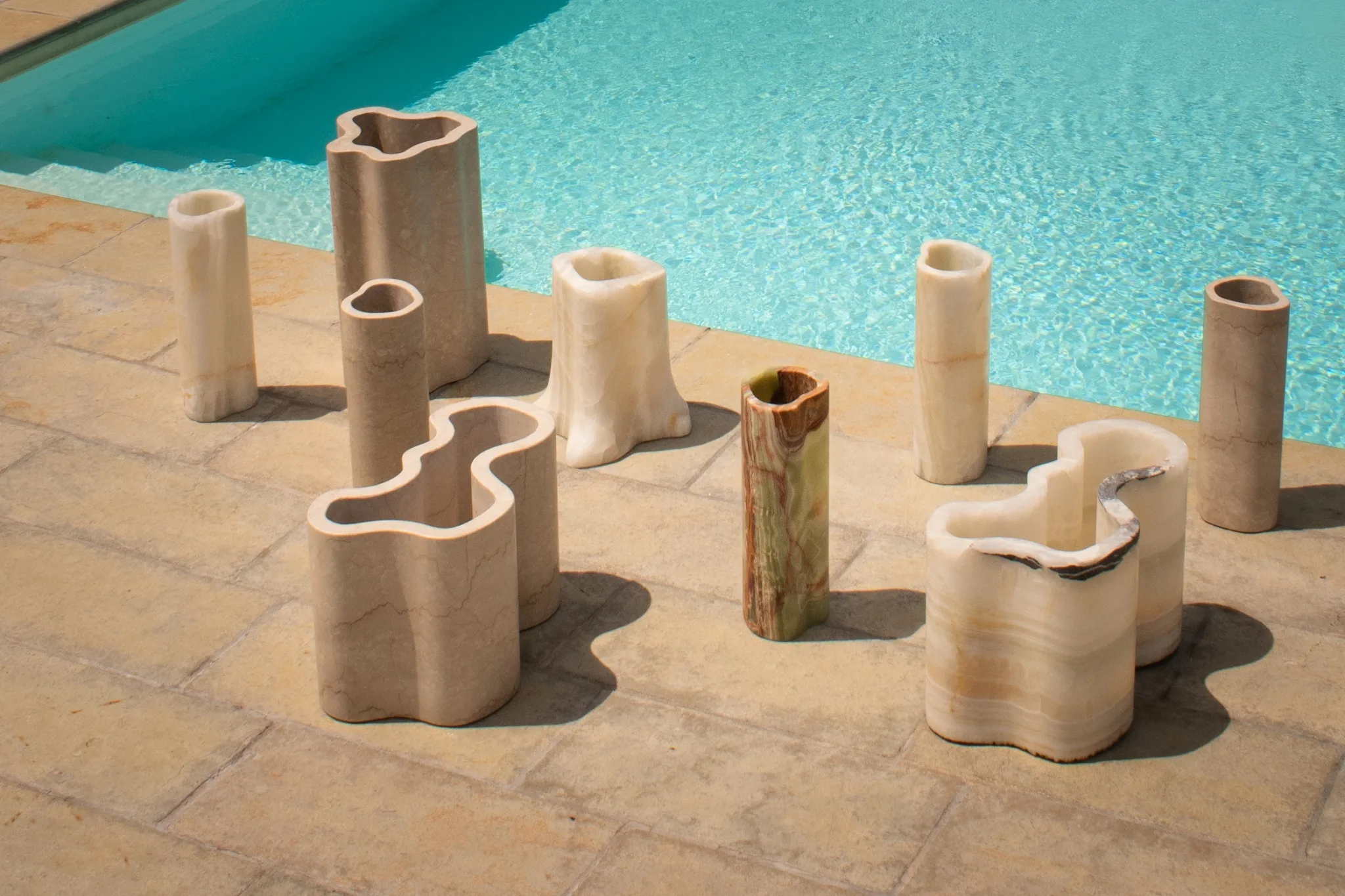
Isole by Bloc Studios and TABLEAU
Marble and other natural materials that have long drawn designers to Tuscany for its rich geological legacy, are cast in an evocative new light at Vestigia, transcending their conventional associations with mass and rigidity. Artist and designer Francesco Doria reimagines the universal ritual of the coffee break with a symbolic table set with cups and saucers, all carved from a single block of Carrara marble. Isole, the collaborative project between Bloc Studios and TABLEAU, evokes the transformative power of water through a collection of bespoke vase-vessels sculpted in locally sourced marble with white and green onyx. ETEREO's fluid, free-standing lamp from its Medusa collection liberates marble from a static application, while Tuscan designer Francesco Maria Messina reinvigorates Breccia Medicea dell'Acquasanta stone from the region's Apuan Alps with RUDIS, a sculptural mass anchored by functional steel blades, created in collaboration with Acquasanta Edizioni.
As one of Italy's first outdoor collectible design exhibitions, and the first of its kind in Tuscany, Vestigia makes a compelling case for experiencing collectible design beyond Europe's major cities through an intimate, authentic lens that invites a renewed sense of emotional engagement. At golden hour, Villa Marie's visitors can gaze into Altera – Costantino Gucci's sculptural mirror with elongated glass planes installed in the garden's lake – and observe how the reflected sunset transforms the garden's colours and rhythms. As daylight fades, they might find themselves circling the feet of Jonathan Bocca's illuminated sculptures crafted from Geolite, the prehistoric looking heroes of his site-specific installation Silenti.
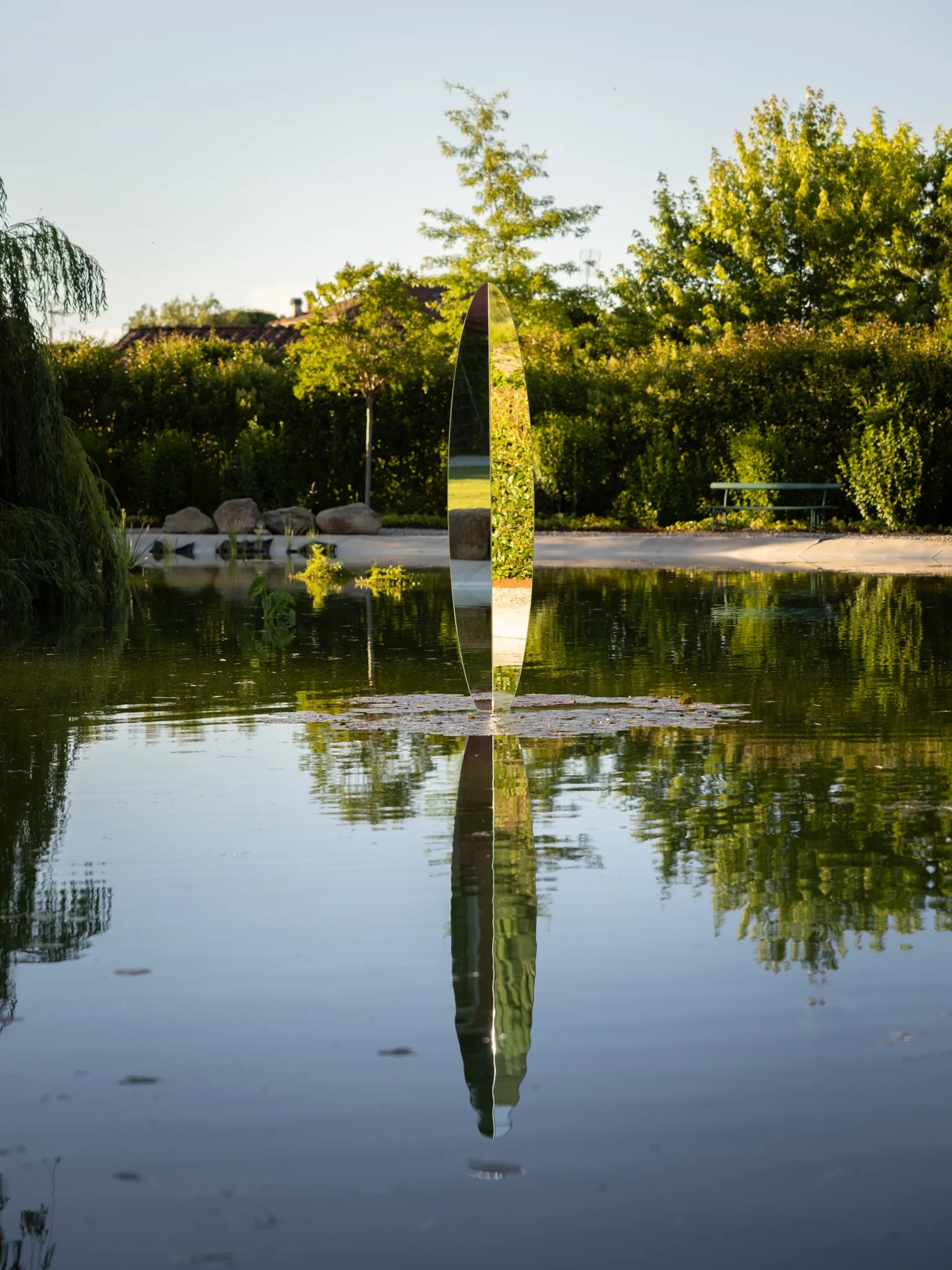
Altera by Costantino Gucci
Then there are objects that stir our tactile urge: pieces that stand as visible testaments to an intense process of questioning and experimentation with materials, textures and finishes. Tuscan designer Tommaso Pardini's UFOs (Unfunctional Fictional Objects) inhabit the landscape like sacred totems that have descended from a dark, parallel universe. Their oily black surfaces conceal an upcycled styrofoam core, revealing the designer's ongoing research into repurposed materials, global cultures and ecology. Clinging low to the ground and coated in a muted shade of violet, the 11.07 Violet Coffee Table by Nèeměsi, in collaboration with Movimento Gallery, is another work that lures you in for a closer look. Composed entirely of reclaimed materials, the piece features a hand-bent recycled metal structure topped with a slab of travertine, though looks can be deceiving.
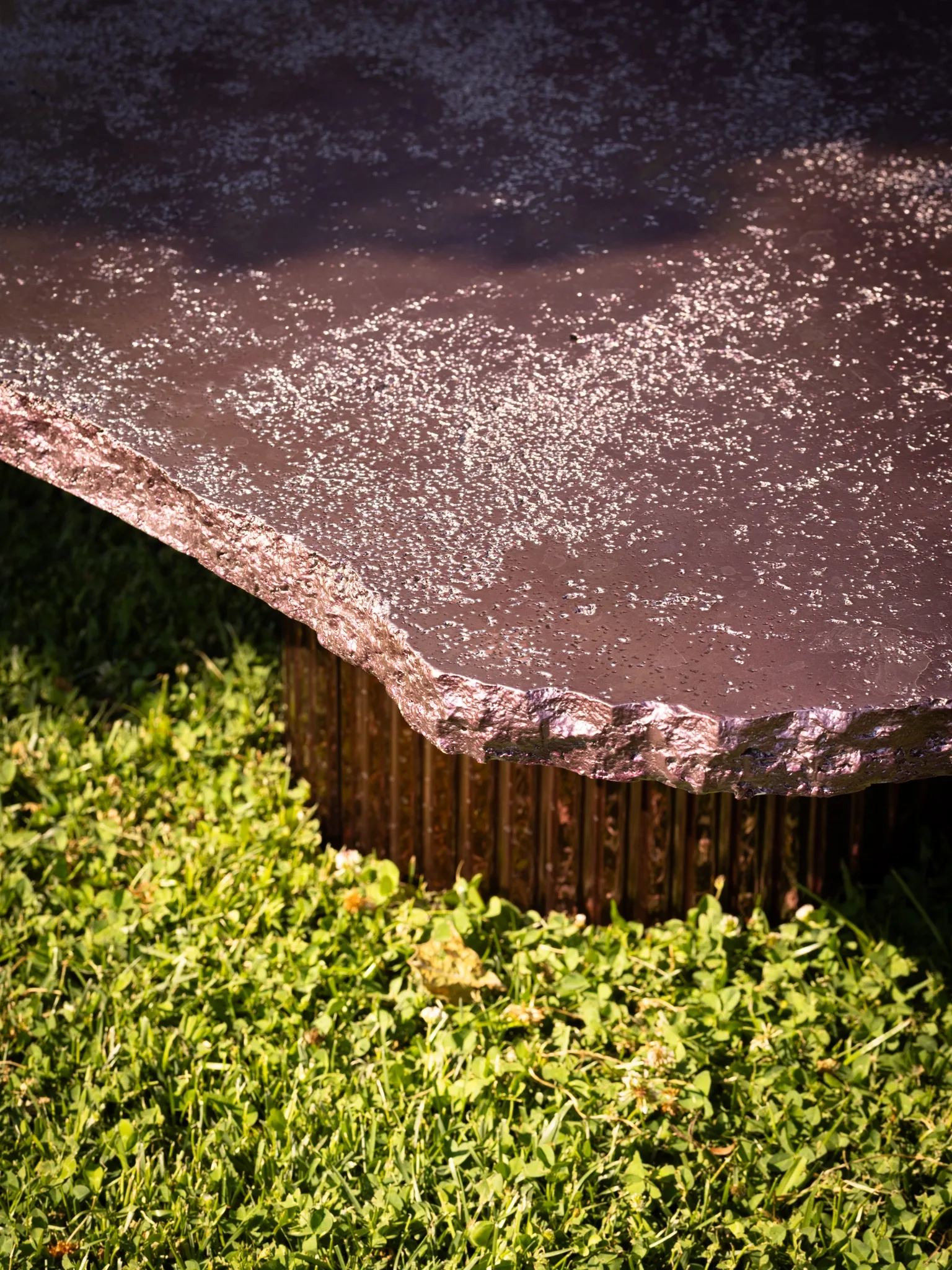
11.07 Violet Coffee Table by Nèeměsi, in collaboration with Movimento Gallery
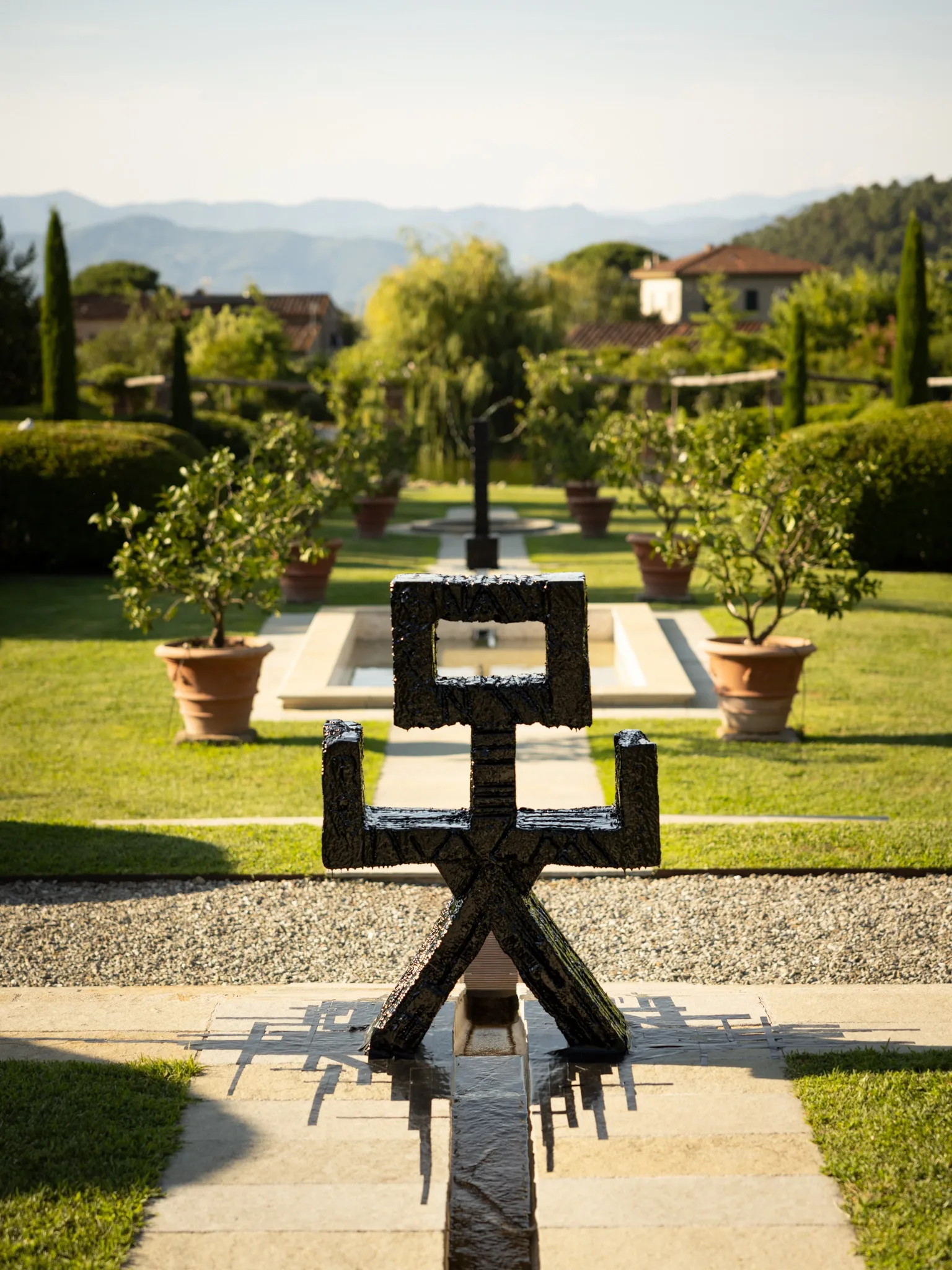
UFOs (Unfunctional Fictional Objects) by Tommaso Pardini
Collectible design doesn’t fight for attention at Vestigia. In the absence of commercial spin, price tags and organised urban chaos, visitors are free to appreciate objects that ‘breathe’ as the sum of all the research, craftsmanship and artisanal ingenuity invested in them. Nature is constantly changing around these objects, and as a result, Don't Call Me Collectible! is a design exhibition that can never be experienced the same way twice.
Vestigia Don't Call Me Collectible!
Villa Marie (Villa della Boccaccia, 50), on view until September 26, 2026.
Upcoming guided tours led by the curatorial team will be held on August 21 and September 26.
@vestigiacollectible
Photography by Dario Borruto


