
Daniel Kołodziejczak’s path to collectible design began in couture, where he designed accessories and jewelry for major fashion houses and developed a love of research and material sensitivity that shapes his practice. Now based between Paris and Milan, he brings that same sensibility to the sculptural furniture and objects he creates through his young studio, StudioDanielK.
As part of the exhibition The Matter of Earth, opening this week during Paris Design Week, Kołodziejczak presents a new collection of vessels, shown alongside 11 Polish design practices working in contemporary craft, sculpture, and collectible design. For Kołodziejczak, whose career and practice has moved between countries and disciplines, the exhibition’s focus on memory and sense of place is particularly fitting.
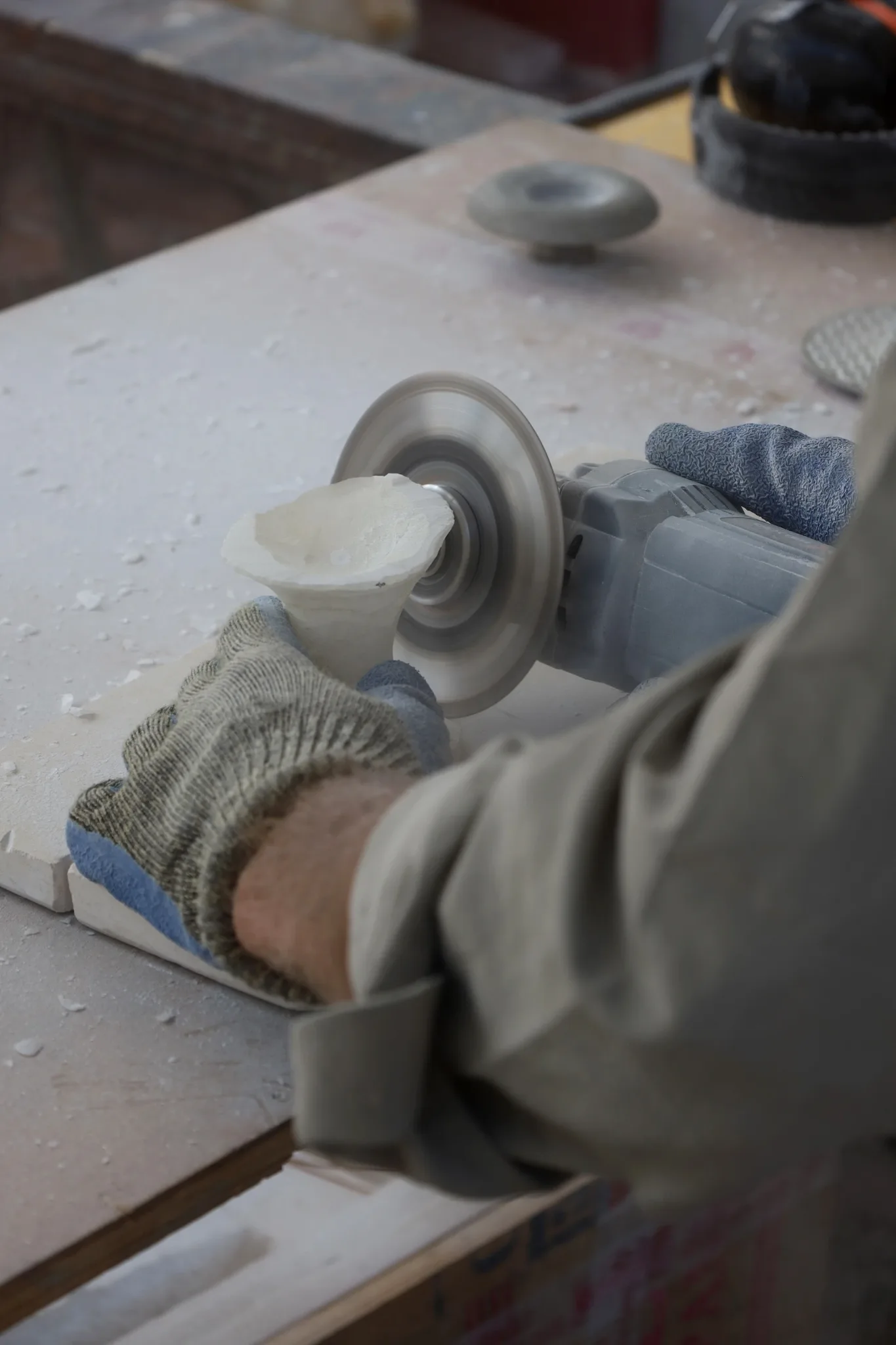
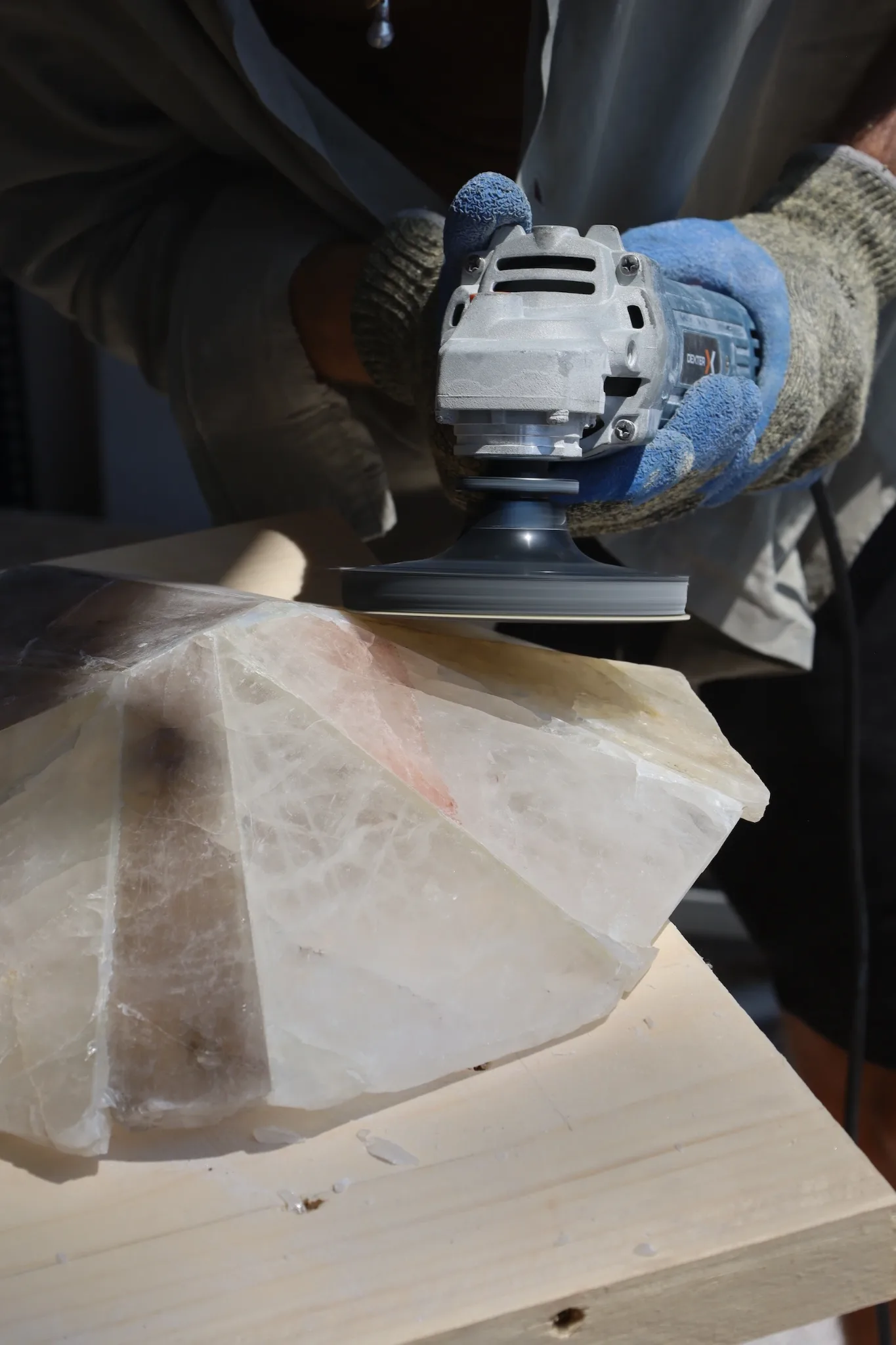
Kołodziejczak grew up in a small village in Poland before leaving to study design at VIA University in Denmark. From there, he moved to Amsterdam to study fashion and briefly worked with Viktor & Rolf on couture collections, before eventually landing in London at the London College of Fashion. Moving between countries became part of the education itself. “Coming from a small village in Poland, it was important for me to throw myself into the deep end and just try to swim.”
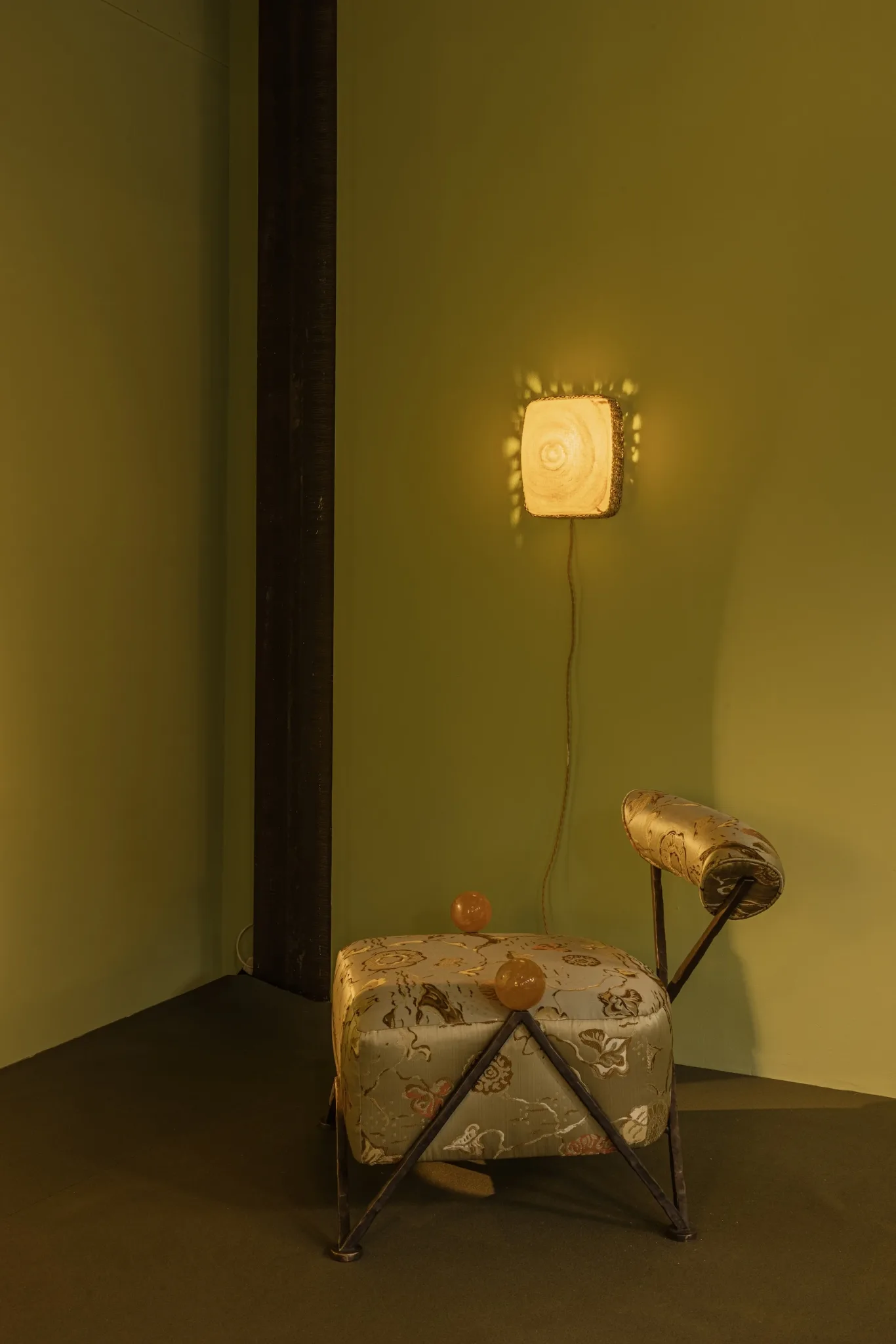
StudioDanielK for Nilufar Depot.
Photo by Alejandro Ramirrez Orozco
After graduating, he joined Givenchy’s accessories team, initially working in the shoes, bags, and jewelry departments. Within six months, jewelry had become his primary focus. He was drawn to its materiality, particularly natural stones and metals, but also to the freedom of designing an object that did not necessarily need to perform a practical function.
“I believe jewelry is the form within fashion that comes closest to art and sculpture,” he says. “Actually, it is sculpture, in a way.”
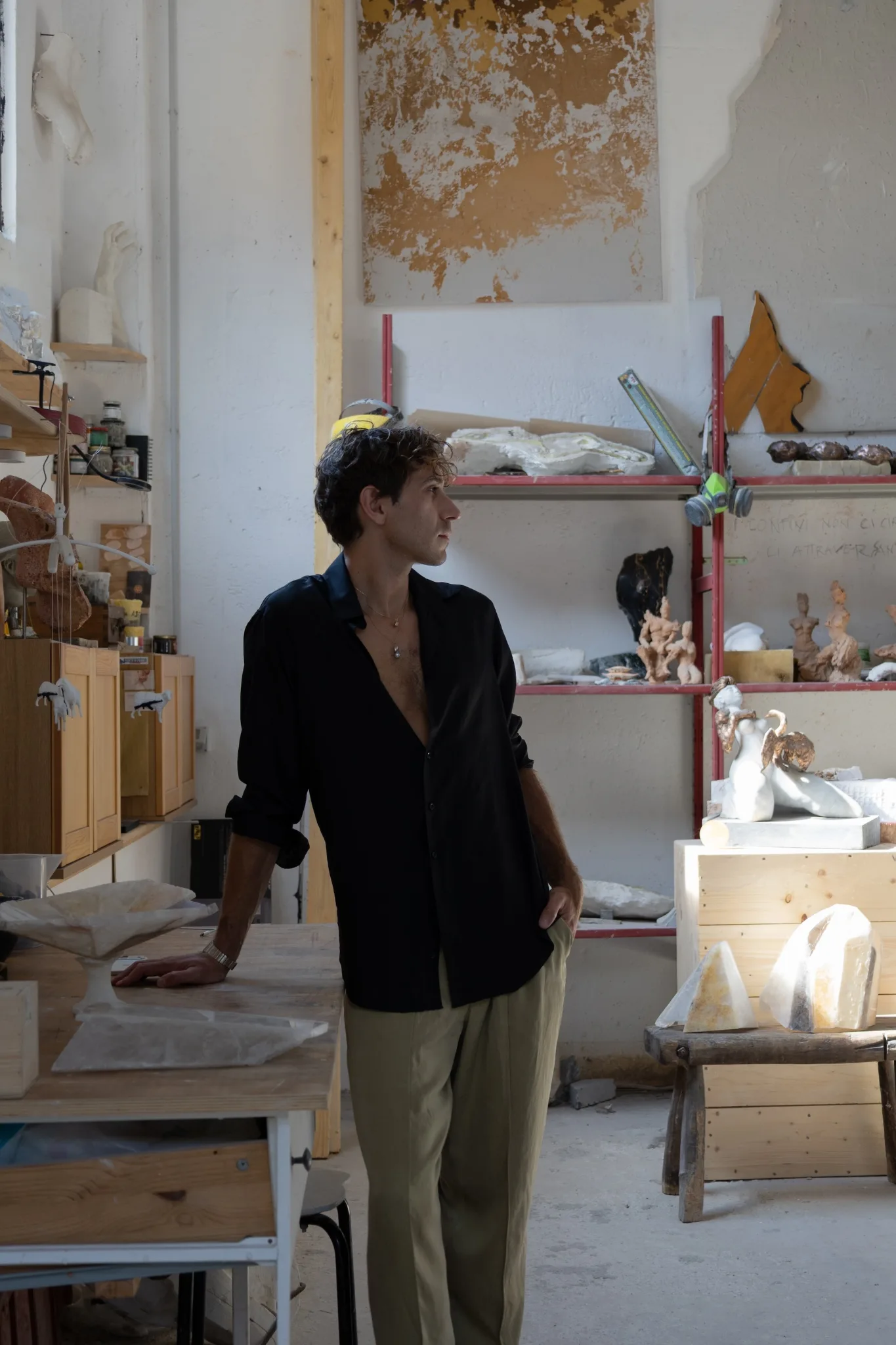
That interest eventually took Kołodziejczak to Saint Laurent, a house he admired for its history of costume jewelry, particularly the work of Loulou de la Falaise. “The possibility of accessing Loulou de la Falaise’s archive was something that made my heart beat faster,” he recalls.
Once there, he found an environment where jewelry held an unusually prominent place within the creative direction of the house, and where the expectation was always to push further. As he describes it, the mandate was “louder, different, new,” giving him the freedom to experiment with scale and form.
The experience expanded his visual language and taught him about materials that would become central to his furniture practice. At Saint Laurent, he advocated for particular natural stones, like onyx and tiger’s eye, and hand-sculpted clay models that were translated into metal.
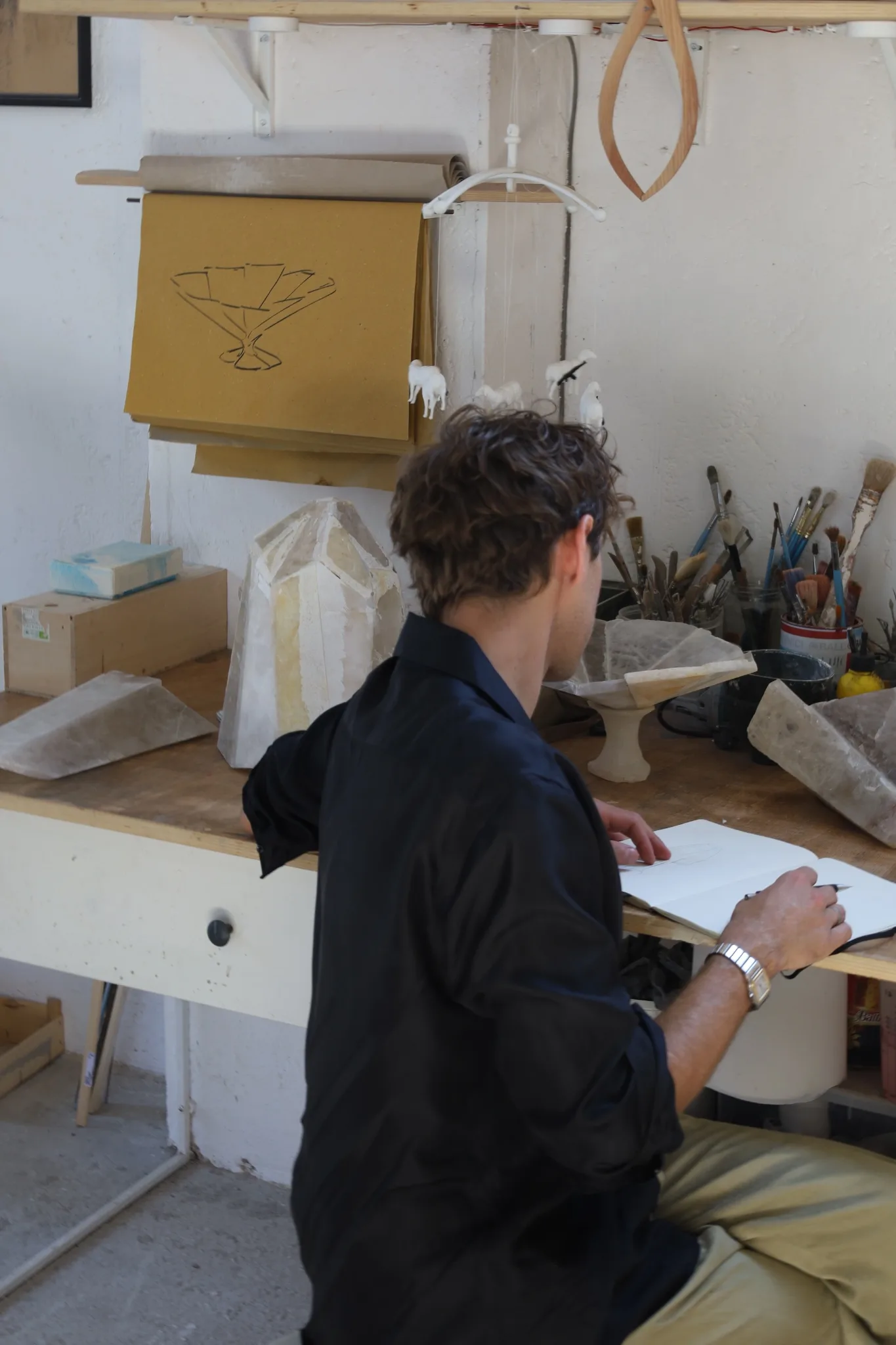
That physical relationship with making has remained important. “I think it is quite rare in fashion and design to actually make things yourself,” he says. “That hands-on, creative part of the process is something I developed, and it is something I keep within my practice.”
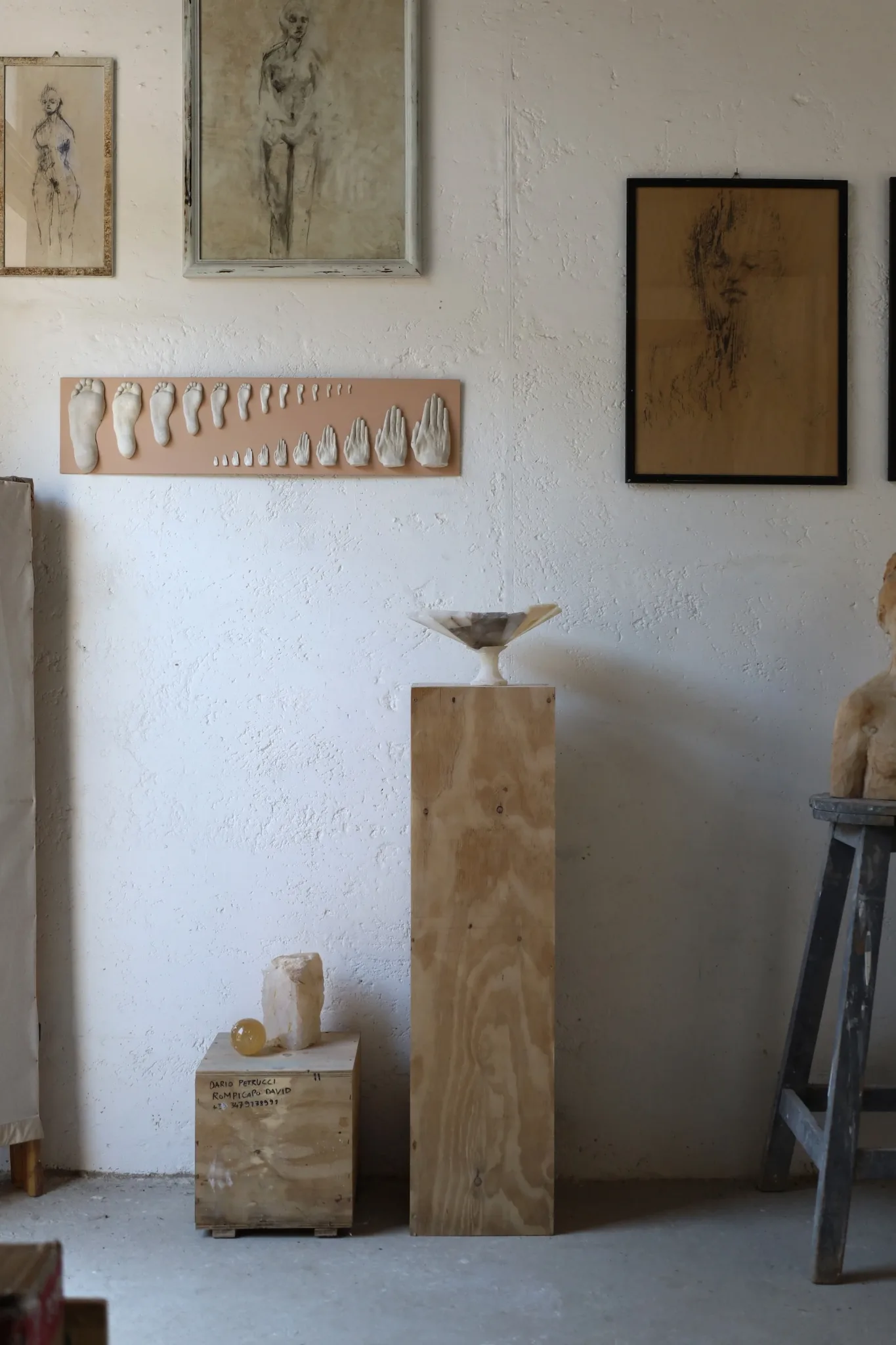
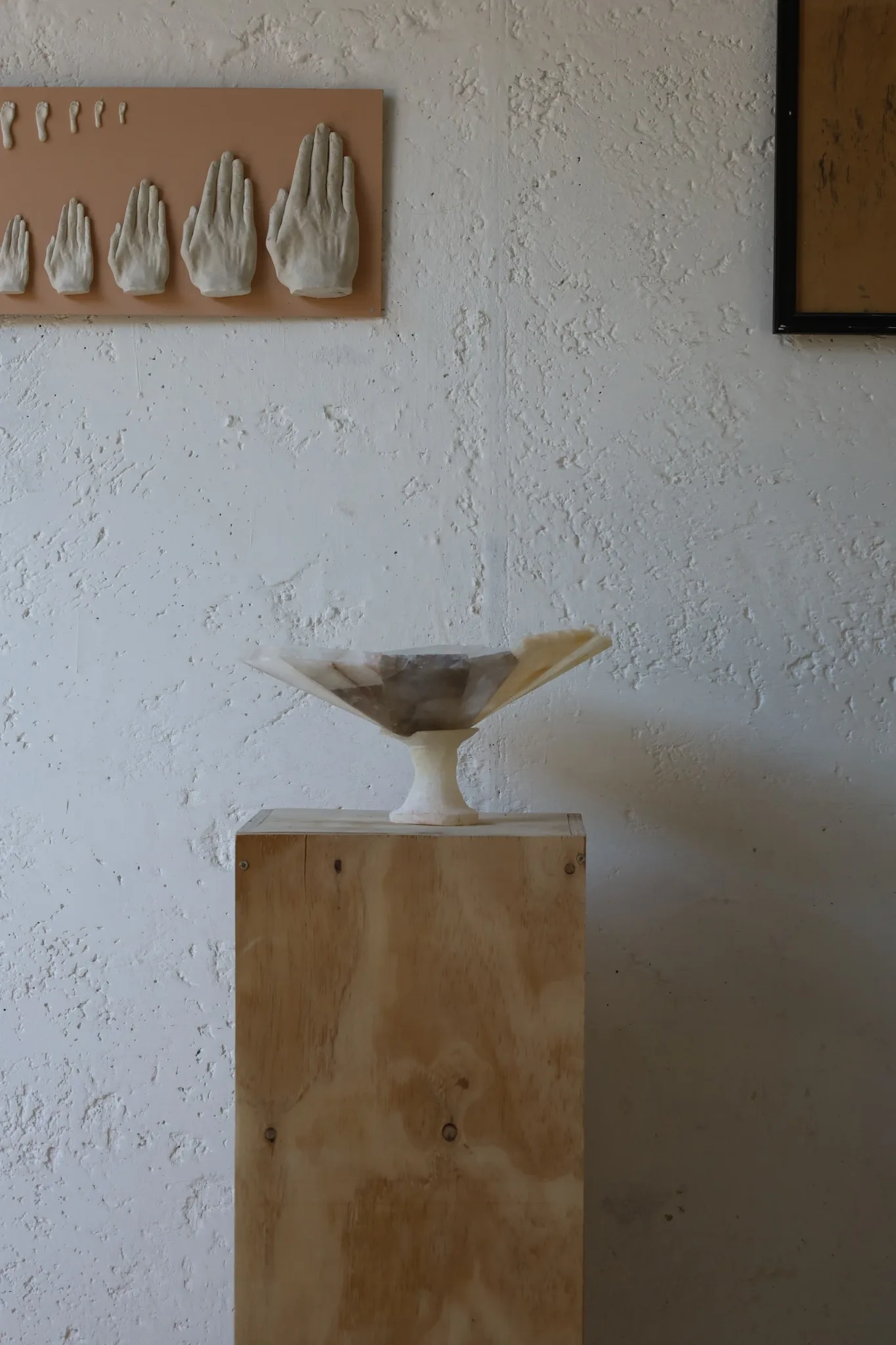
After three years at Saint Laurent, Kołodziejczak began to crave change. He explored set design, which brought him closer to furniture, vintage markets, and interiors. Consulting work gave him the opportunity to develop concepts for boutiques and showrooms. While sourcing furniture for these spaces, he occasionally couldn't find exactly what a project needed, so he began to design it himself.
A showroom for Bally in Milan became an important early project and later informed designs for stores in Zurich and New York. Through that process, Kołodziejczak began working directly with producers, marble artisans, and woodworkers. The decision to formally establish StudioDanielK came later, on a train returning from the Venice Architecture Biennale. “I want to be part of this world,” he remembers thinking. His first collection launched just over two years ago.
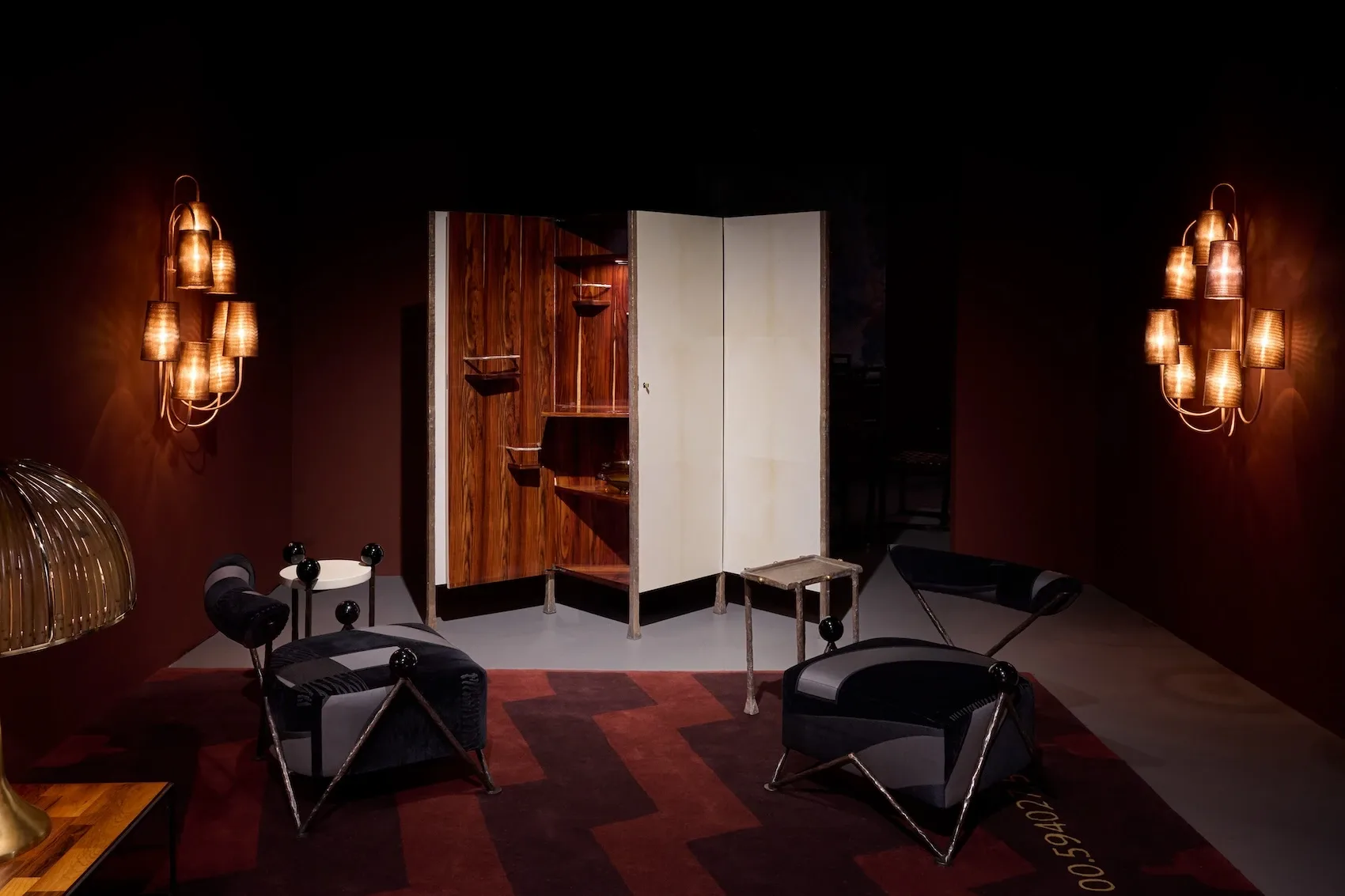
StudioDanielK for Nilufar Gallery. Photo: Filippo Pincolini
His set-design experience remains particularly visible in how he develops new work. Rather than approaching each collection simply as a group of individual objects, Kołodziejczak thinks of them as rooms within the same imaginary house.
“Every year when I design a collection, I’m designing a room,” he explains. “I’m designing every individual piece, but I’m also designing pieces that together create a universe.”
The first collection was an antechamber; the next became a formal salon. This year, he moves further into the house with a collection intended for nighttime, centered around a bar and a more intimate kind of entertaining.
For his upcoming collection, Kołodziejczak imagined returning home from the opera, opening the bar, pouring a drink for yourself and another for your partner. The specifics of the scenario matter, as does the interaction that might happen around it.
Some of this thinking goes back much further than his career in fashion or set design. Growing up in Poland, Kołodziejczak remembers a culture of hospitality in which his family frequently entertained and different rooms were used for different kinds of guests. Formal meetings, close friends, and family gatherings each had their place within the home. Those memories are now finding their way into the spaces he creates.
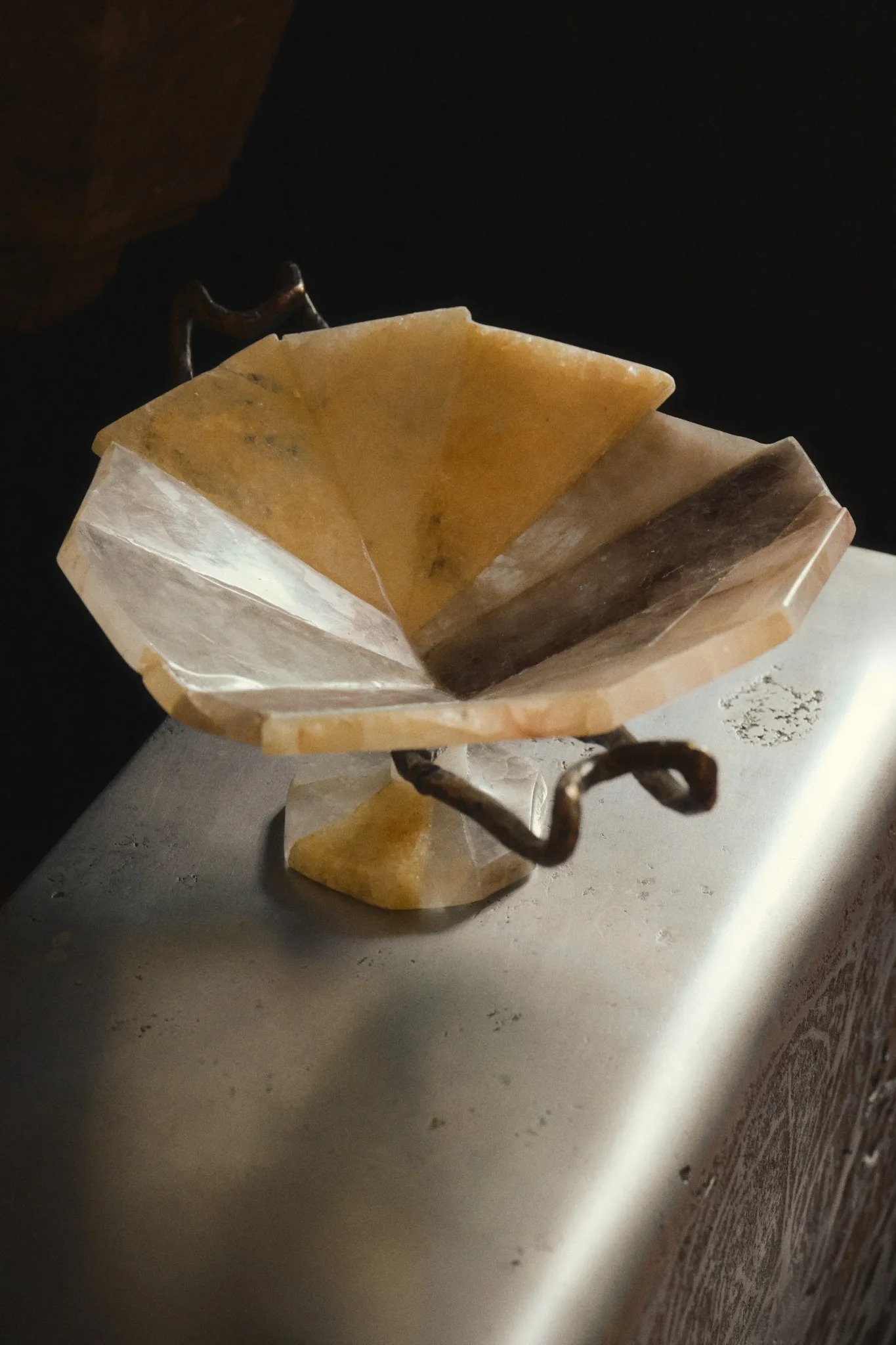
That makes his inclusion in The Matter of Earth feel particularly apt. Material and memory are already embedded in his work.
Even as the scale has changed, the approach stays the same. The same interest in precious materials, sculptural form, and craftsmanship that shaped his years in jewelry now appears in furniture and the larger environments imagined around them. Rather than leaving one discipline behind for another, he has expanded the context.
The Matter of Earth is on view at the Institut Polonais de Paris from September 10 through October 4, 2026, as part of Paris Design Week.
Exhibition details here.
Photography by Radoslaw Nicgorski unless otherwise noted.


