
Matter & Shape’s B2B structure, brand curation, and exceptional production make it stand out from the crowded calendar of trade shows and design fairs. Speaking with founder and managing director Matthieu Pinet and creative director Dan Thawley, two themes quickly emerged: a structure that expands beyond the collector-driven fair model, and an aesthetic approach that prioritises minimalism over branding.
The result feels more relaxed and approachable than an art fair, yet far more cohesive and compelling than a trade show.
This year’s edition took place in the Jardin des Tuileries in Paris, across two purpose-built pavilions by multidisciplinary studio JA Projects, who used hemp bricks and oil-stained pine to create a restrained atmosphere.
The exhibitor list reflected the fair’s hybrid positioning, mixing international independent designers with established brands, galleries, and cultural institutions. Participants included Georg Jensen, Lindsey Adelman Studio, UPPERCUT, Frama, Hosoo, and Completedworks, alongside fashion/design collaborations, like Ann Demeulemeester — Serax.
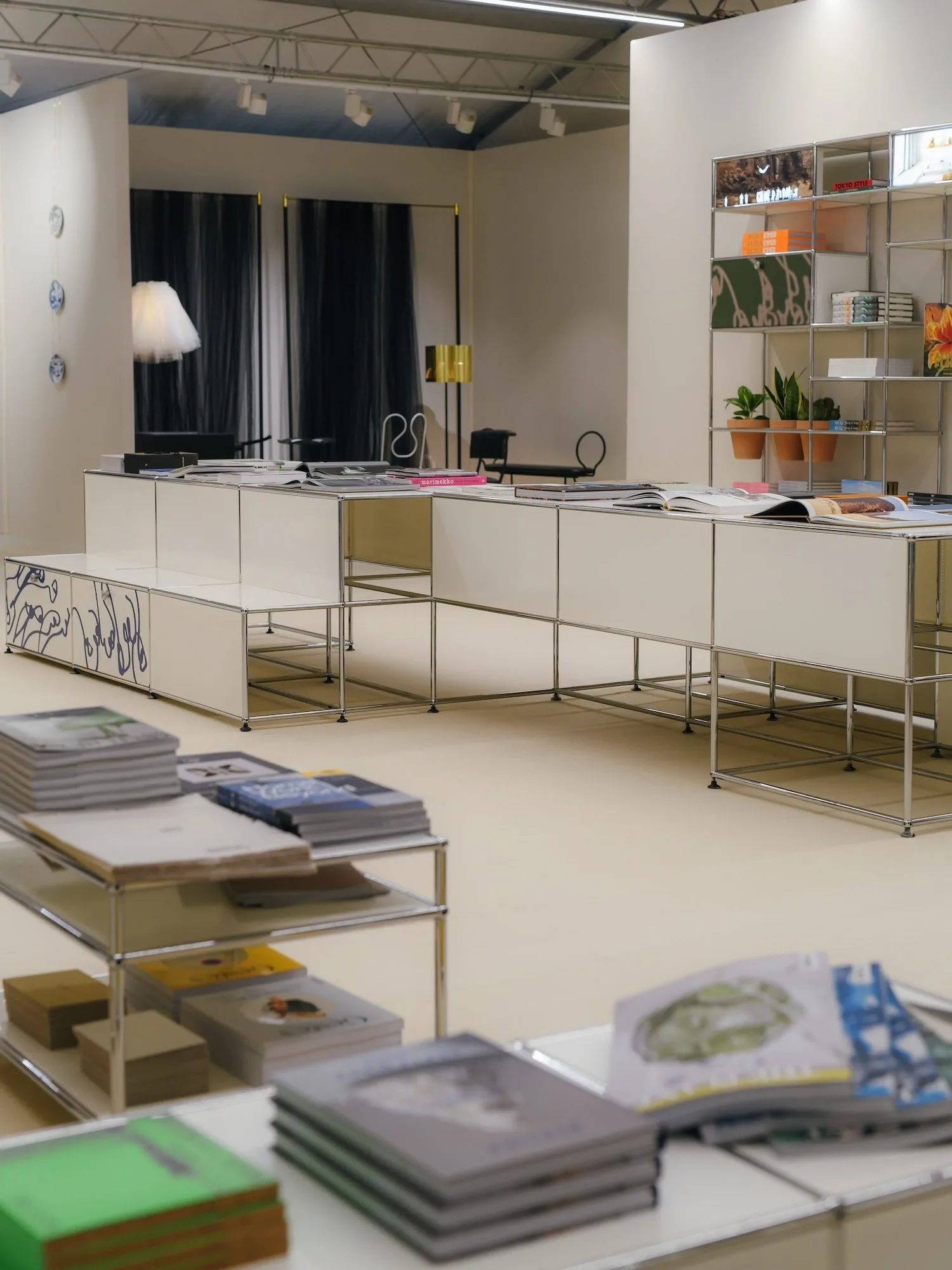
The reading room, developed with Villa Hegra and furnished with USM pieces reinterpreted by Saudi artist Badr Ali.

As a perfume lover, Olfactory Signals’ immersive fragrance project was an exciting discovery. It invited visitors to engage with design through smell rather than sight.
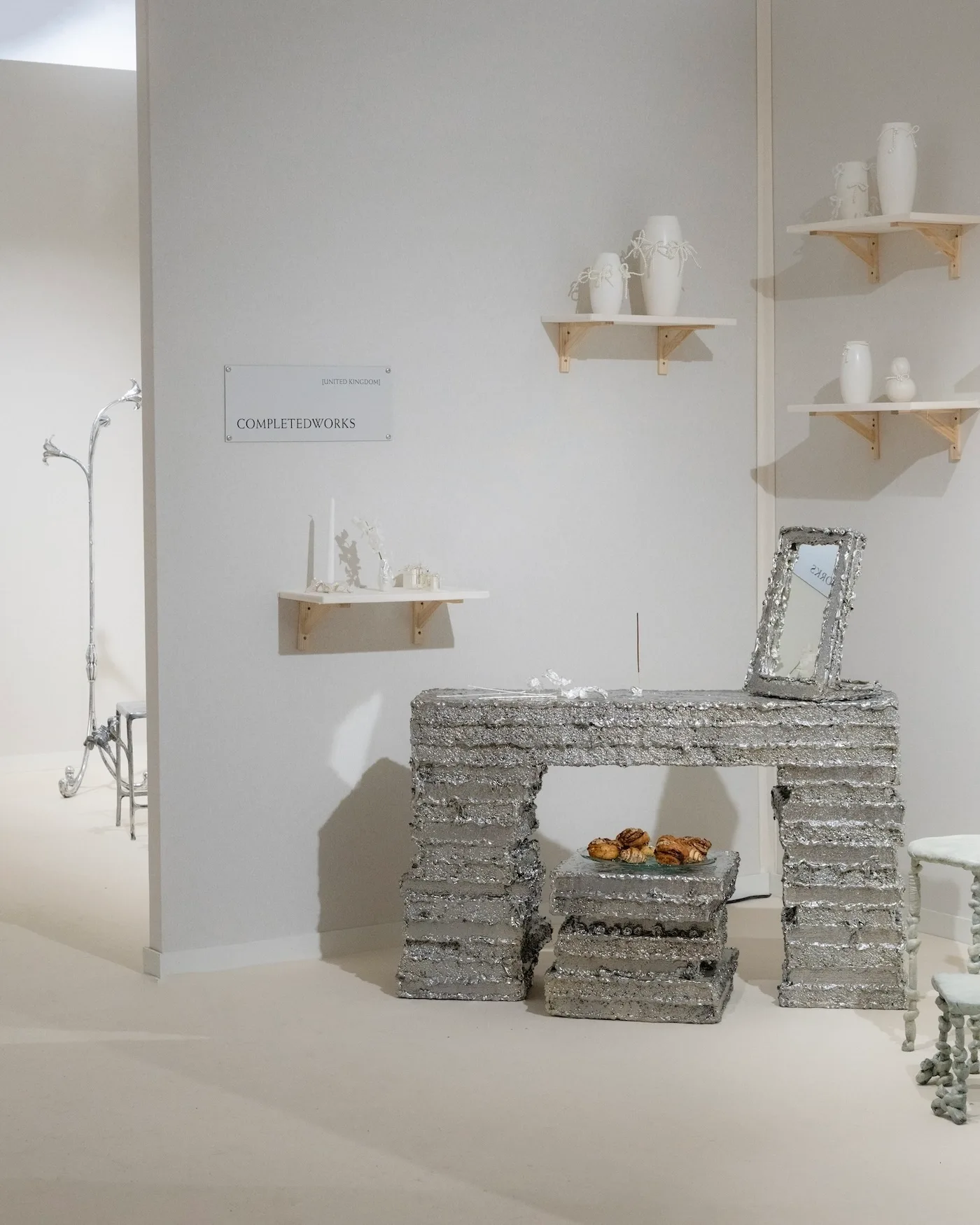
Nearly a decade before Matter & Shape became a physical fair, founder Matthieu Pinet started the project as a personal website where he shared designs that caught his attention.
Colleagues at WSN, the events group behind Matter & Shape, suggested turning the platform into a physical fair, and Pinet eventually agreed, as long as he had complete creative freedom.
Pinet’s eye, combined with WSN’s backing, ultimately shaped the structure of the fair and the kind of event it would become.
Unlike most contemporary design fairs dominating the calendar today, where galleries act as both curators and gatekeepers presenting works to collectors, Matter & Shape takes a broader approach. As Pinet explained, “while collectible design certainly has its place at Matter & Shape, the ‘gallery-first’ model will always remain a minority compared to the participation of designers themselves, as well as publishers, foundations, and heritage companies.”
The structure, therefore, resembles a traditional trade fair more than a typical collectible design event, distilled into a smaller, more carefully curated format. In Paris, already a global destination for antiques and collectible design year-round, Pinet saw an opportunity to do something different: elevate designers and design companies themselves.
“To some extent,” he explained, “our curatorial approach means that we are the gallery.”
That structure is also rooted in the background of the organisation behind the fair, which has been producing B2B trade shows for more than three decades. Collectors are increasingly present, but the underlying mission is about generating long-term business for exhibitors.
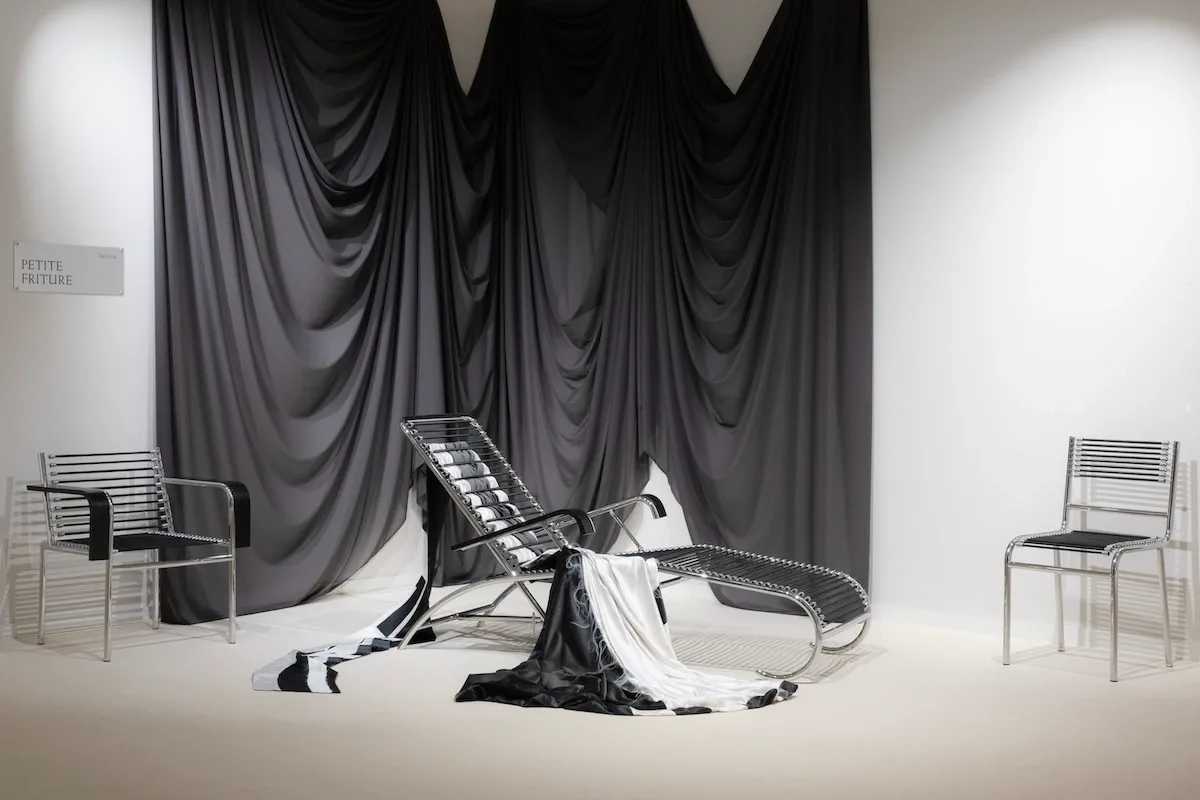

If Pinet’s thinking shapes the fair’s market structure, Creative Director Dan Thawley’s influence is immediately visible in its atmosphere.
Compared with the visual noise of many fairs, Matter & Shape feels unusually calm and cohesive. Thawley described the original 2024 edition as beginning with a blank canvas and a very specific idea: a kind of contemporary “International Style” environment.
“We wanted to create a beige cube,” he said, “where heritage designs and contemporary works, big industry players and emerging names, could all float together in a calm negative space, so the object is always king.”
The inspirations behind the fair, Thawley explained, range widely from early twentieth-century world fairs to the eclectic cultural mix that defines contemporary Paris. But the cohesion in the fair’s public spaces also comes from discipline: humble materials such as wood and brushed cotton, and strict rules around presentation.
“No logos and no wall texts,” he noted, a decision that intentionally strips away branding and keeps the environment feeling intimate rather than commercial.
That may be the fair’s greatest achievement. Matter & Shape doesn’t feel commercial, but it clearly understands commerce. It stylistically softens the hard edges of the trade fair model without losing its effectiveness, creating a setting where designers, brands, and collaborators can connect in a way that feels considered moreso than transactional.


