
As contemporary design has moved further into the conceptual, artisanal making and a return to beauty have emerged as compelling counterpoints. As a result, the design world has renewed its focus on craft.
At ICFF, taking place during New York Design Week in May, that transition will be reflected in Look Book, a section dedicated to North American independent design. Collaboratively curated by The Design Release co-founder Julia Haney Montanez, it brings together emerging and mid-career studios working across furniture, lighting, and decorative objects, each with a distinctive point of view and artistic vision.
Here, we preview works on view at the 2026 edition of Look Book that reflect this high level of material understanding, with many drawing on the language of historical applied arts, reinterpreting them through contemporary forms.
Look Book at ICFF runs 17–19 May 2026 in New York City, at the Javits Center.
Register to attend here.
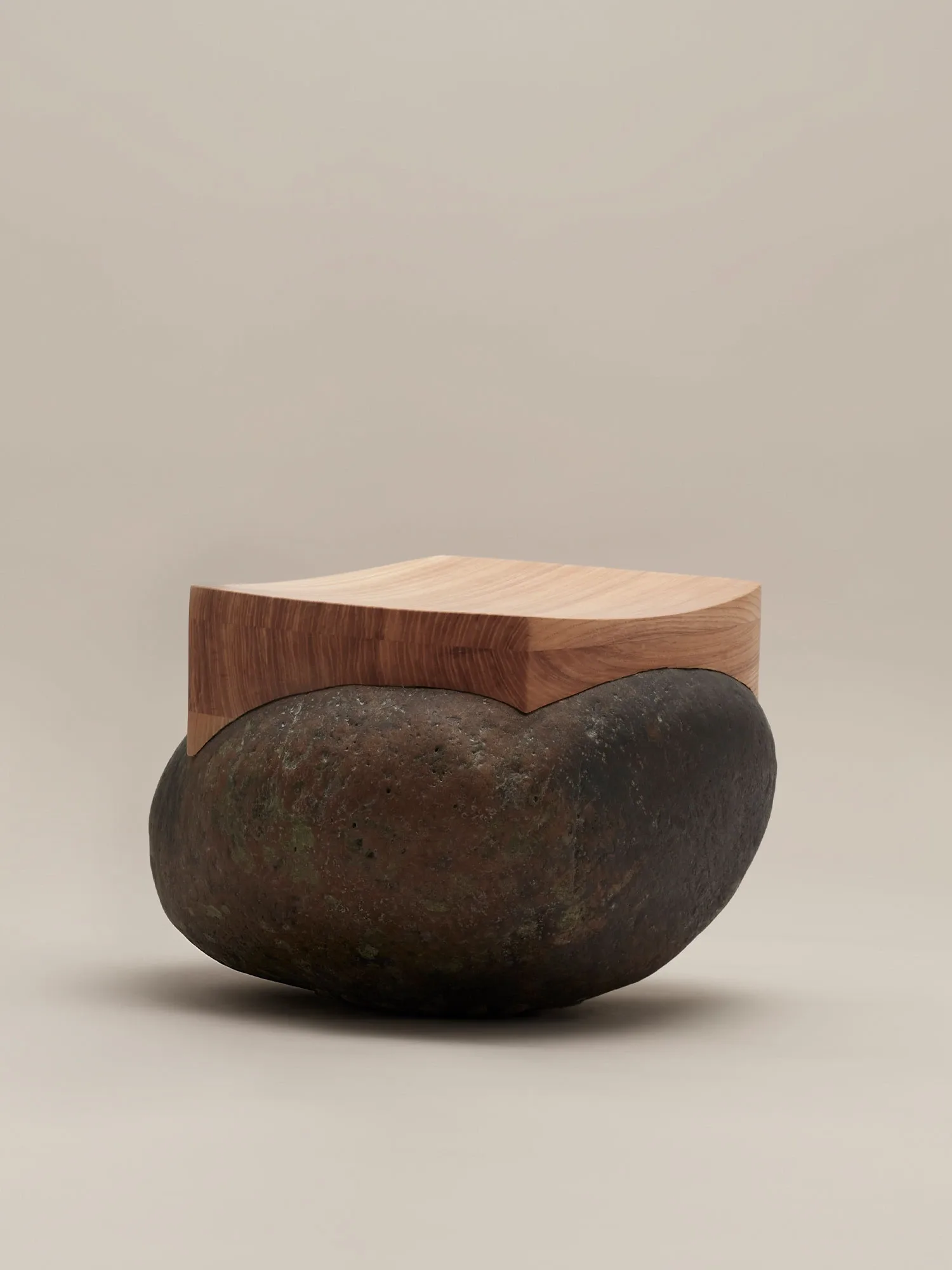
Thomas Yang's Rocking Rock Floor Stool, made of white oak and river stone. Photo courtesy of the studio.
Thomas Yang approaches design through a close relationship between memory and material, pairing personal references, from family homes in Taiwan and Northern Italy to everyday objects and mechanisms, with what he describes as “living materials” such as wood and stone, which carry their own histories. Trained in industrial design but working against its more outcome-driven logic, he focuses on slowing the process down, using material intention and traditional techniques to shape objects that reflect how they are made. His work considers how objects gain meaning over time, not as immediate statements but through use, ritual, and longevity.
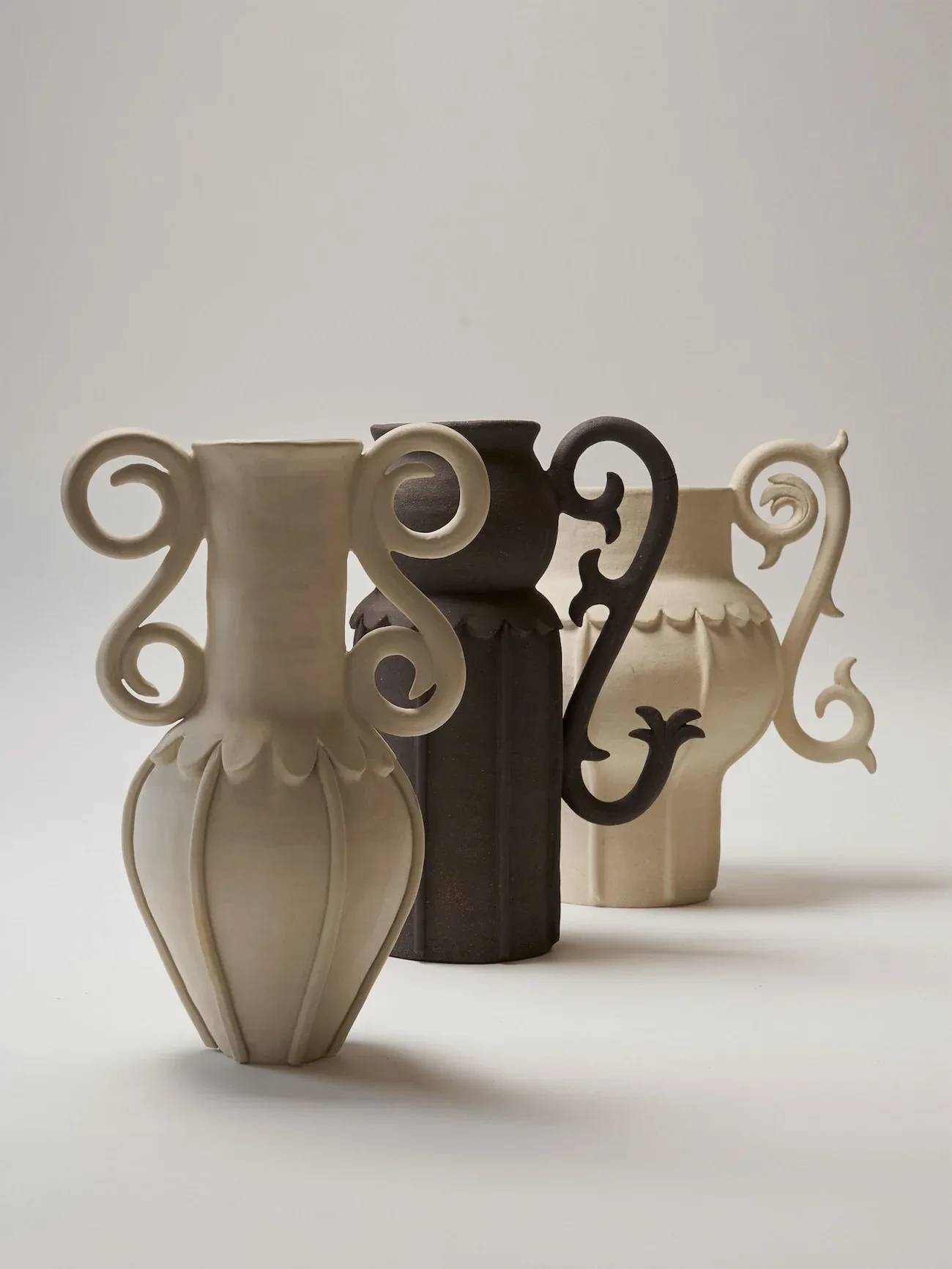
Sivim Ly's vessels, inspired by iron gates. Photo courtesy of the studio.
Sivim Ly is a Brooklyn-based ceramicist and designer whose work features whimsical, sinuous, and embellished forms. Drawing inspiration from Art Nouveau and the flowing lines of iron gates, her pieces reference decorative traditions of the past while remaining grounded in function.
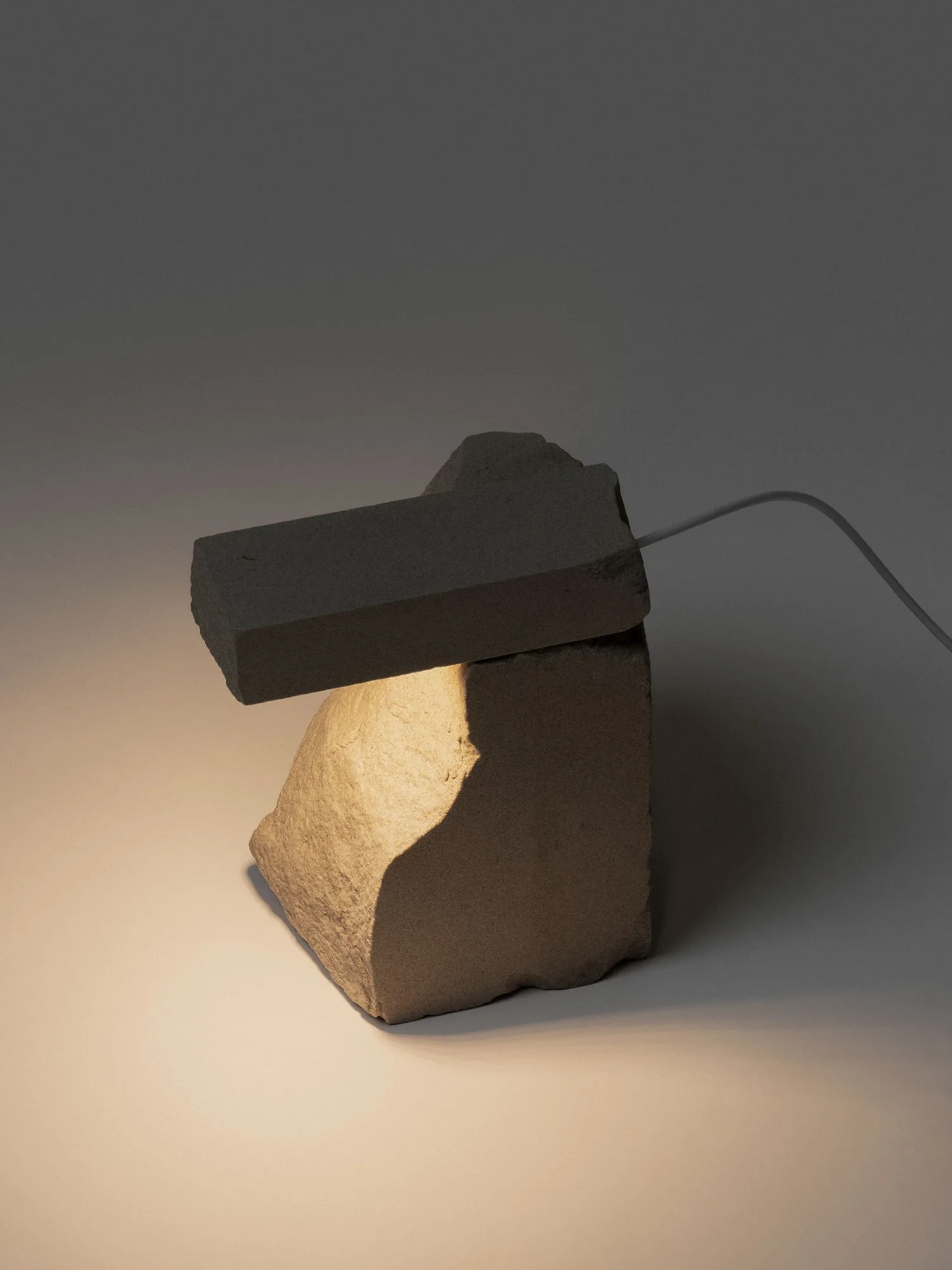
HB-AS’s Berea Sandstone Lamps. Photography courtesy of the studio.
HB-AS’s Berea Sandstone Lamps, an exclusive design for the minimalist platform Leibal, are made from quarry remnants of prehistoric sandstone, turning discarded material into sculptural lighting. Formed over roughly 350 million years through river deposits carrying clay, iron, aluminum, magnesium, and other minerals, the stone bears natural variations in color, markings, and pattern that make each piece distinct. By working with offcuts left behind by industrial quarrying, the designers transform a material typically considered unusable into a raw, minimal object that foregrounds both geological history and process.
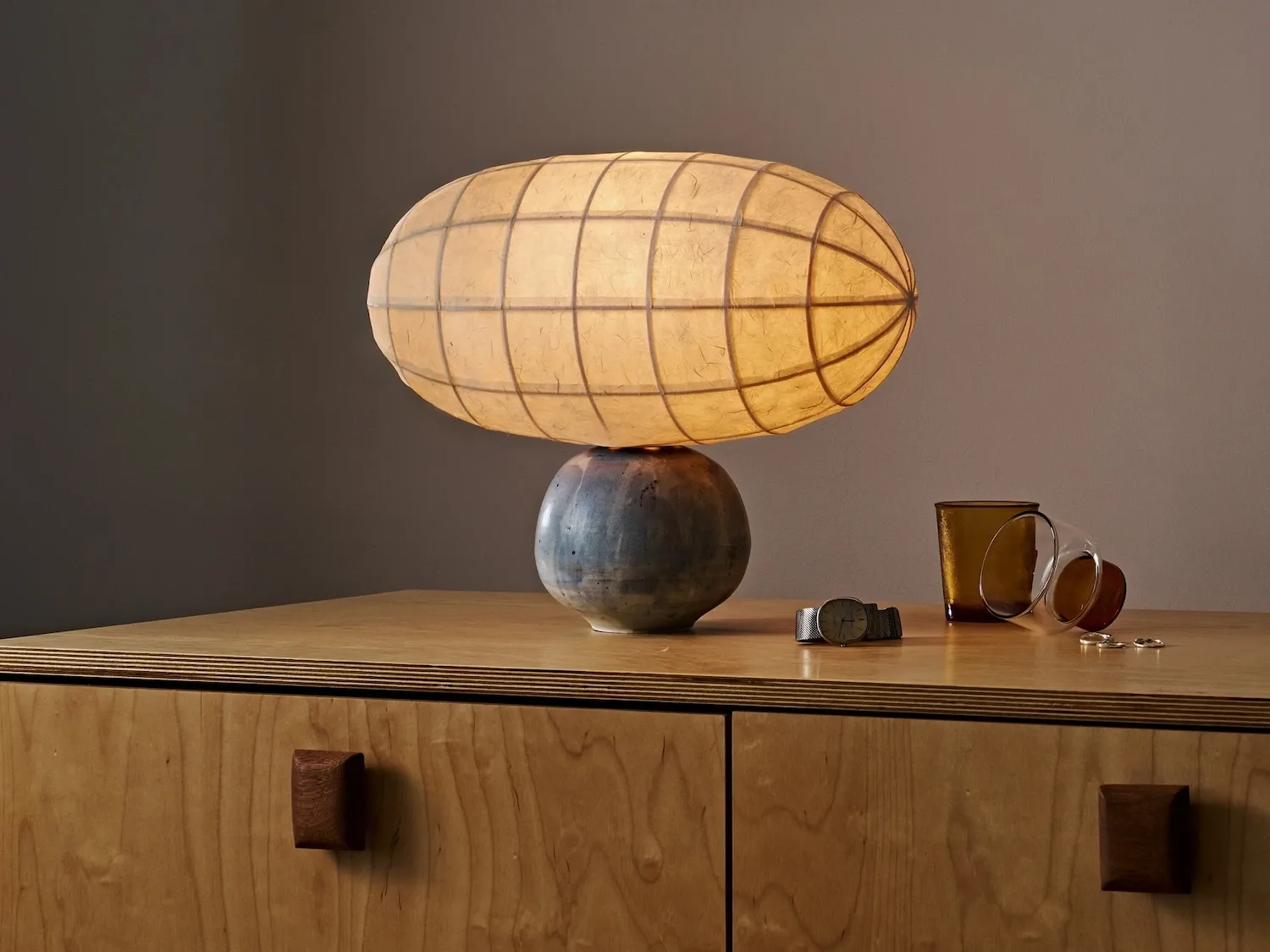
Steffany Trần is the founder of Vy Voi, a New York City-based design studio that brings together Vietnam’s art and design history with contemporary living. Trained as both an industrial designer and artist, Trần works between New York and Sài Gòn, creating furniture, lighting, and objects in ceramic, paper, and wood. Each piece is made by hand using traditional Vietnamese techniques and shaped by observations of the natural world and daily life.
Vy Voi's San Light. Photography by Andrew Bui.
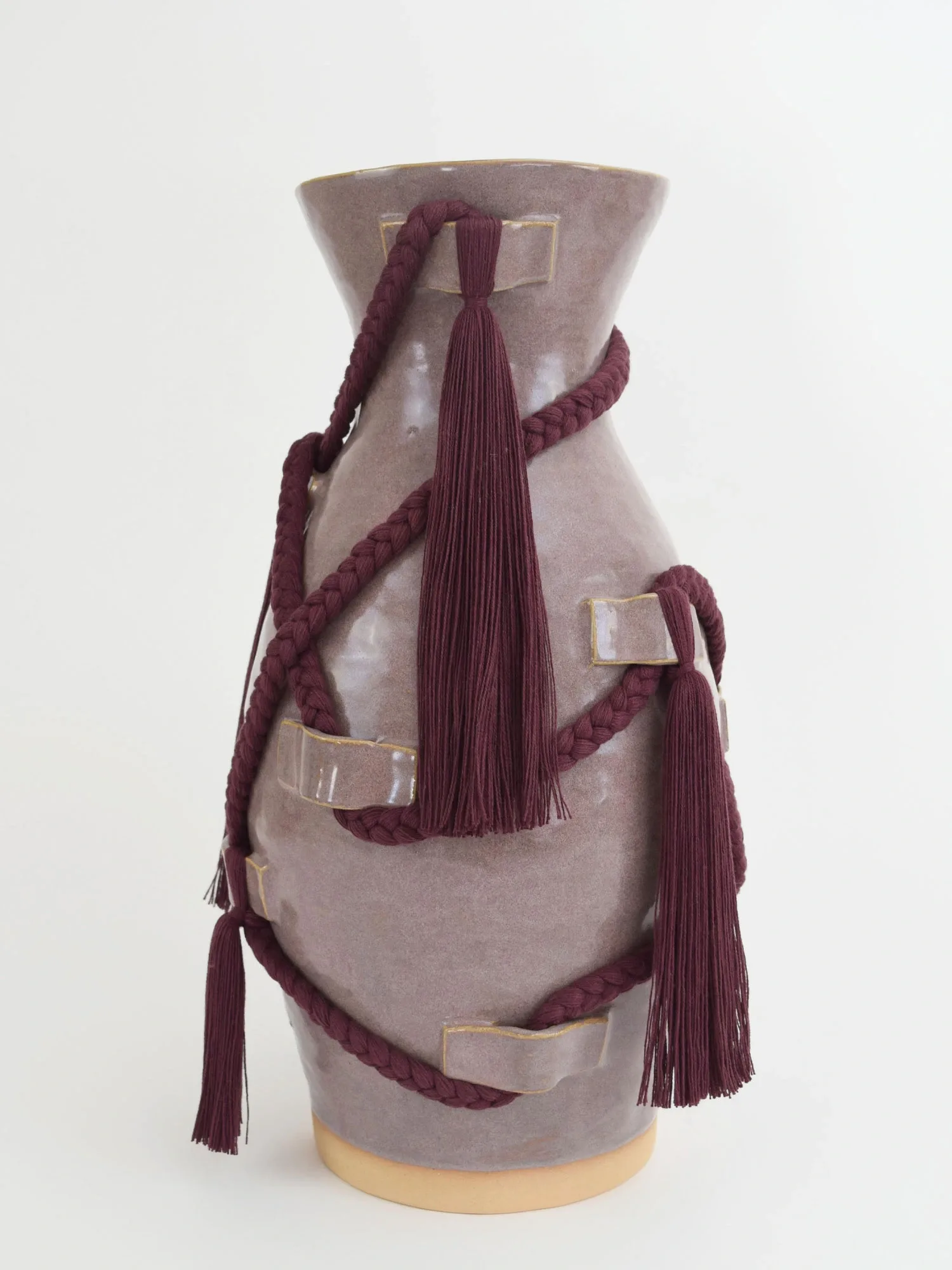
Karen Gayle Tinney's one of a kind vase. Photo courtesy of the artist.
Karen Gayle Tinney is an artist and designer whose work brings ceramic and fiber together in pieces shaped by the relationship between the two materials. In her practice, neither stands alone: ceramic establishes form and structure, while fiber extends, completes, or physically connects each composition. After studying product design at Parsons School of Design and working for several years as a home décor designer, Tinney launched her own practice in 2016. She now creates each piece by hand in her Vermont studio, where she works alongside her husband in the Okemo Valley, with some works taking months to complete.
Anna Dawson’s work is guided by sensory experience, drawing on references such as ocean air, morning light, and moments of urban discovery. Designed with emotion as a starting point, her pieces balance atmosphere and function. Here, handblown glass bases feature rounded forms and subtle translucency contrasted by wide, hovering shades and brass details.
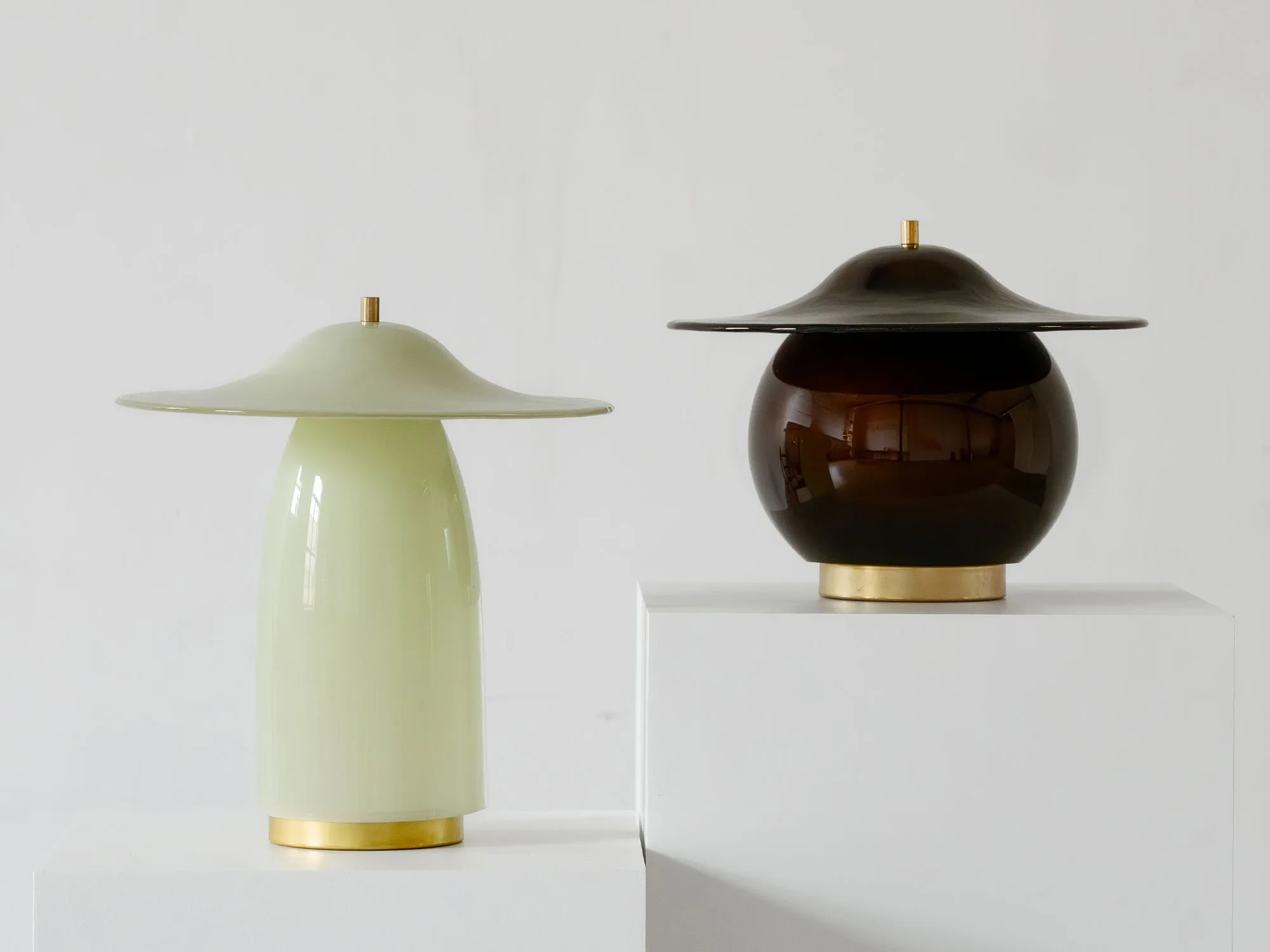
Anna Dawson Studio's handblown table lamp. Photo courtesy of the studio.
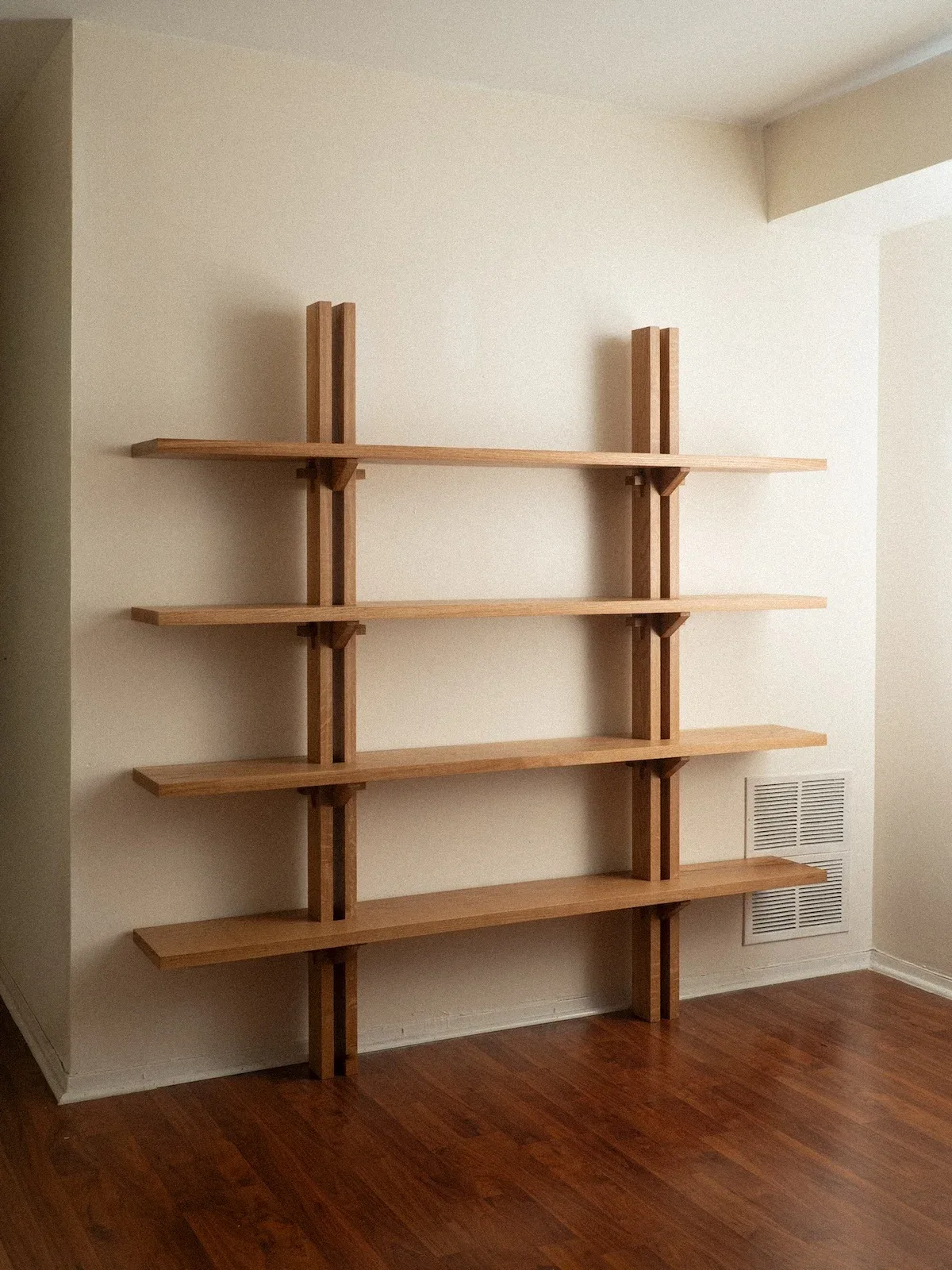
Shelving handmade by Robert Seishin Rurup. Photo courtesy of the studio.
Robert Seishin Rurup is the maker behind Mokko Seishin, a design and fabrication studio producing heirloom-quality furniture and objects using domestically and ethically sourced natural materials. Each piece is made by hand with an emphasis on longevity and a reduced environmental impact over its full lifecycle.
Drawing from both Japanese and Scandinavian design traditions, the work reflects a focus on simplicity, material integrity, and a close connection to nature. The name Mokko Seishin, meaning “spirit of woodworking” (木工精神), speaks to this philosophy and the studio’s commitment to its practice.
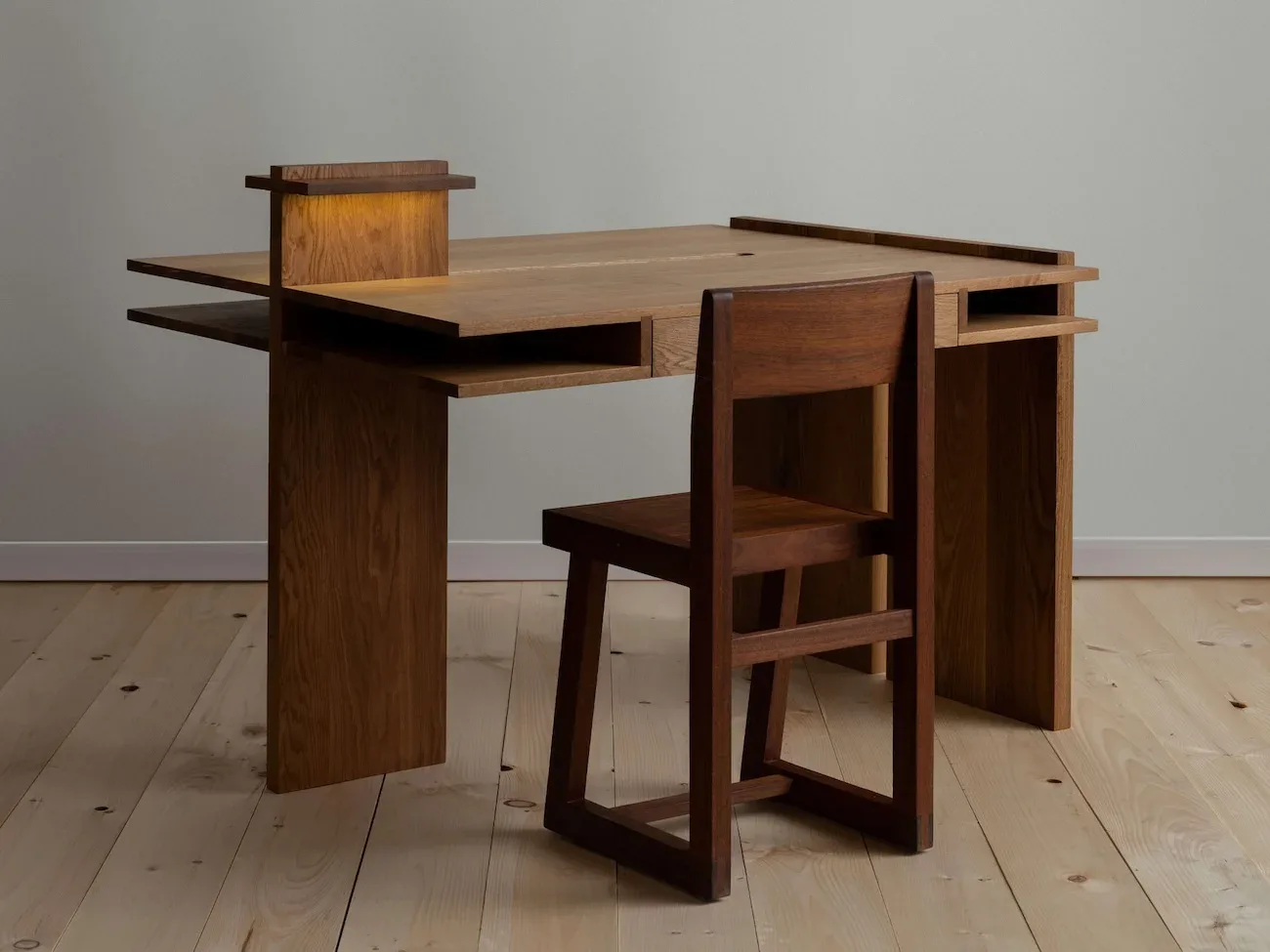
Photo courtesy of the studio.
Austen / Morris is a Washington, DC–based design and fabrication studio producing hardwood furniture finished with natural oils. Each piece is designed and made by hand, combining traditional craftsmanship with contemporary techniques. The No. 16 Desk references the work of Frank Lloyd Wright and features an integrated built-in lamp.
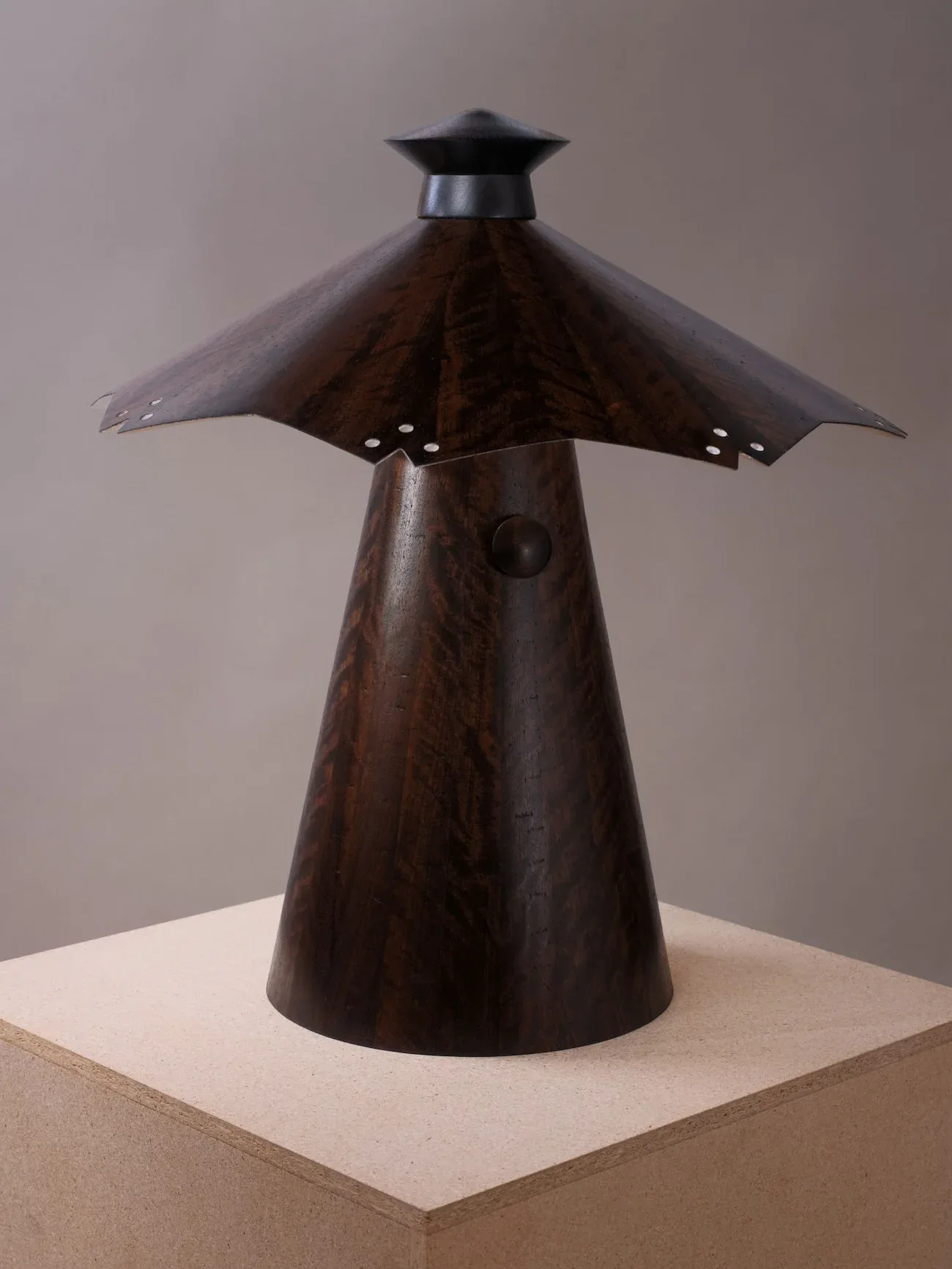
Aaron Pickering’s Frieze lamp. Photography by Luke Carquillat
Aaron Pickering’s practice is informed by experience across furniture, sculpture, and built-in work, as well as an interest in Shaker, Windsor, and Scandinavian design traditions. A cold-molding technique, derived from boatbuilding and encountered during his time working with Martin Puryear, became central to his approach, allowing him to achieve complex forms with minimal machinery in small-scale studio settings.


