
I arrived at Collect with my usual agenda: check in with the go-to galleries, discover new talent and meet the people behind the works. Design fairs are my playground for serious work. The difference this time? I jumped onto the tube to Charing Cross instead of flying to Paris or Milan.
A bit of context. Collect 2026, now in its 22nd edition and presented by the Crafts Council at Somerset House, positions itself as the leading international art fair for contemporary, museum-quality craft and design.
At Collect I witnessed plenty of beauty and materiality. The conversations with artists and gallerists mattered. Most importantly, the range of global craft disciplines and styles felt directly applicable. From Japanese lacquer traditions and Korean design influences to experimental material practices from Poland and Britain, the fair felt like a reflection of global craft culture today. This signals why London continues to matter as an international design hub for collectors and professionals. It also reflects the city itself: layered, complex and culturally interconnected.
Design world, take note. Welcoming and supporting emerging talent in front of a high-calibre, diverse audience is how institutions maintain their edge. In challenging times like these, every design event should meaningfully commit space to new voices. Emerging talent is the future, after all.
This is exactly what Collect Open set out to do. Alongside the gallery presentations and established masters, the section reflects Collect’s broader commitment to platforming artists who push the boundaries of traditional craft techniques. This year’s selection brought together 11 artists, offering a balanced mix of roughly 45 percent British makers and 55 percent international participants.
Collect Open 2026 is supported by Spinocchia Freund, the interiors and architectural practice founded and led by Brigitta Spinocchia Freund. What I admire about her work, beyond impeccable taste, is her ability to transform spaces into liveable galleries and her consistent support of artists and designers across disciplines. Her initiatives continue to inspire many across the design world, including myself.
Let’s get to the highlights. What stood out for me at Collect 2026? I approached the fair with an eye for spatial and tangible impact, seeking works that transition across contexts, whether in a collector’s home, a hotel lobby, or a private dining space. There are many more pieces from galleries and Collect Open participants that I may highlight in the future. For now, here is my first selection of design highlights:
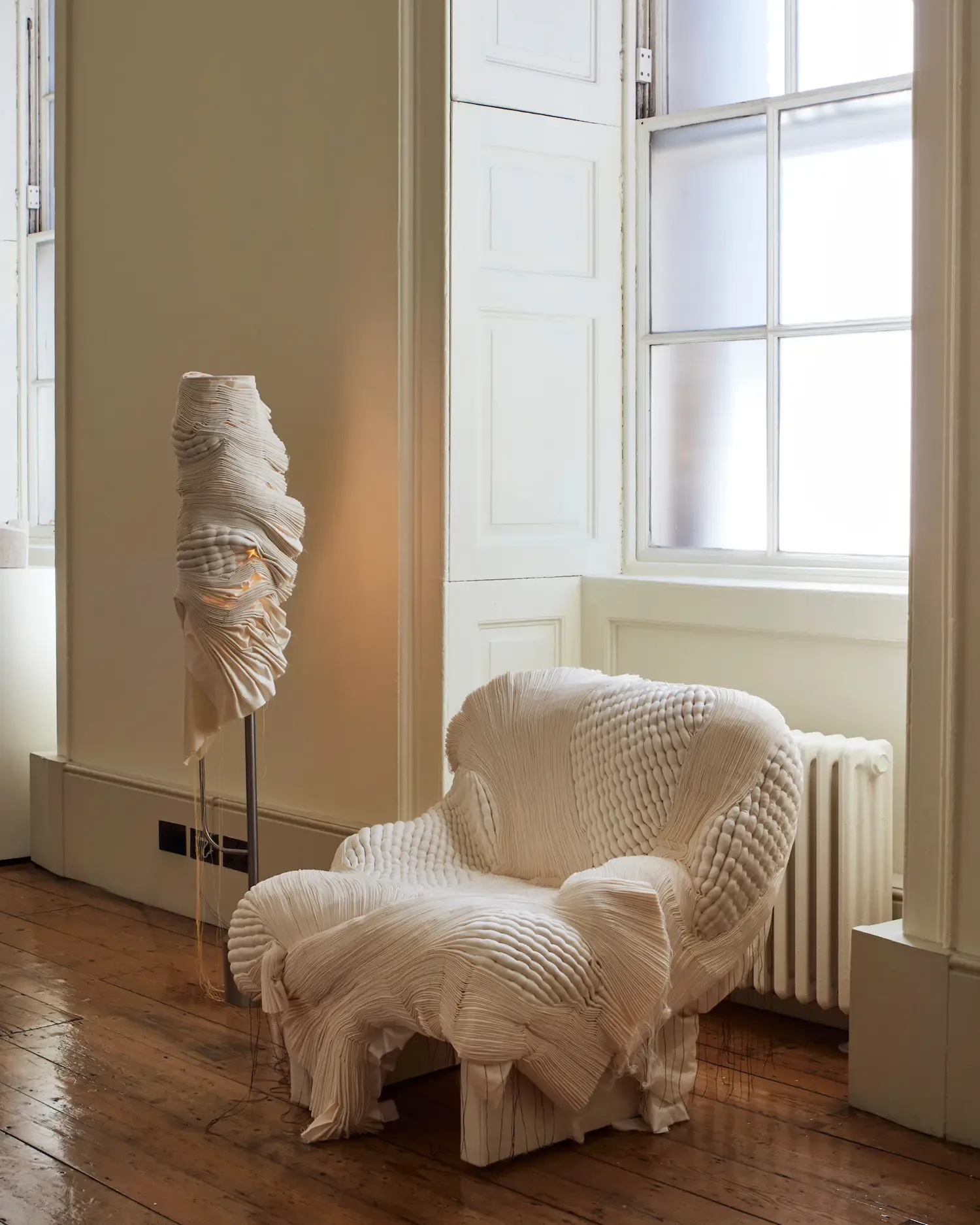
Photo courtesy of Max Radford Gallery by Ed Rolli
Max Radford Gallery offered a different perspective, presenting furniture made from discarded materials, including Tessa Silva’s Smock Lounge Chair and Smock Floor Lamp, crafted in deadstock cotton and wool. Radford demonstrates that sustainability can be embedded in design itself, rather than applied as an aesthetic or marketing layer.
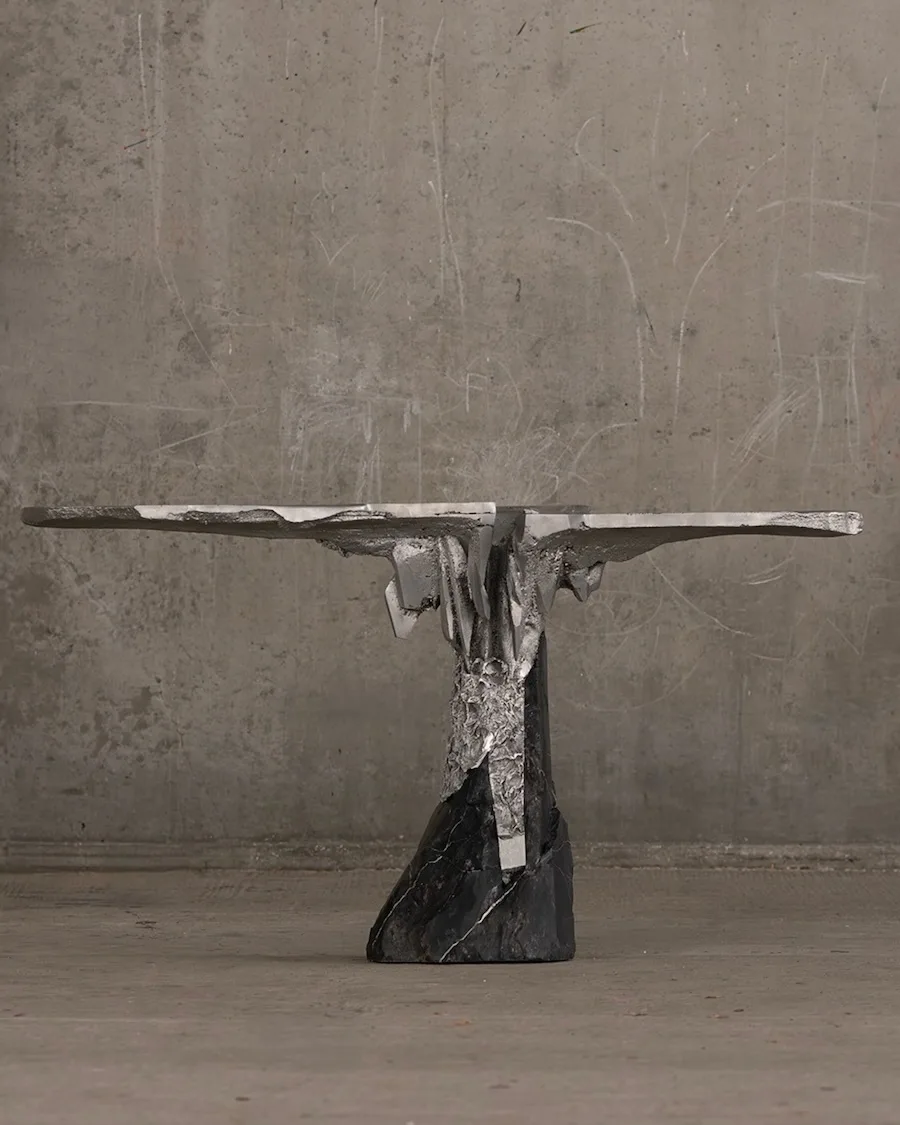
Photo courtesy of Formsophy by Damian Kołodziejczyk
I enjoyed discovering Formsophy and their avant-garde direction, Romantic Brutalism. Founded by Alicja Prussakowska and Jakub Kijowski, the duo produces sculptural objects guided by intuition and material exploration. For Collect 2026, Formsophy presented Fjor, a sophisticated console in cast aluminium and black marble.
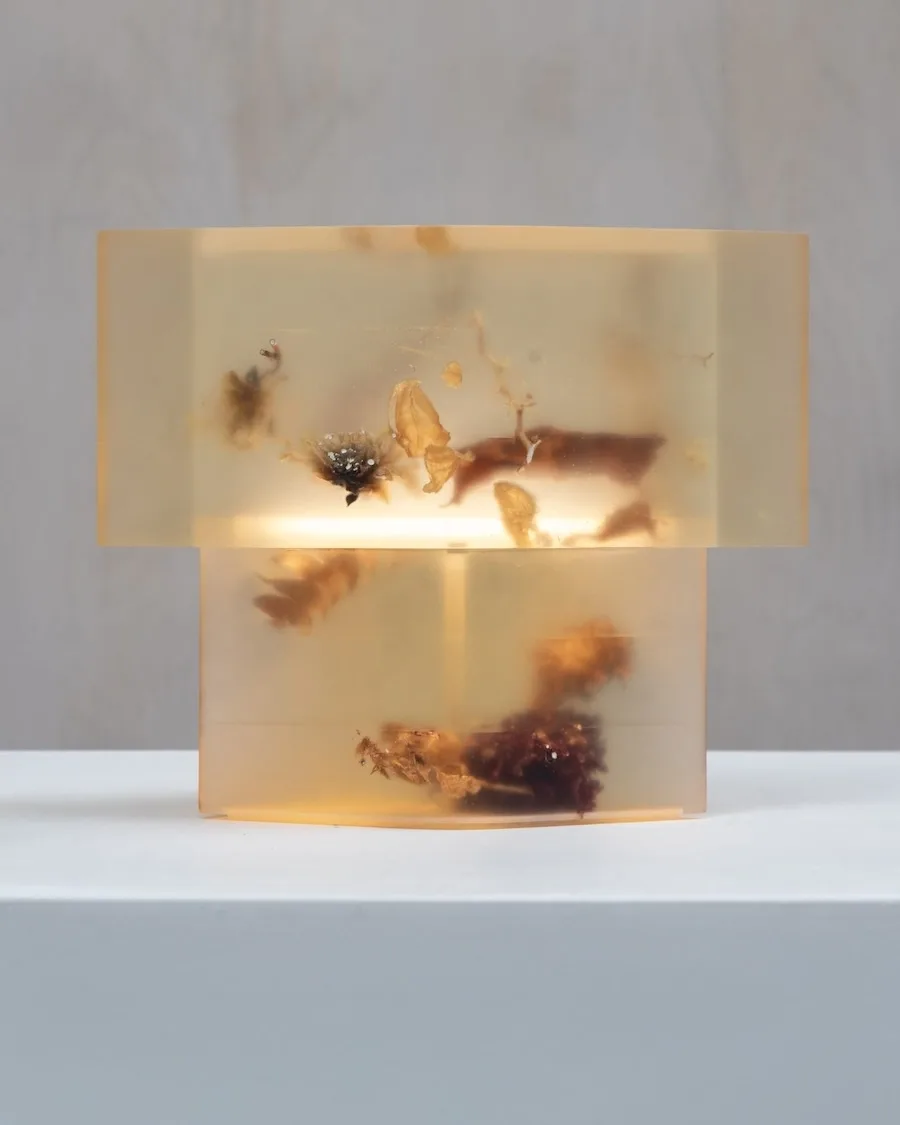
Photo courtesy of Marcin Rusak Studio
Flowers are forever with Marcin Rusak Studio. Rusak’s work explores themes of ephemerality, nature and beauty. The Flora Lamp II features a unique flower arrangement encased in a tinted, amber-like translucent form. Handcrafted from resin and waste flowers, Rusak preserves what would otherwise fade.
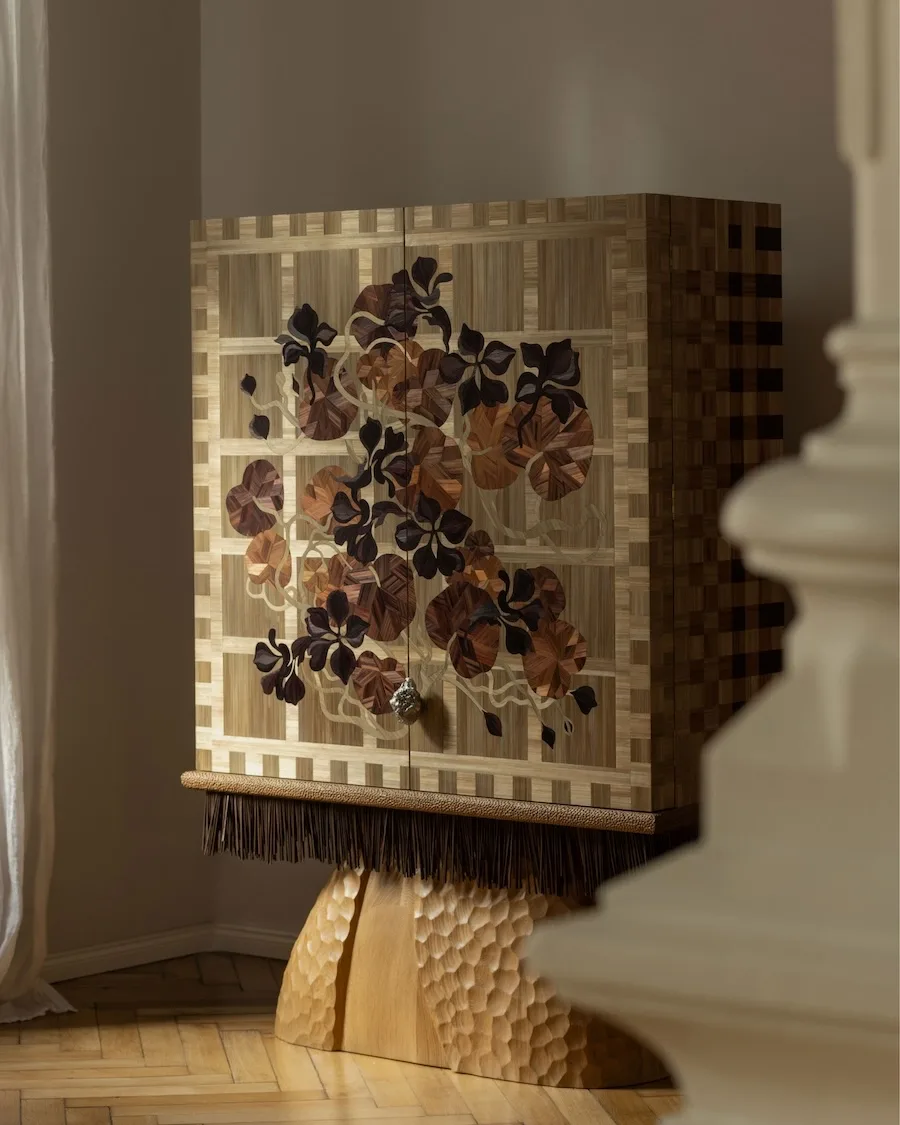
Photo courtesy of Zofia Sobolewska by Oni Studio
I first discovered Zofia Sobolewska Ursic’s work online and was thrilled to finally see the cabinet in person. Featuring La Nature est un Temple 2, crafted in carved oak and hand-cut straw marquetry, this cabinet is the epitome of collectible chic. The cabinet series is defined by a dense floral composition with botanical and geometric rhythms into a contemporary, functional form.
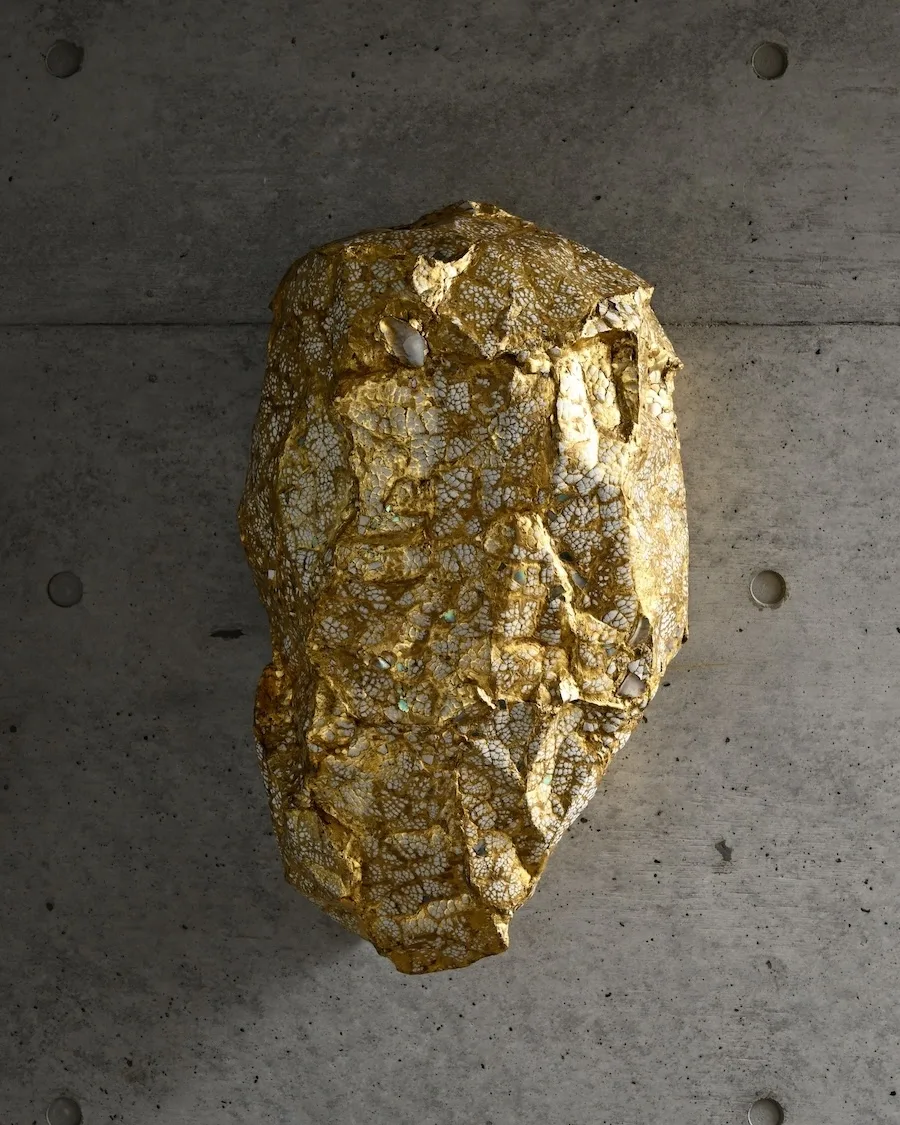
Photo courtesy of Wajoy by Akira Yuasa
WAJOY took me on a journey to Japan with their curatorial theme, The Ritual of Resilience. Among the works that stood out was A Piece of Life 10 by Yuki Nakamura, crafted in lacquer, paper, eggshell, turban shell, gold leaf and brass powder. Nakamura gathers fragments, often shells, fixing them one by one with lacquer to build structure through accumulation. A wonderful discovery of traditional craftsmanship and a theme that feels more relevant than ever.
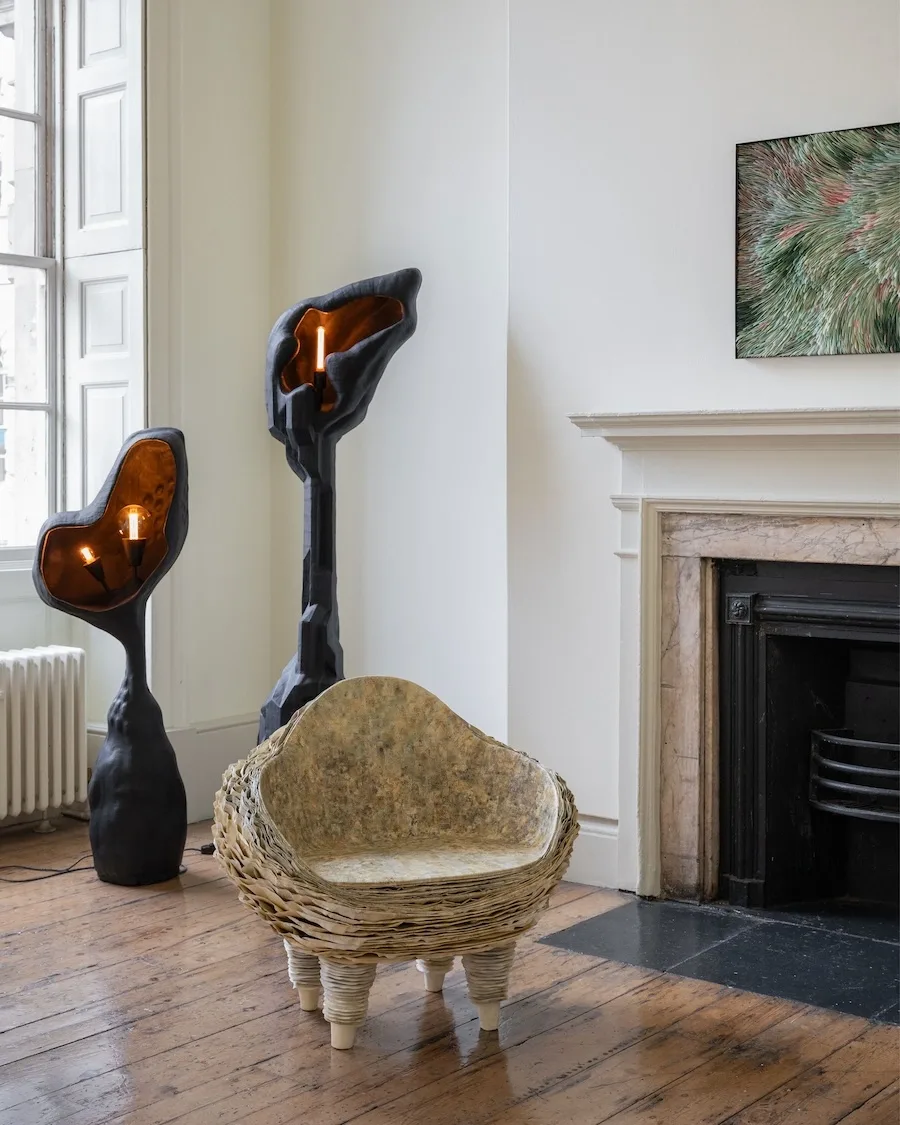
Photo courtesy of Mia Karlova Galerie by Studio Aest
My go-to design gallery, Mia Karlova Galerie. Karlova’s curatorial vision is bold, the kind of international positioning the Dutch design industry benefits from. The material vision was alive and well, featuring Vadim Kibardin’s renowned Black Nostalgia Lamp and Off White Miracle XXL Chair, both constructed from layers of paper and recycled cardboard. Kibardin’s practice has long been recognised for experimenting with materials and developing innovative construction techniques.
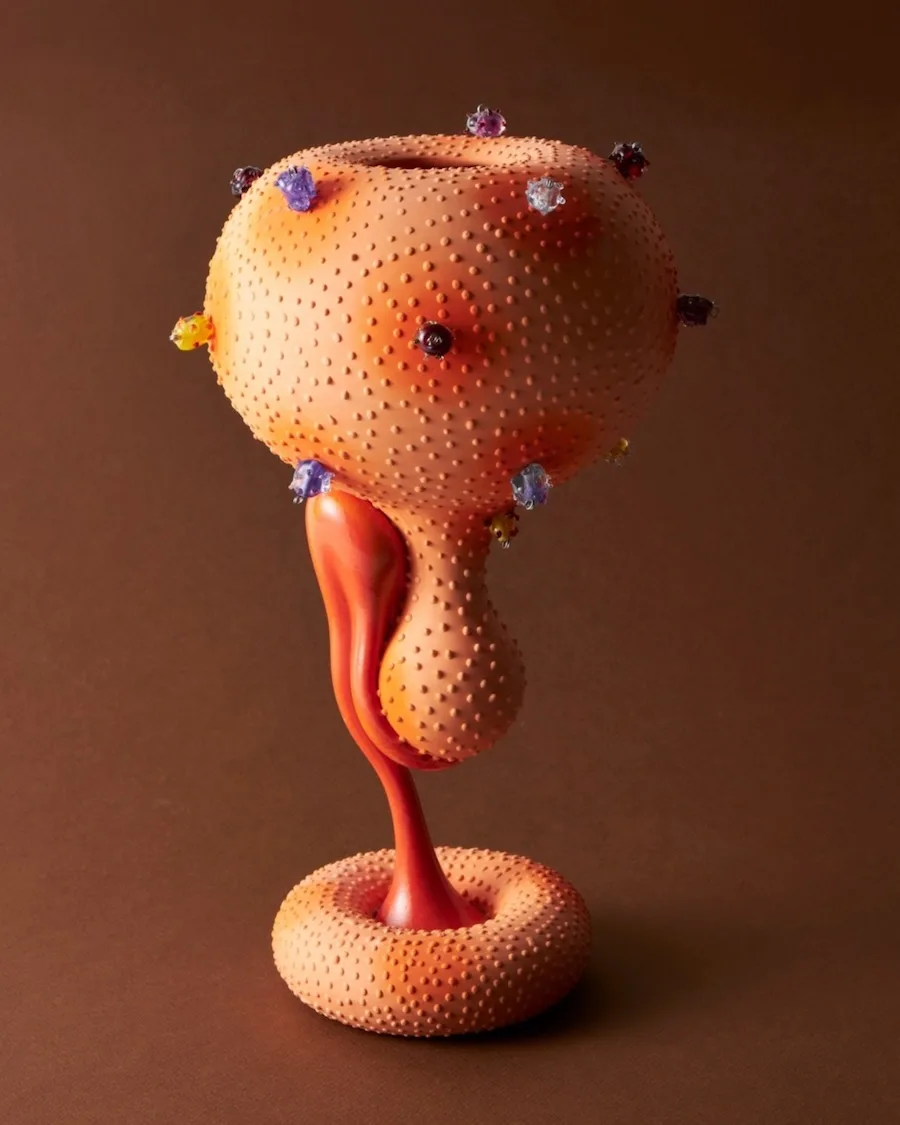
Photo courtesy of Jihyun Kim by Karin Taylor and Chris Rands
I discovered Jihyun Kim at Collect Open and was immediately drawn to her colourful display of intriguingly shaped vessels. Salty Fairy Danji 17, part of the Salty Fairy Ring series, is crafted in porcelain with high-fire colour stain, gloop glaze and borosilicate glass beads, drawing on the artist’s South Korean heritage. The work references Kim’s grandmother’s tradition of placing a small jar of salt by the home's entrance to ward off negative energy. Worth mentioning: the National Museum of Scotland acquired one of the vessels that same week.
What makes a moment like Collect 2026 interesting goes beyond the quality and variety of work. It is the context surrounding the fair. As digital platforms and AI increasingly dominate visual culture, the value of human-made work and physical presence only grows. Design fairs are evolving into ecosystems where professionals, institutions and collectors assess cultural authority in real time. We are entering a chapter where design and culture operates as a serious asset class, a focal point of differentiation in a market saturated with sameness.
With that in mind, I look forward to what Collect has in store next year.
Esther Kroes Weizman is the founder of design procurement and consultancy studio WEIZ&CO, and Contributing Market Editor at TDR Journal. Follow her for more updates.


