
Most architects, handed a beachfront site in Los Cabos, would have built toward the ocean. Miguel Angel Aragonés built around it. Not away from it, not despite it, but in a state of genuine conversation with the water, the desert, and the knife-edge horizon where the two meet. That decision, made in the earliest stages of what would become Hotel Mar Adentro and later Viceroy Los Cabos, is the reason this property still stops people cold. Years on, in a region where luxury resort design has grown louder and more insistent in its bids for attention, Viceroy Los Cabos remains the most radical sructure on the Baja Peninsula.
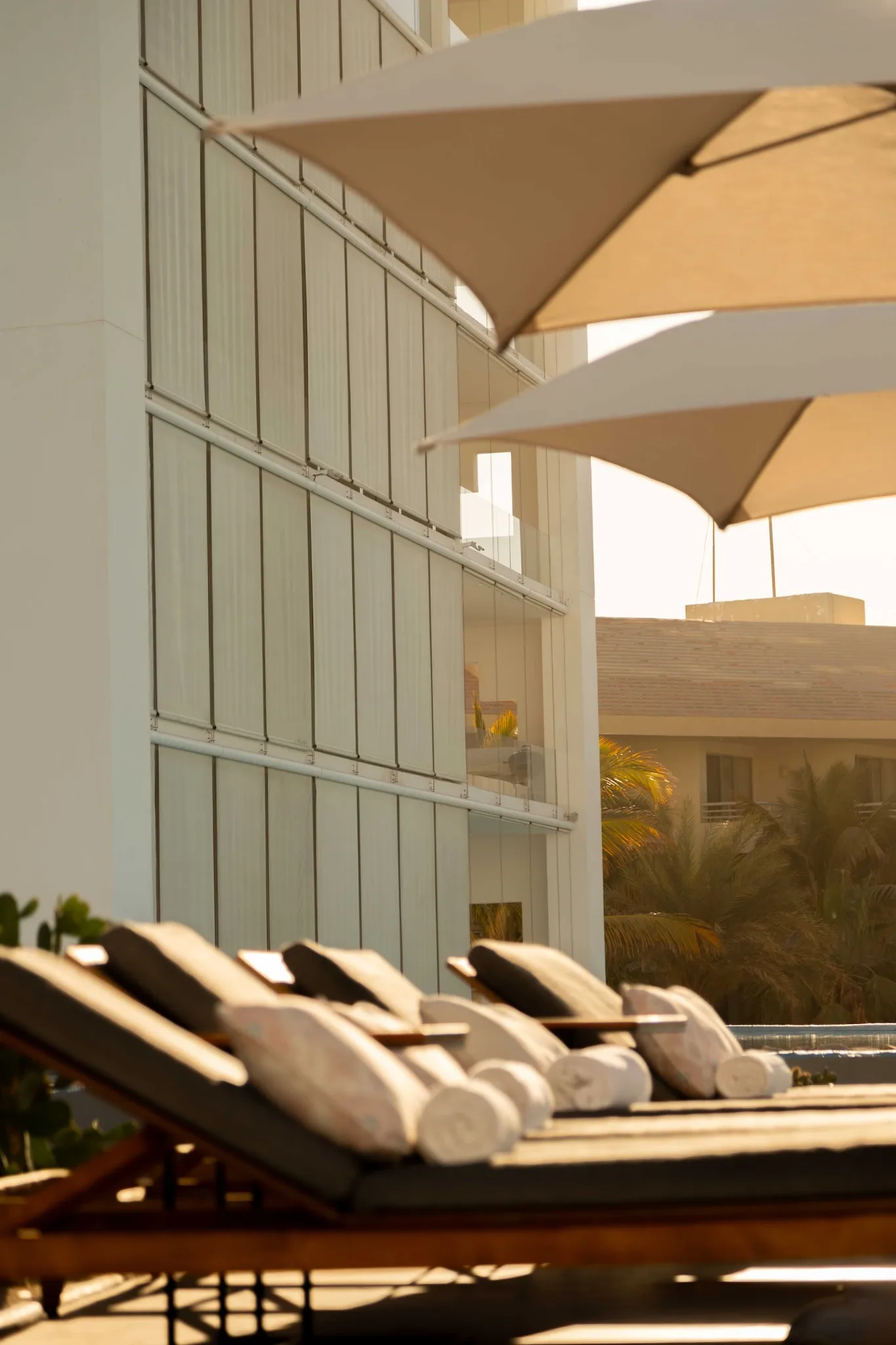
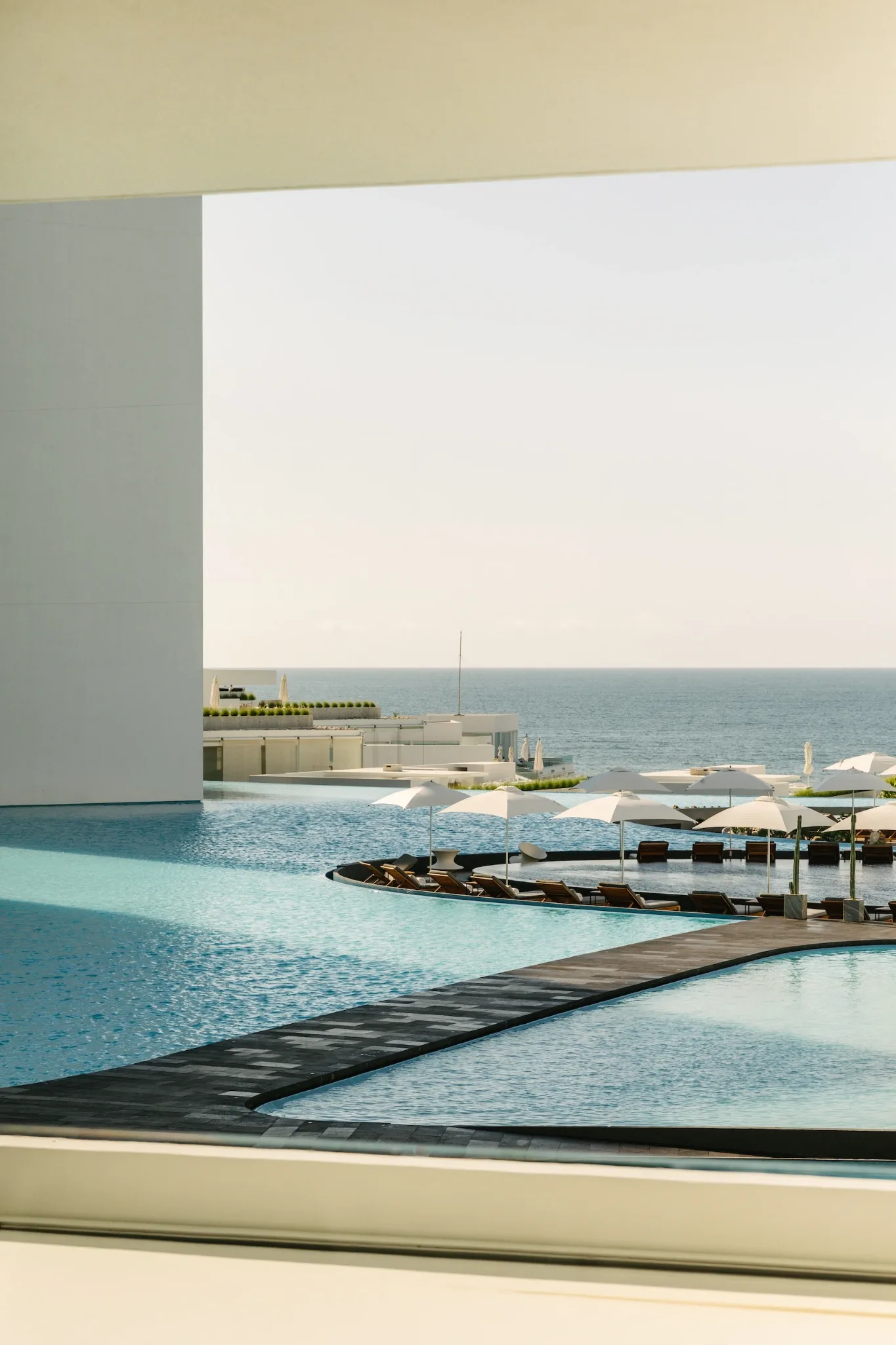
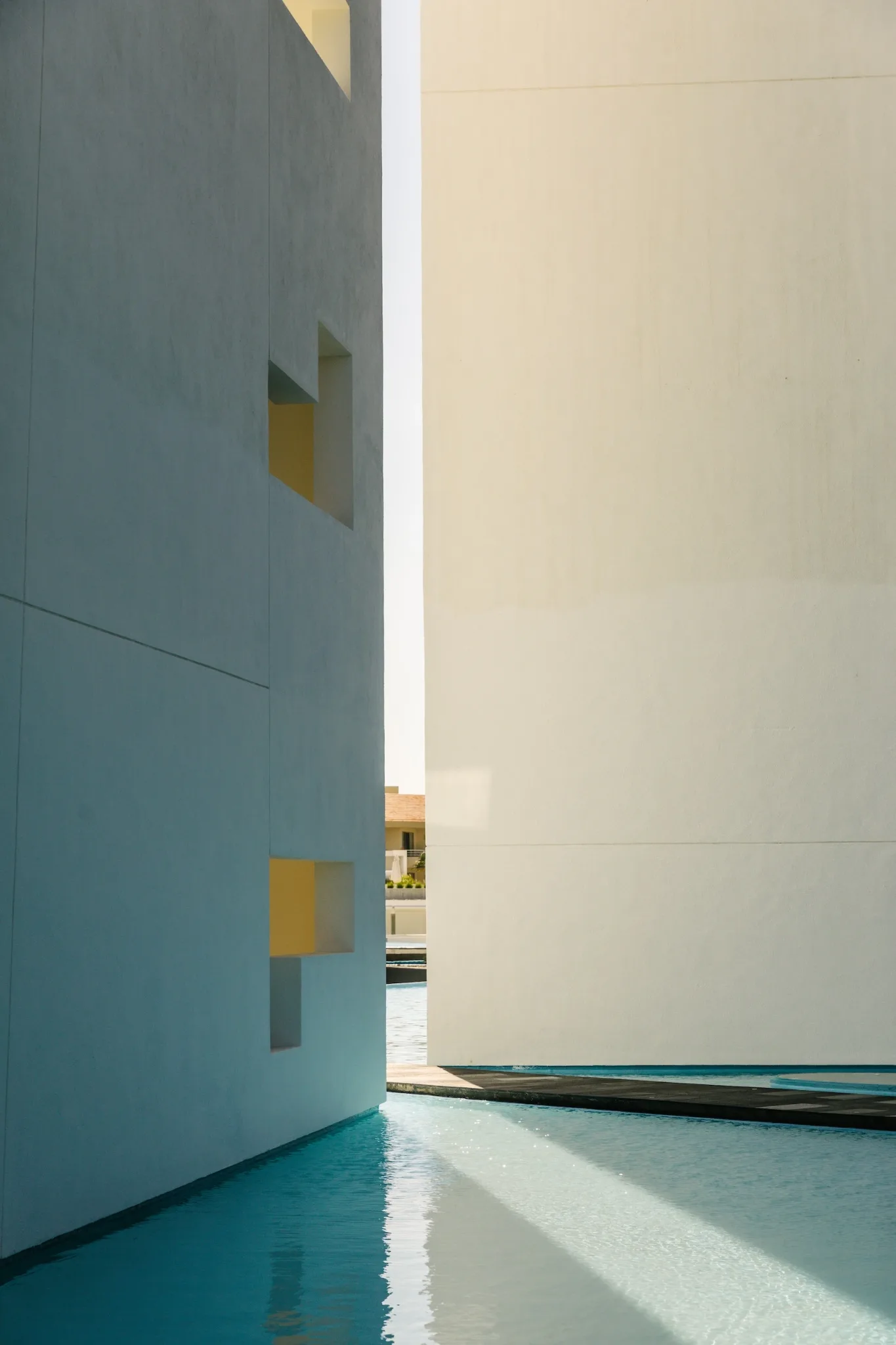
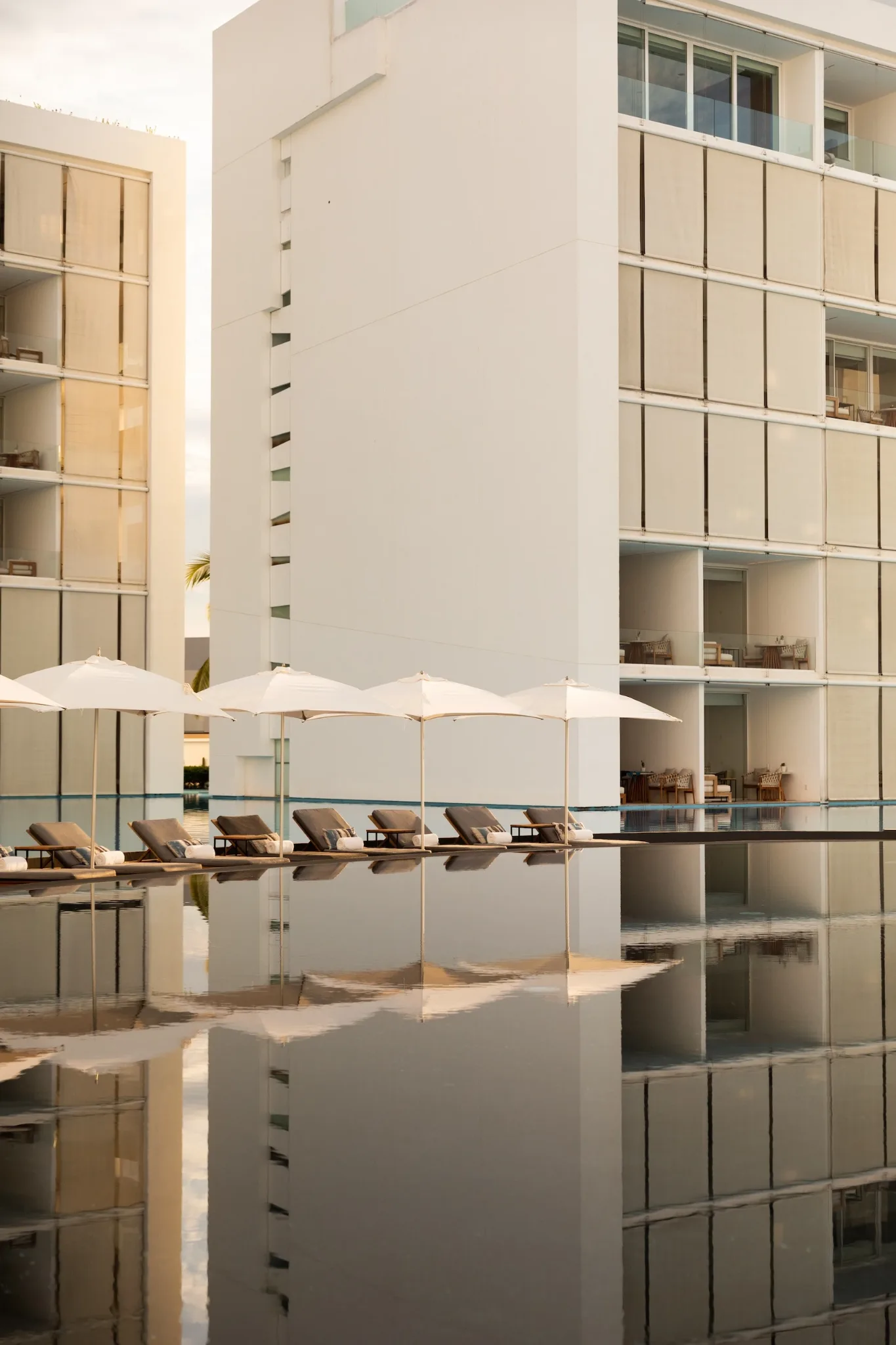
Aragonés has spoken about standing on the site for the first time and feeling the force of water under a scorching desert sun, two elemental conditions sharing a border with an almost impossible abruptness. The coastline dotted with all-inclusives on either side struck him as noise. What he wanted to build was silence made structural. Eight volumes of white concrete, what he calls his floating boxes, arranged above a network of reflecting pools connected directly to the Sea of Cortez. Elevated walkways threading between them. Light, shadow, and water doing the work that ornamentation does everywhere else.
The project won the Prix Versailles Special Prize from UNESCO and the International Union of Architects in 2017, not for spectacle but for exactly this: the discipline to build less and mean more. Inspired by the Brutalist principles of Le Corbusier and the poetic modernism of Oscar Niemeyer, and then filtered entirely through the specific demands of this landscape, the architecture that emerged belongs fully to neither tradition. It belongs to Baja.
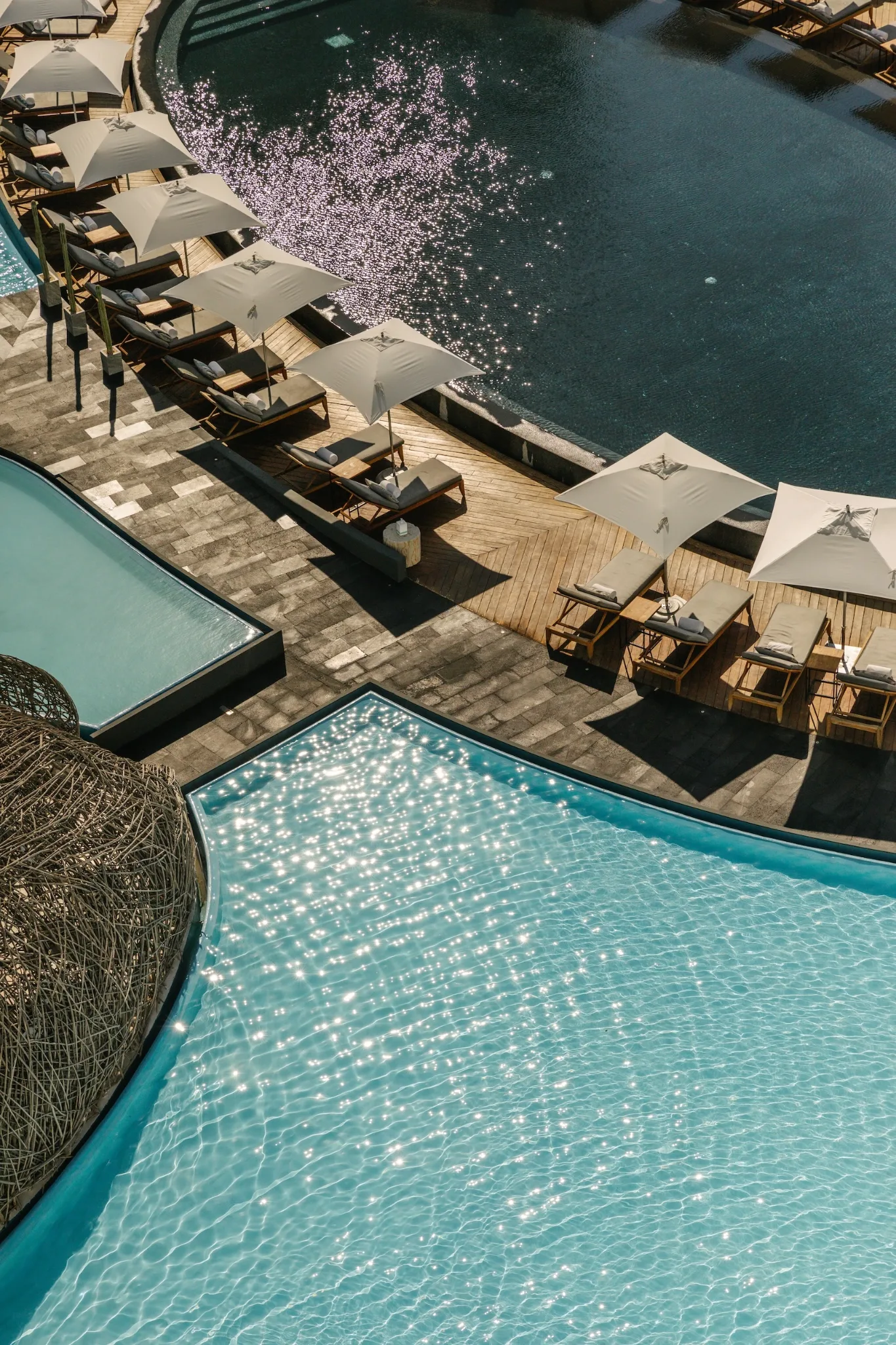
"This piece of land would have to be transformed into a box that contained its own sea, practically its own air."-- Miguel Angel Aragonés, Architect
Walking the property is a lesson in what architecture feels like when it is working at the level of the body rather than the eye. The walkways pace you. The shadows orient you. The water, always audible, always present, keeps pulling your attention outward just as the concrete mass of the towers pulls it inward. The towers themselves are not static objects. They shift from blush pink at sunrise to blinding white at noon to something close to rose gold in the hour before the desert dark, and no photograph has ever quite captured the sequence. You have to be there, and you have to be patient, and the building rewards both.
The rooms and suites carry this logic through without apology. Floor-to-ceiling glazing opens entirely onto the Sea of Cortez, the interiors stripped to material honesty and proportion, minimalism as philosophical position rather than decorative choice. Many are suspended above water, the boundary between inside and outside genuinely difficult to locate. Villas come with private plunge pools and rooftop terraces where the geometry of the resort dissolves into the wider geometry of the coastline, and where a morning spent watching the light move across still water is, without question, the most restorative thing the property offers.
"I believe that the greatest virtue of architecture is the generation of sensations through space on a series of planes found within the realm of sensitivity."-- Miguel Angel Aragonés, Architect
At the center of it all, literally and spiritually, is Nido. A nest-shaped timber lattice structure suspended between ocean and land, warm and curved where the architecture around it is angular and severe, it houses an elevated Japanese dining experience that rivals the finest destination restaurants anywhere. Omakase, creative sushi, robatayaki, the freshest local seafood from the Sea of Cortez prepared with the kind of technical precision that makes you slow down and pay attention. Nido is the rare room where the architecture and the food are equally serious, and it is worth visiting independently of any intention to stay. Its sibling, Nidito, spills out to the beach and pool with mezcal cocktails, fresh agua fresca, and the kind of easy coastal energy that makes an afternoon disappear.
The broader culinary program is, by any measure, exceptional for a resort of this scale. Cielomar on the rooftop delivers elevated Mexican cuisine above sweeping views of the sea, refined and inventive by night, sun-lit and relaxed by day. Casero channels the warmth and generosity of a Mexican family table for breakfast and lunch, rooted in local sourcing and tradition in a way that feels genuinely soulful rather than performed. Otro Bar is a sculptural social salon anchoring the resort's evenings with rare mezcals, inventive cocktails, curated music, and the kind of considered small plates that make you stay longer than you planned. The Wine Room offers something rarer still: an intimate tasting lounge where sommeliers guide you through Mexican and international selections with the unhurried intelligence of someone who actually wants you to understand what you are drinking.
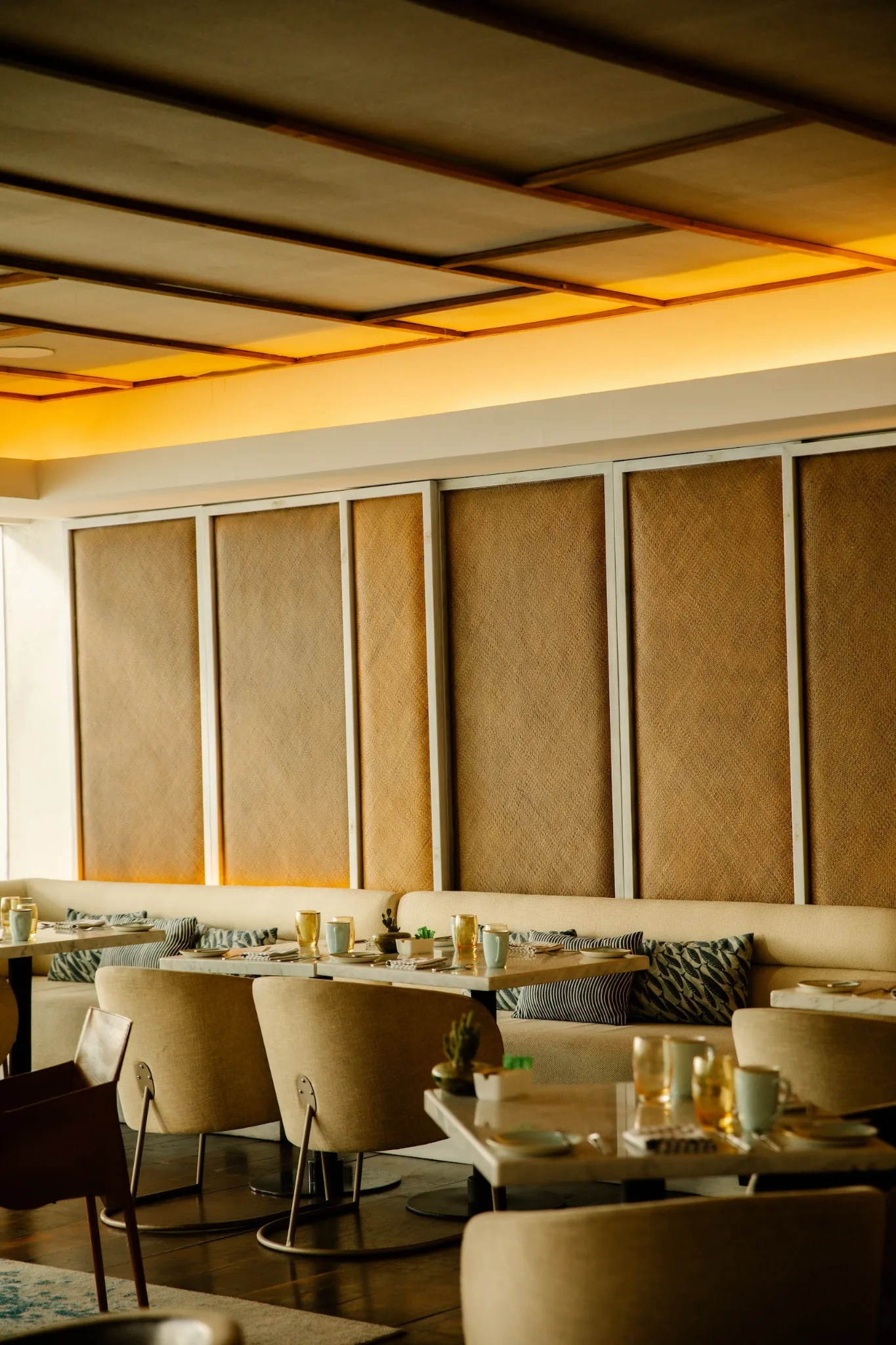
The spa extends the architectural philosophy into the body. Conceived around elemental contrast rather than indulgence, it draws on the forces that define Baja itself: cold plunge pools, hydrotherapy, ancestral healing traditions woven through contemporary wellness science, private treatment suites using native botanicals, minerals, and marine elements. Sunrise yoga on the beach, meditation, and a state-of-the-art fitness center complete an offering that treats wellbeing as integral to the experience rather than ancillary to it. Beyond the resort, the Sea of Cortez provides its own programming: seasonal whale watching, snorkeling, private boat journeys, desert explorations, and curated encounters with local artisans and communities that connect guests to the living culture of Baja California Sur. Back on property, a rotating calendar of art installations, music performances, and culinary collaborations keeps the resort in active conversation with the wider world, positioning it less as an escape from life and more as a particularly vivid version of it.
What Aragonés built here, and what Viceroy has continued to honor, is the proposition that the most generous thing a building can do is place people in unmediated contact with something larger than themselves. On this coast, that something is the light, the water, and the silence of a desert that runs all the way to the sea. The architecture does not compete with any of it. It holds it, frames it, and steps back. That kind of restraint is vanishingly rare. It is also, as anyone who has spent real time here will tell you, the most luxurious thing imaginable.
Viceroy Los Cabos website
Photography courtesy of the property.


