
Sushi was fast food before it became luxury. In the 1820s a Tokyo vendor named Hanaya Yohei began pressing seasoned rice under a slice of cured fish and selling it from a portable stall, collapsing a preservation process that had taken months into something a laborer could eat standing up. The yatai, a wheeled cart with a plank counter and a cloth curtain, was the delivery mechanism, and by the 1850s these carts crowded the banks of the Sumida. Sendo builds its second location on that memory, and the premise carries real consequences for how the room is assembled and how the menu is priced.
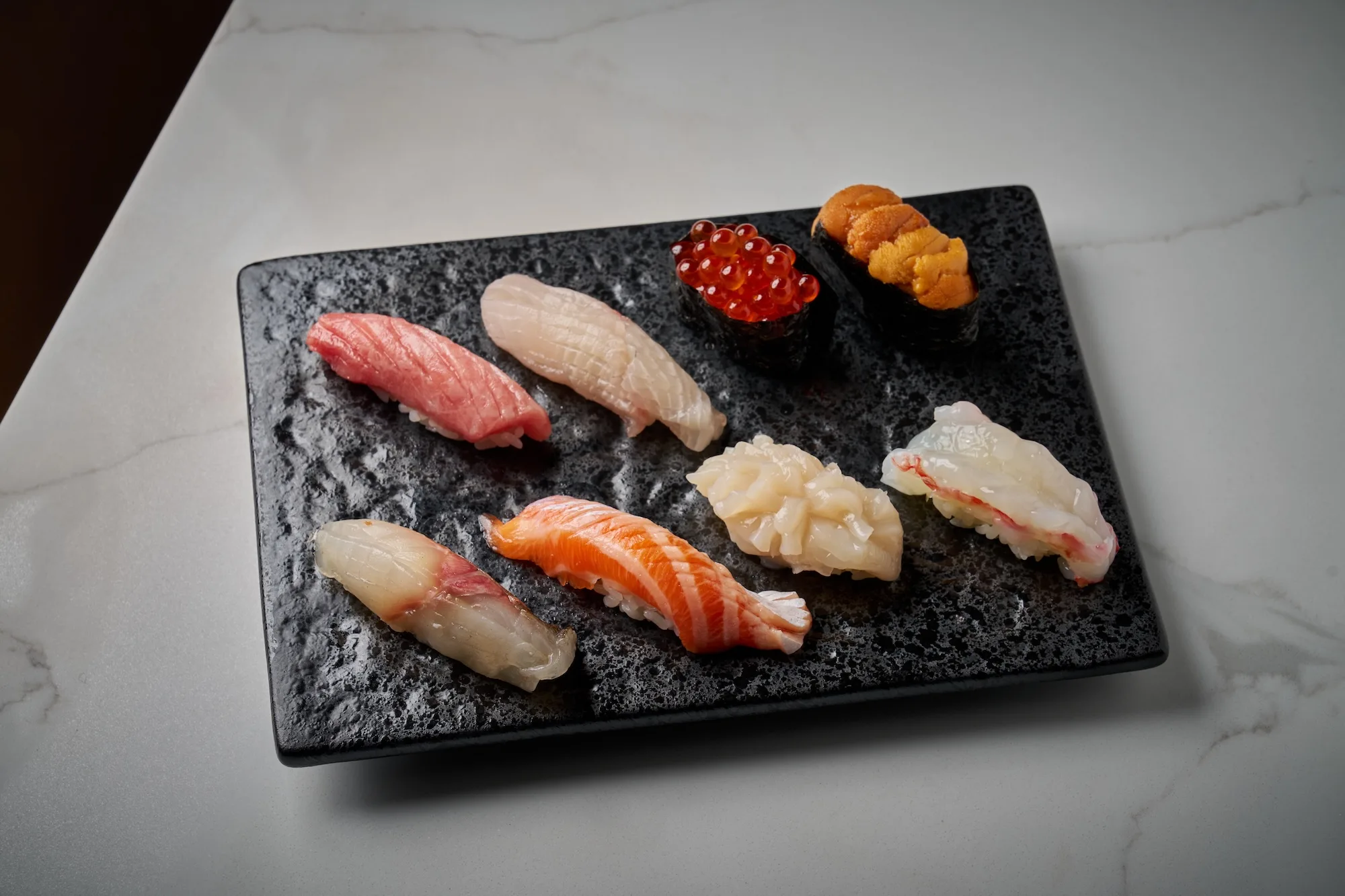
The sushi counter is a yatai that stopped moving. Postwar sanitation ordinances pushed Tokyo's street vendors indoors during the late 1940s, and the plank of the cart became a fixed bar with the chef working from the far side. That geometry survives everywhere sushi is served today, though most contemporary rooms have forgotten its origin. Sendo's counter at 43 West 8th Street is polished grey marble, which is a departure worth sitting with. Traditional Edo counters are unfinished hinoki, a soft cypress sanded down after service and eventually replaced, porous enough to absorb water and odor and prized for exactly that vulnerability. Marble refuses all of it. The surface is cold, nonporous, and permanent, and it imports the vocabulary of European fine dining into a room otherwise arguing for informality.
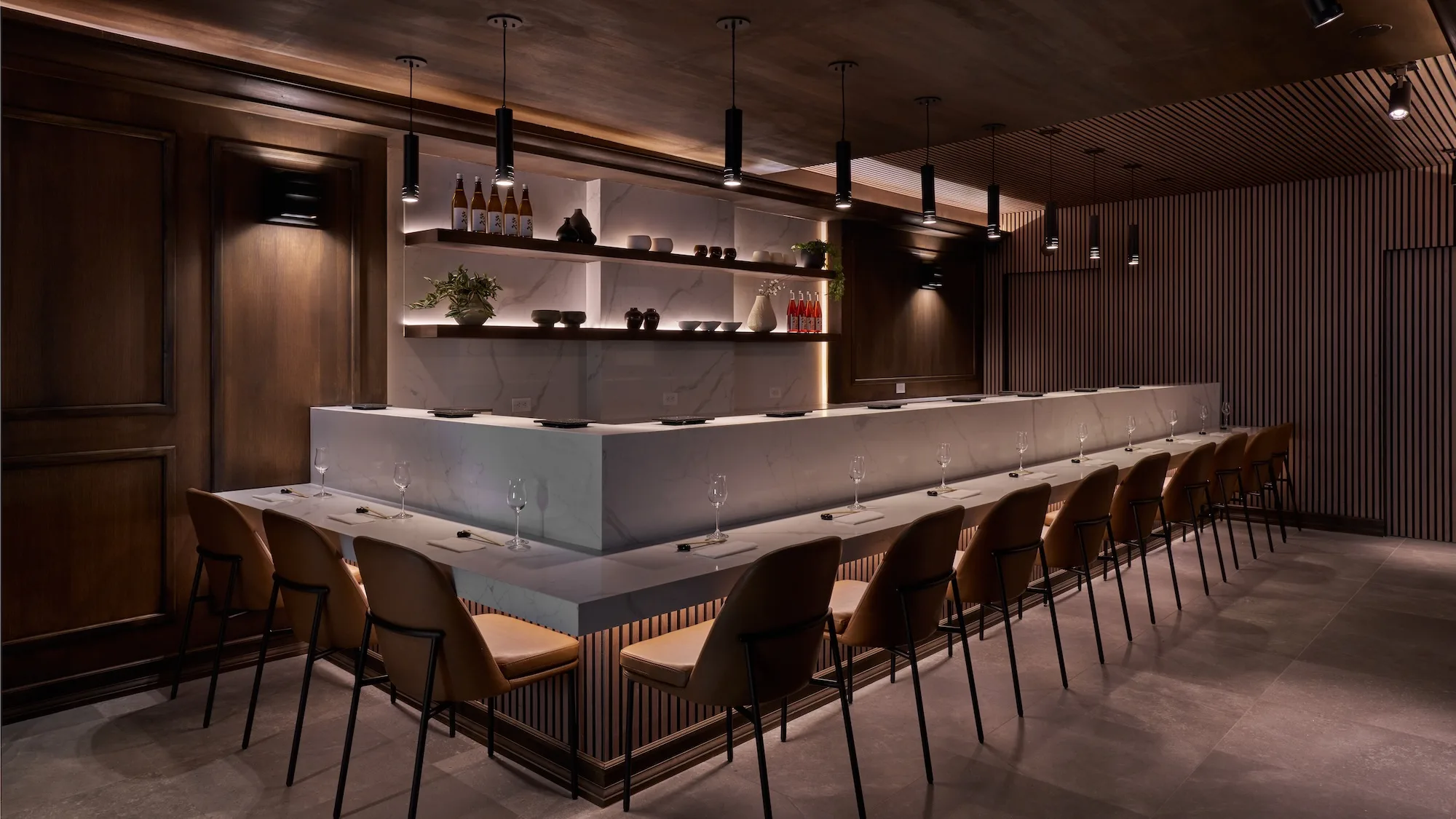
Cherry and walnut carry the millwork, both warm and reddish under low light, both American cabinet woods standing in for the hinoki, sugi, and zelkova that define Japanese interior carpentry. The substitution amounts to a translation. Wallpaper patterned after Edo-period motifs completes the envelope, and the likely reference is karakami, the woodblock-printed paper produced in Kyoto and Edo for sliding fusuma panels, frequently dusted with mica so the pattern shifts as a person moves past it. Applied flat to a Village storefront it becomes wallcovering, though the underlying logic of small-scale repeating ornament read at close range still functions in a narrow room.
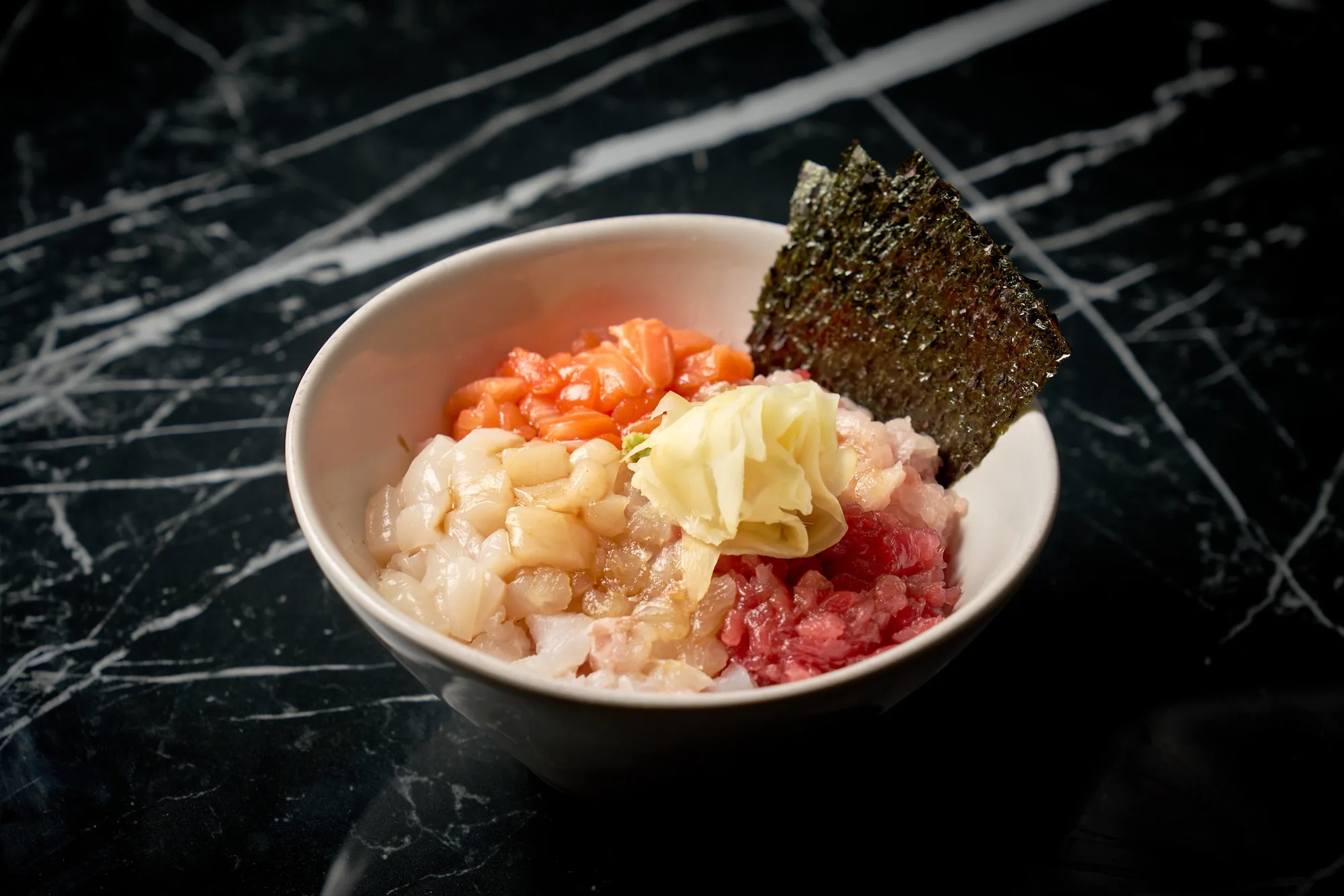
Pricing follows the same historical argument. Nigiri from three dollars, omakase sets from thirty four, a menu built on handrolls and kaisendon rather than a long procession of courses. The counter format does the economic work by removing runners, plating, and table turns from the equation, which is precisely how the yatai operated. Rice arrives from Hokkaido and fish from Toyosu, and the aged vinegars the kitchen leans on connect to akazu, the red vinegar brewed from sake lees that Edo chefs used because refined rice vinegar was prohibitively expensive. Akazu tints the rice amber and contributes a low fermented sweetness, and its revival among younger Tokyo shops has been one of the more interesting technical currents of the past decade.
Sendo
43 W 8th St 2nd Floor,
New York, NY 10011
Website


