
Developed and constructed by Campagna Ricart & Asociados (CRA), the award-winning Dominican firm led by Dino Campagna Ricart and Alexandra Guzmán, and designed by Alejandro Acebal of Acebal Canney Arquitectos & Asociados, a firm rooted in Cap Cana, Santo Domingo, and Madrid, the project is the product of six years of rigorous collaboration.
The St. Regis Cap Cana Resort & Residence project began, as the best ones often do, with an extraordinary challenge by developer Dino Campagna Ricart. “You have an irreplaceable piece of land. Do something that gives me goosebumps,” he told the architect. It is the sort of brief that separates architects who design buildings from those who design experiences. Acebal belongs firmly to the latter camp.
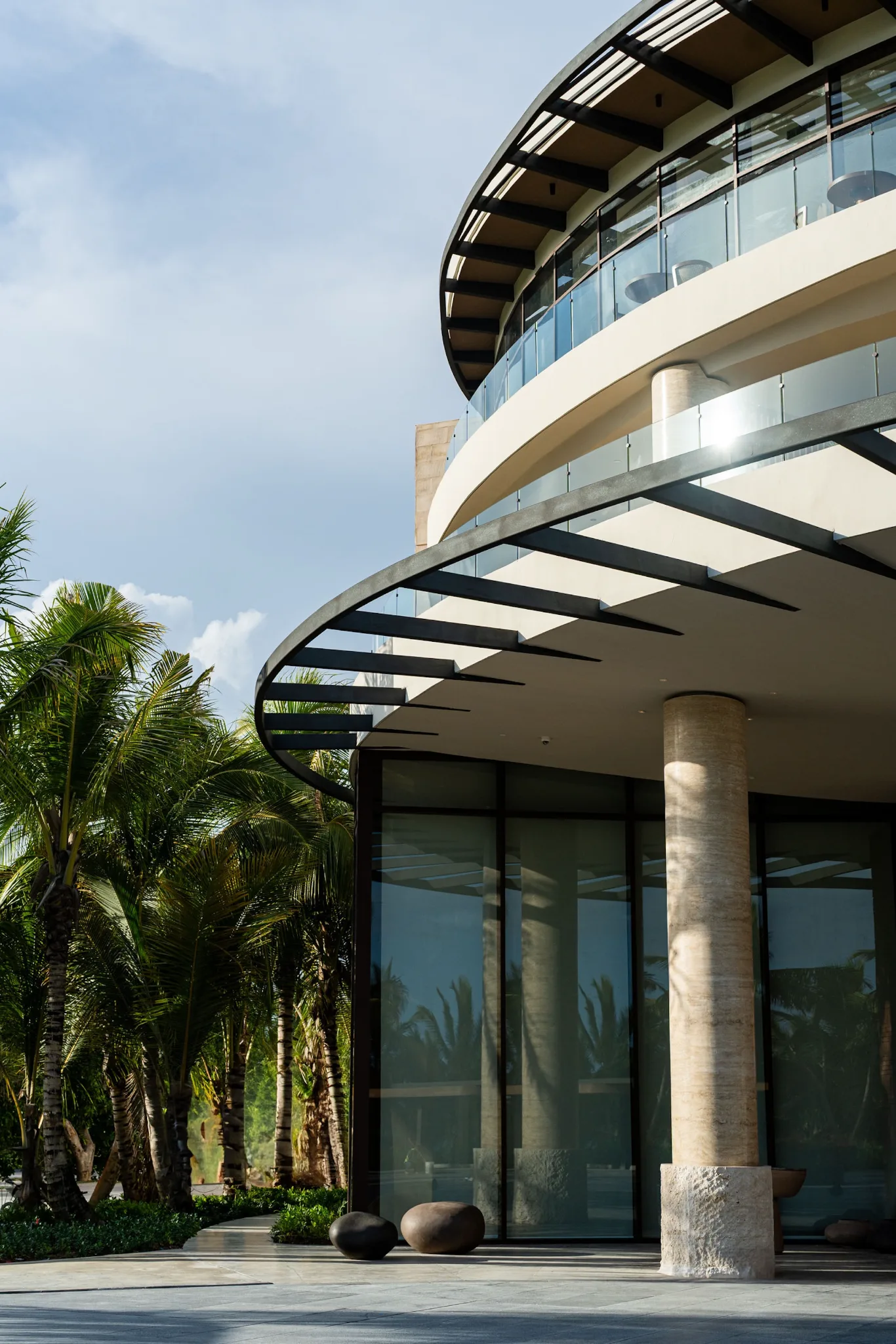
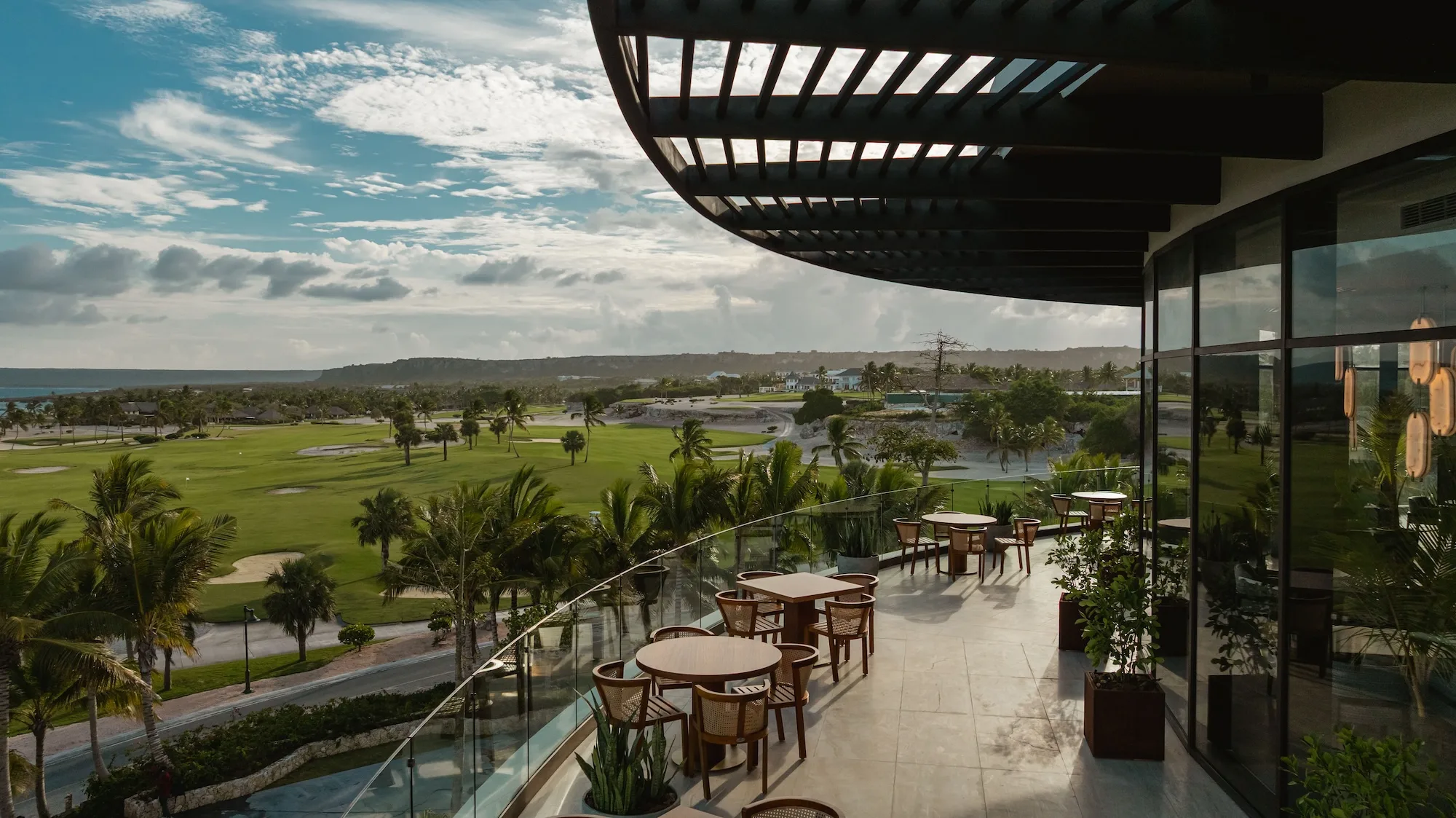
The architect’s response to the site’s design was to reject the conventional centralized resort typology entirely. Rather than anchoring a single monolithic structure at the heart of the property, he devised a horizontal, asymmetrical composition inspired by an unlikely muse: the geometries of the golf course itself. He looked at the fairways of Punta Espada: the arcs, the straight runs, the dogleg turns, and found in them an architectural grammar. "The true inspiration was remembering when Jack Nicklaus was sketching the Punta Espada Golf Course: he would start by drawing a circle, then a straight line, followed by another circle," the architect explains. "Most people see a golf course as an organic landscape, but in my mind, I began to see the circles and lines." Those circles and lines became the generative logic of the resort's plan.
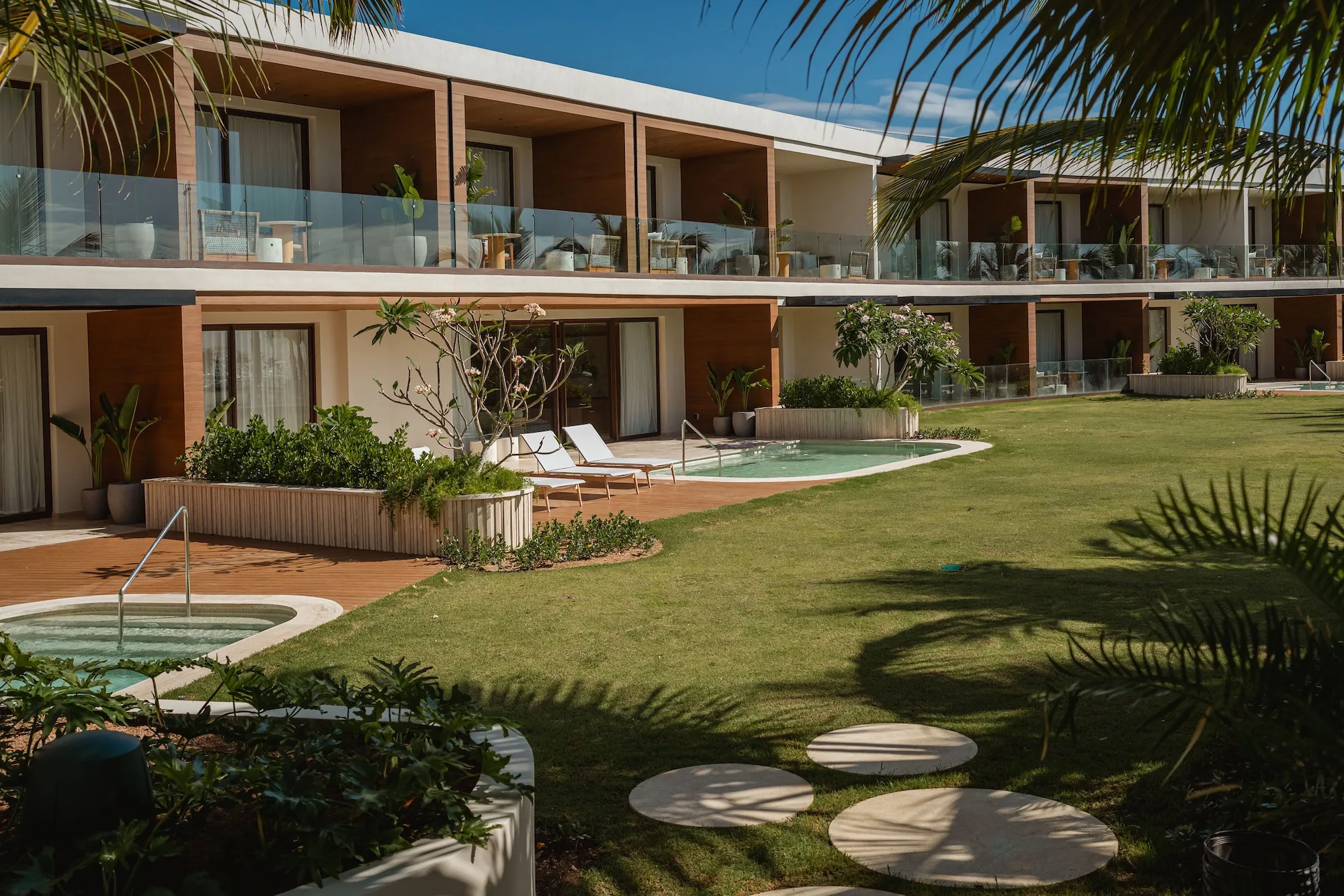
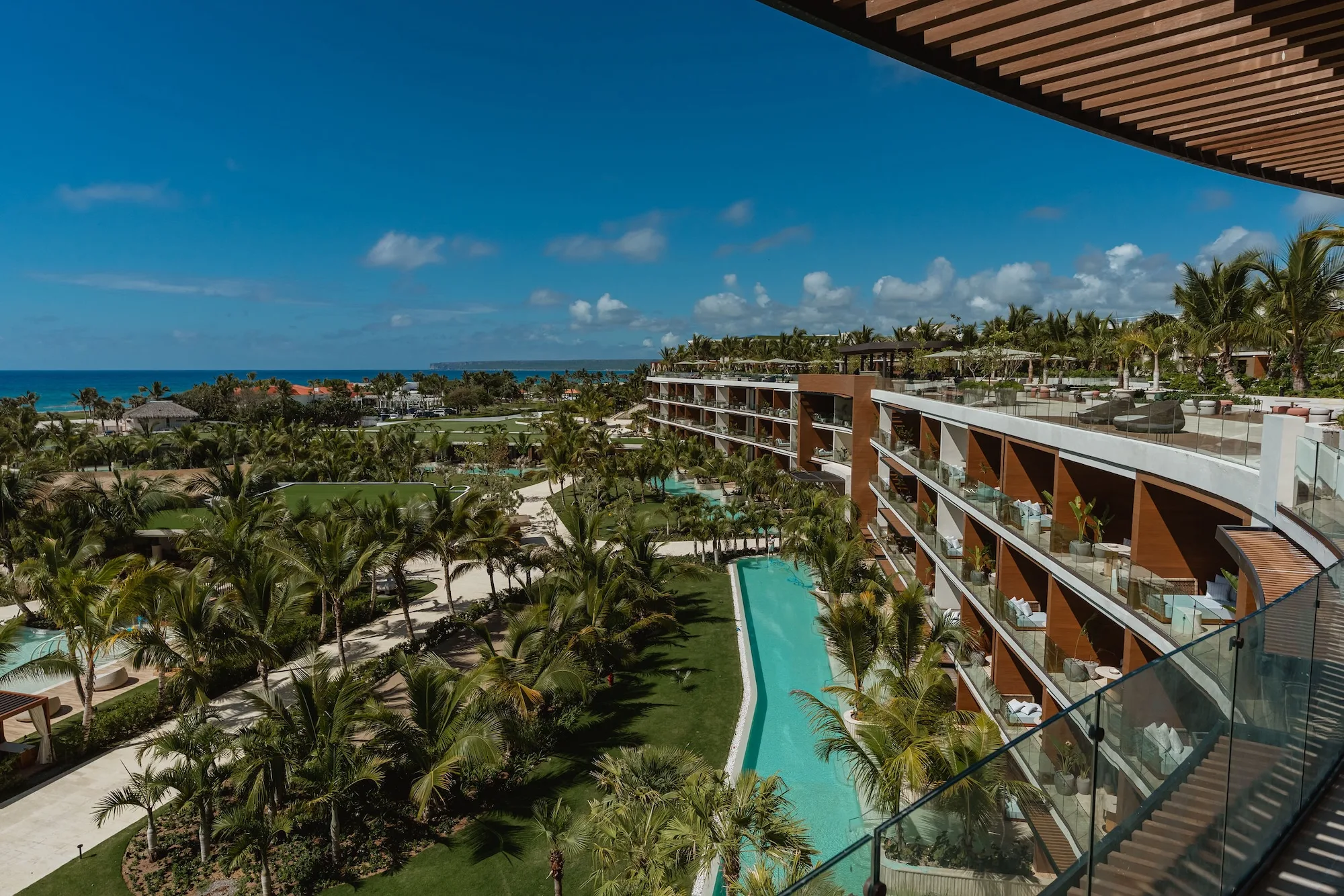
The result is a project that sequences itself across the landscape in staggered volumes, each one turned just enough to reveal a new panorama; much like a dogleg hole that bends and exposes fresh perspectives; each spatial transition at the resort is an act of discovery: the Caribbean glittering through a corridor, a cliff face materializing beyond a lounge, the greens unrolling in the distance from a suite terrace. "It was designed from the air as much as from the ground," The resort's seven levels step down into the topography with four and a half above ground and two semi-underground, capped with green roofs that blur the boundary between structure and hillside. It is visible from all angles, and yet never intrusive.
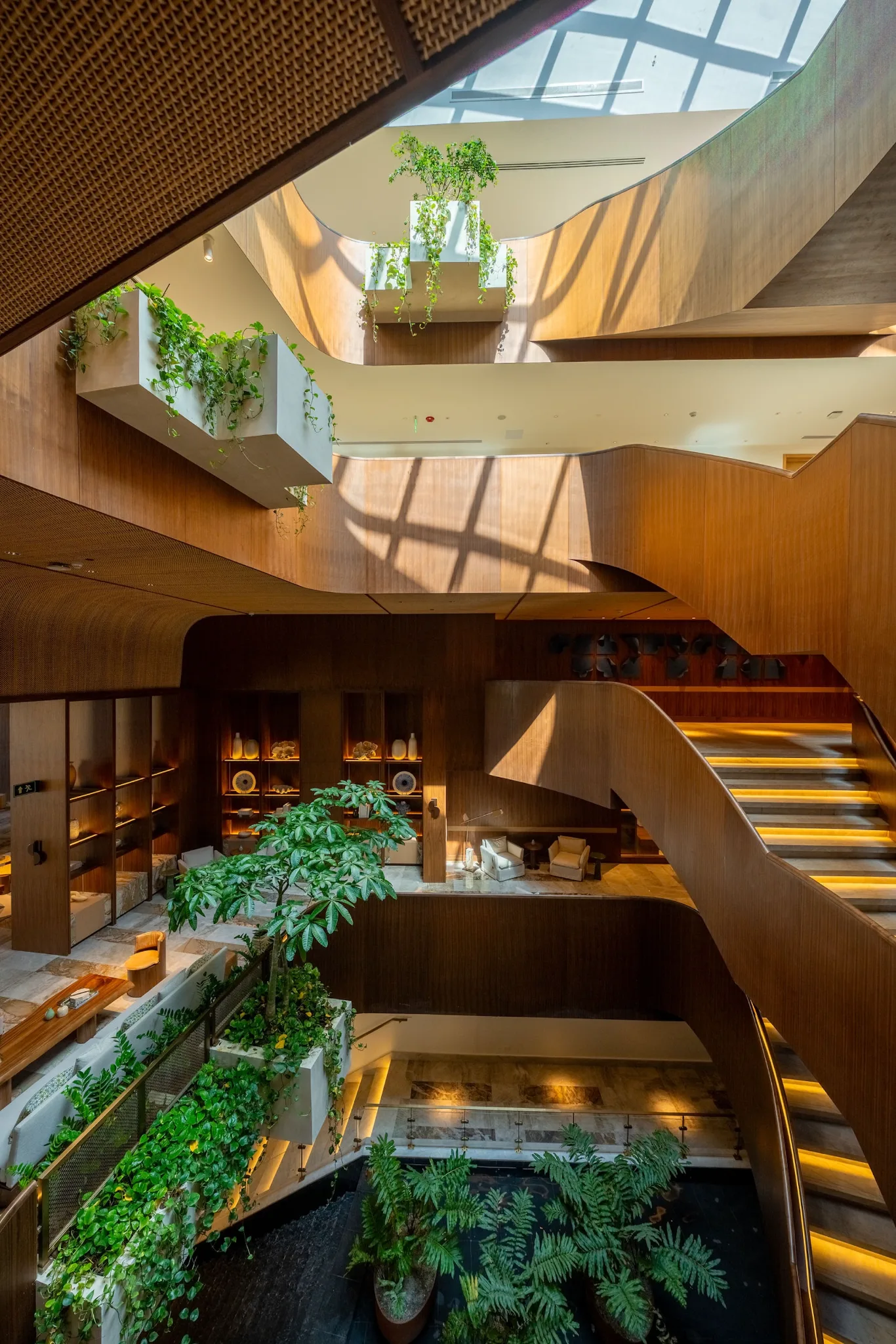
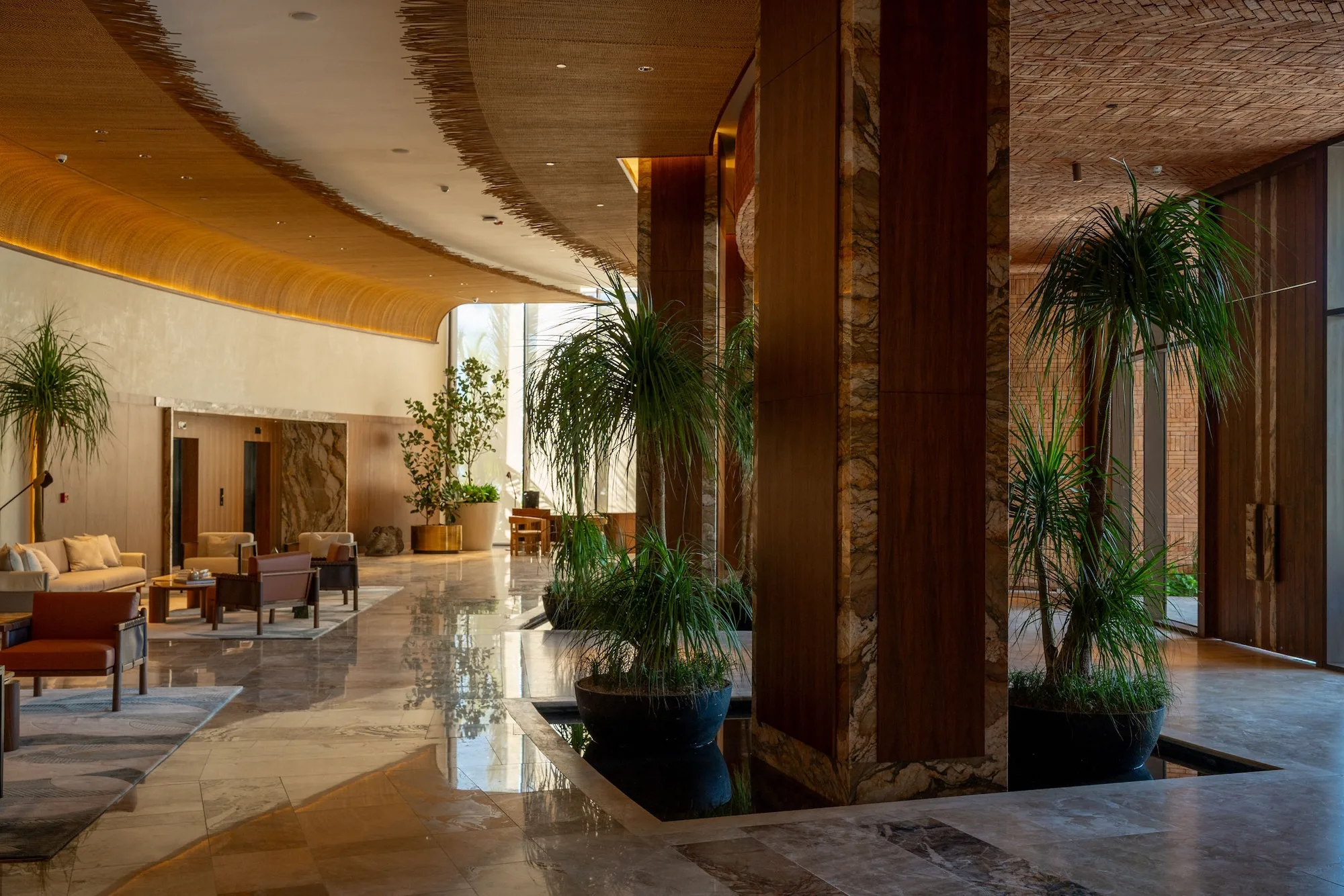
Amongst the most audacious moves in the resort's interior architecture is the reinvention of a quintessential St. Regis brand element: the Long Gallery. In most St. Regis properties, the Long Gallery functions as a grand corridor linking the hotel's key spaces. At Cap Cana, it transforms it into something altogether more elemental. Rising five stories as an atrium inspired by the cenotes of the Caribbean- those luminous, mysterious sinkholes that punctuate the region's limestone bedrock- the space is anchored by a cascading waterfall and crowned by a skylight that floods the interior with tropical light.
At the atrium's core, the ‘Dancing Stairs’ as they are affectionately called by Campagna and Acebal ascend in a visual crescendo, vertically connecting the resort's signature spaces in a choreography of elevation and arrival. This is not circulation; it is ceremony. Every arrival at the hotel, every journey between floors, is framed as a moment of architectural theater. "Every use of space, had to be a moment." From the cliffside dining room at Nina, the resort's signature restaurant helmed by internationally acclaimed Peruvian chef Diego Muñoz, to the hidden overlooks distributed across suites and amenities, the entire resort was conceived as a network of vantage points, each one calibrated to deliver the landscape in a new register.
For the project to translate from vision into reality, it required a builder of commensurate ambition and experience. That builder is Dino Campagna Ricart and Alexandra Guzmán, the Dominican Republic's foremost luxury construction and development firm. Founded and led by Dino Campagna Ricart, CRA has spent more than twenty-five years shaping the built environment of the country, from private residences and iconic towers in Santo Domingo to large-scale hospitality developments across the Caribbean. The firm has delivered over 700 luxury residences to date, with more than 200 further units in progress. Working alongside Acebal's architectural vision, Campagna Ricart orchestrated a project of formidable scale: 125,000 square meters of construction on a complex, dramatically sloping site, executed to the exacting standards of Marriott International's most prestigious brand. "The challenge was to intertwine the global sophistication of St. Regis with the natural soul of Cap Cana," says Alexandra Campagna. "We wanted each residence to convey a sense of timelessness while fostering an intimate connection with its surroundings."
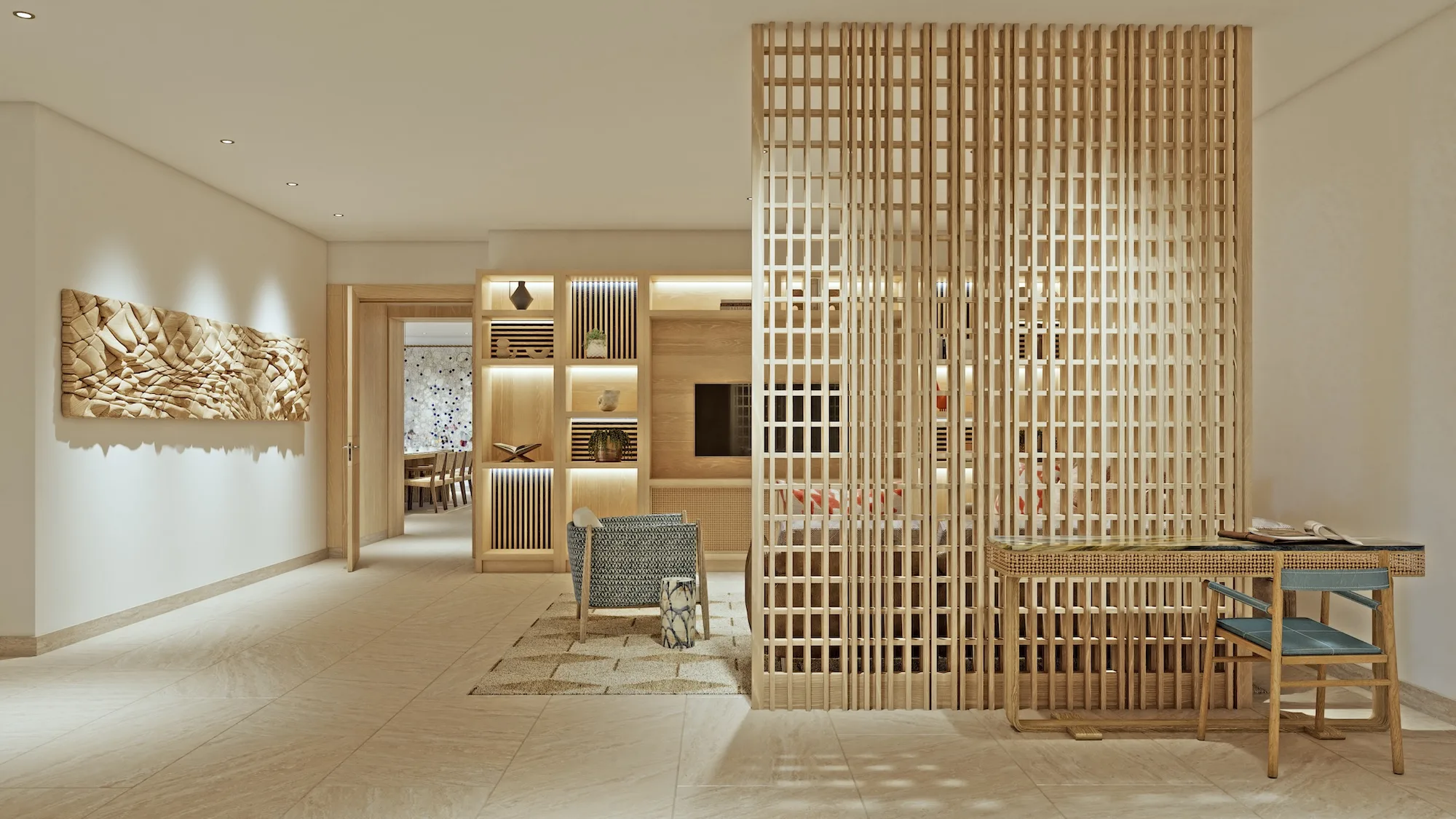
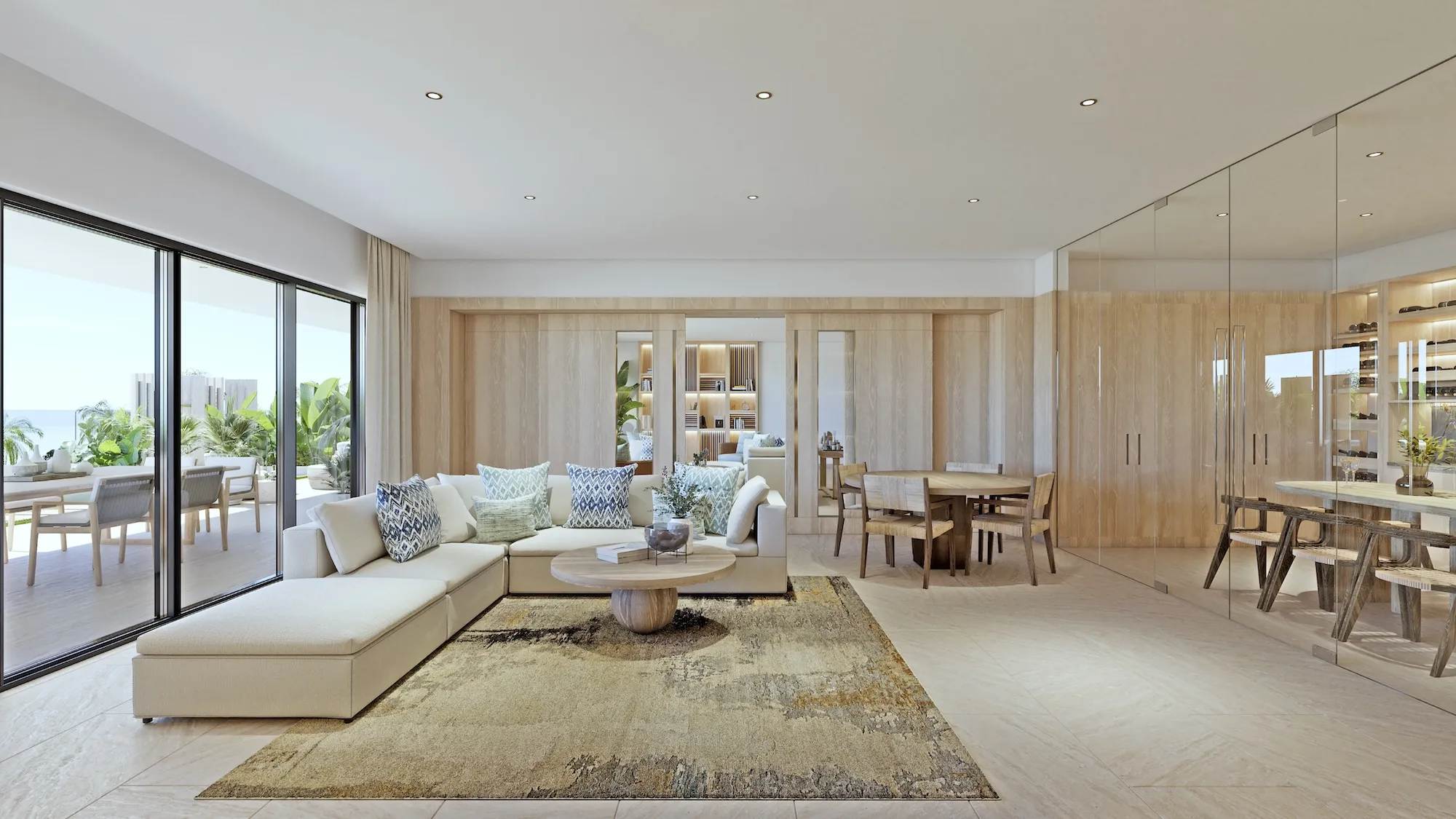
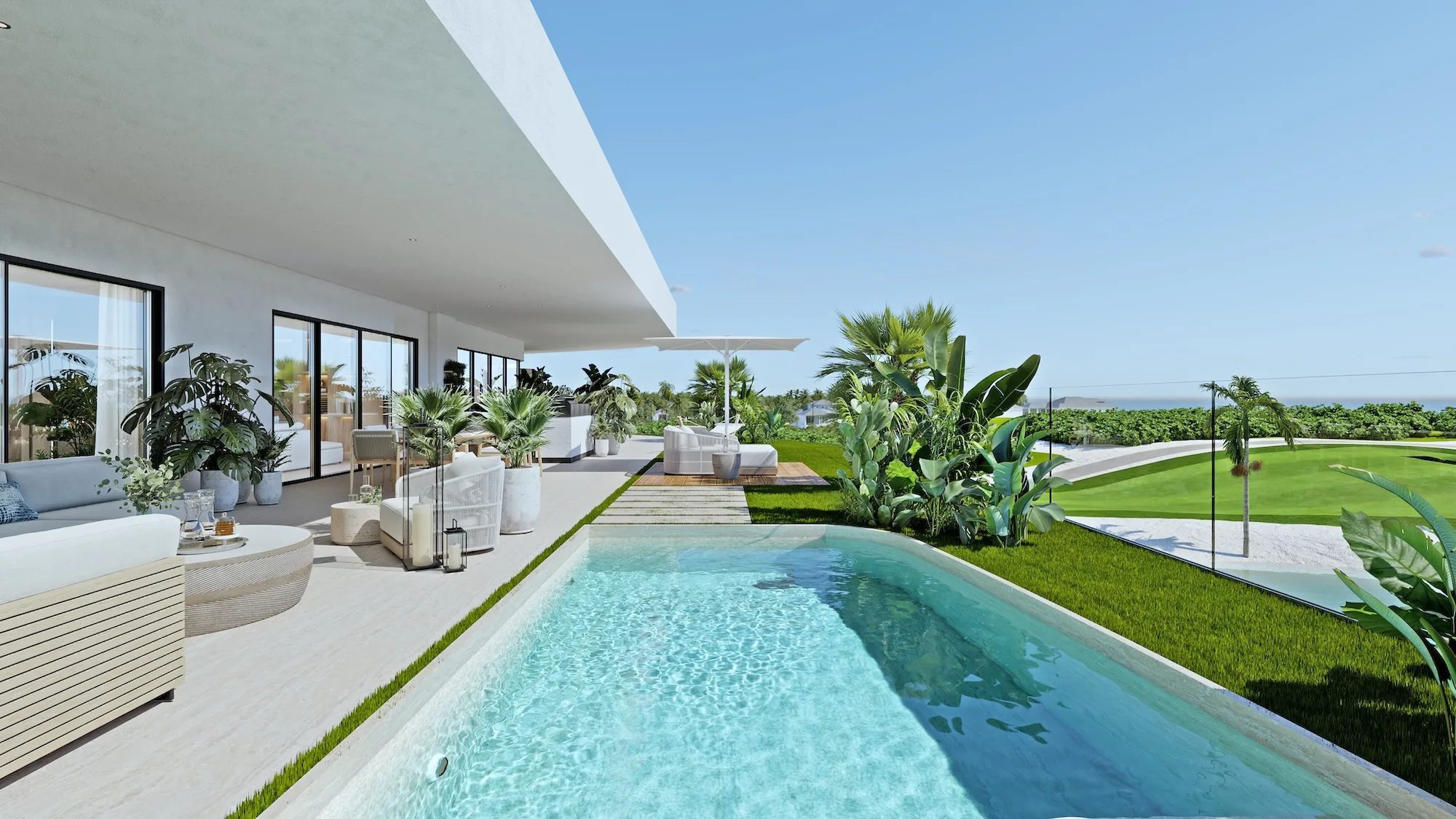
Integrated within the resort's architecture but conceived as a world apart, The Residences at St. Regis Cap Cana comprise just 70 units: a deliberate scarcity that is itself a luxury statement. The collection spans 47 Beachfront Residences, 15 Golf Terrace Residences, and eight Astor Penthouses, the most coveted of which command prices that begin at $25 million and ascend from there. Floor-to-ceiling glazing frames unobstructed panoramas of either the Caribbean or the Punta Espada fairways; travertine stone floors extend through interiors finished with top-tier European appliances and bespoke furnishings. Residence owners enter a world calibrated to the highest register of St. Regis hospitality: 240 meters of private beach, the legendary butler service, access to the Iridium Spa, a Rum & Cigar Club (the brand's traditional Cognac Room re-imagined in honor of the Dominican Republic's most distinguished exports), a private cinema, and the full culinary program of the resort's nine dining and bar venues. The development is accessible within ten minutes of Punta Cana International Airport, which offers direct connections to more than 98 cities worldwide, a practical reality that has drawn a community of notable luminaries to ownership, among them professional golfer Miguel Ángel Jiménez, who holds a residence here, as well as polo icon Nacho Figueras and chef Diego Muñoz.
Guzmán and curator Paula Gómez Jorge was developed through years of research into Caribbean cultural imaginaries, studio visits, and ongoing dialogue with artists from multiple generations. The resulting collection encompasses works by an exceptional roster of Dominican and international artists, including Ariadna Canaan, Engel Leonardo, Iliana Emilia García, Lidia León, Mario Lopomo, and Patricia Castillo, among many others. The majority were commissioned specifically for this collection, with scale, materials, and narrative developed in direct conversation with the architecture. "We conceived an art collection that would not only accompany the architecture, but articulate a narrative about who we are, rooted in the present and in the cultural and symbolic richness of the Caribbean," Guzmán has said.
Dino Campagna Ricart set out to build not just a resort, but a new standard for what Caribbean luxury could mean. Alongside Alejandro Acebal's architecture, and complimented by Alexandra Campagna's interiors and Paula Gómez Jorge's art curation, they have more than delivered.
"We didn't design a building. We became part of the landscape." Standing on the terraced cliffs of Cap Cana, overlooking the sea at sunset, and sipping the signature ‘Quisqueya Mary,’ the resort's local interpretation of the iconic St. Regis Bloody Mary, I couldn’t agree more.
The St. Regis Cap Cana Resort
Punta Cana 23000, Dominican Republic
Website


