
At Tortuga Bay Puntacana Resort, the story begins decades before arrival, on a stretch of coastline that was once inaccessible, untouched, and largely unknown. What exists today is the result of a singular vision shaped by founders, refined by culture, and ultimately defined by Óscar de la Renta, whose imprint on the property remains both architectural and emotional.
The origins of Puntacana read almost mythically. In 1969, a group of investors acquired a vast expanse of land on the eastern edge of the Dominican Republic, drawn by its six miles of pristine beaches yet hindered by the absence of roads or infrastructure. What followed was a slow, deliberate transformation led by Dominican entrepreneur Frank Rainieri, culminating in the development of a destination that would eventually attract global attention.
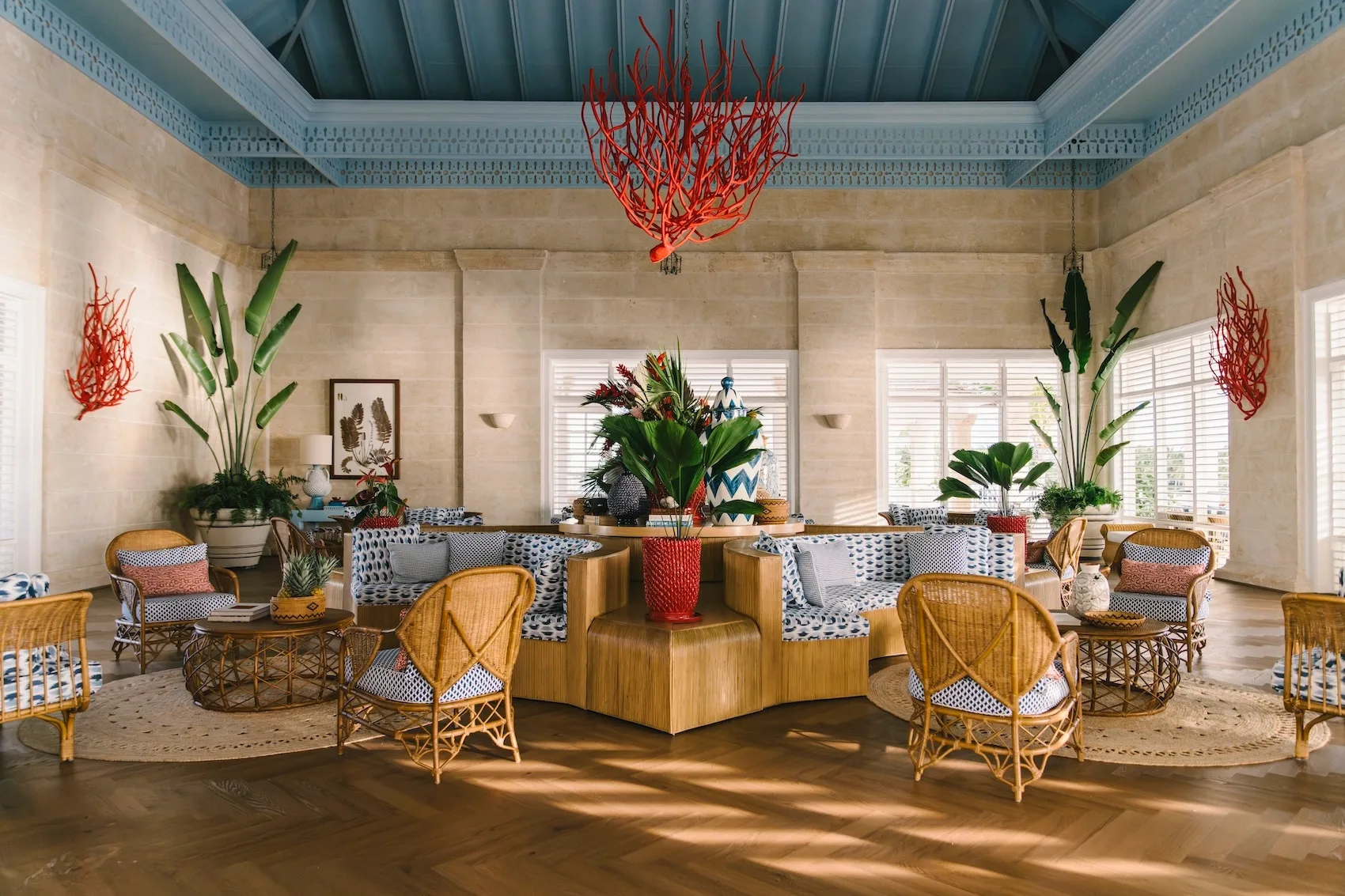
That attention crystallized in 1997 with the arrival of de la Renta, who brought not only visibility but a deeply personal sensibility rooted in his Dominican heritage. His ambition for Tortuga Bay Puntacana, which opened in 2005, was precise. “We wanted a small jewel of a hotel,” he said, envisioning something intimate, residential, and enduring.
Rather than a singular structure, he conceived a series of beachfront villas, each positioned with intention along miles of uninterrupted coastline. The scale was deliberate. Low density was not simply a planning decision but a philosophy, one that continues to define the experience today.
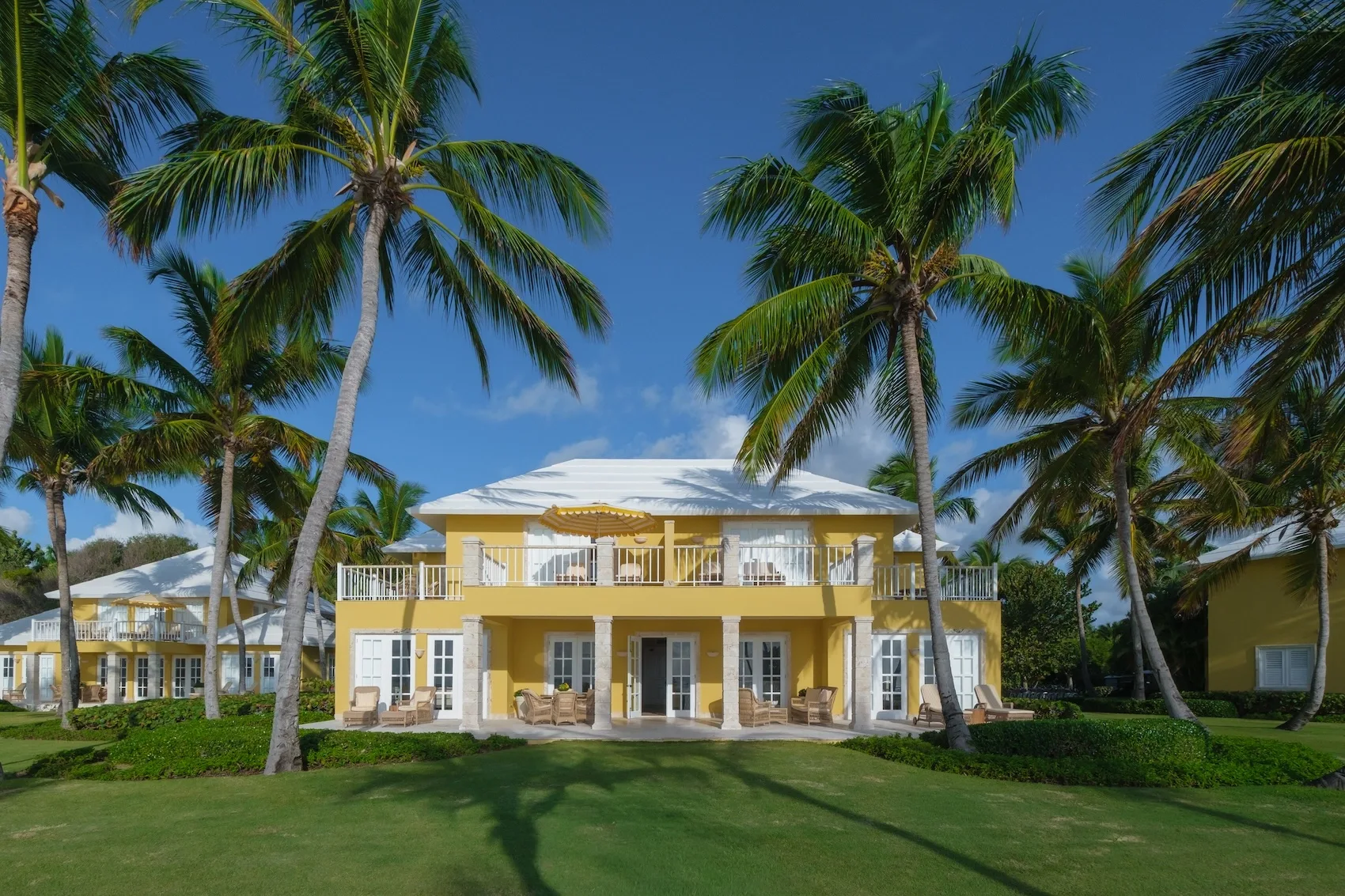
De la Renta approached Tortuga Bay Puntacana as he did his own homes, with a cultivated sense of ease informed by both European training and Caribbean instinct. The interiors resist theatricality. Instead, they are composed through proportion, material, and light.
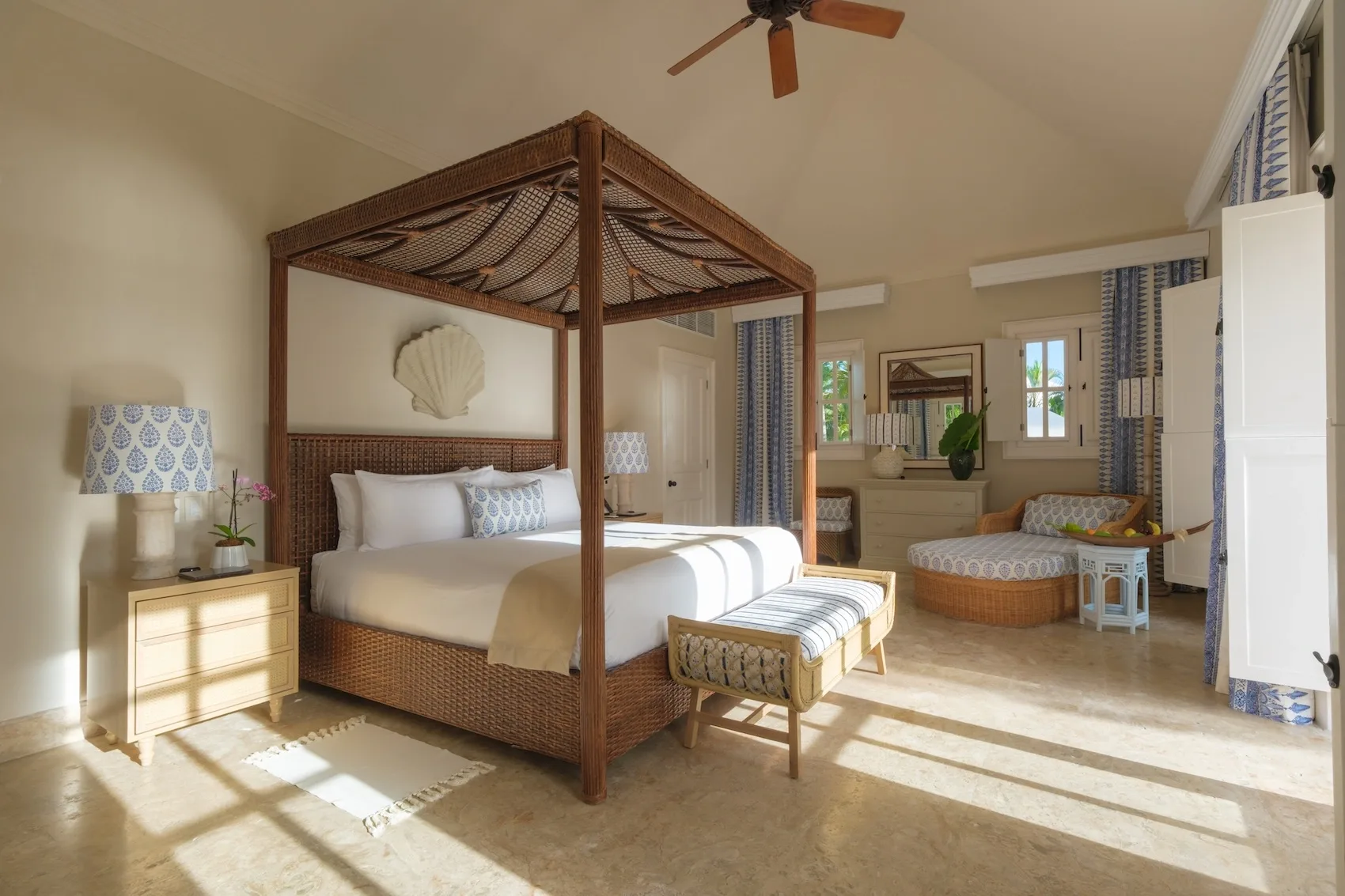
Muted tones of ivory, sand, pale yellow, and soft green create a palette that allows the landscape to take precedence. “Why try to compete with the vegetation,” he once reflected, opting for restraint over excess.
Furnishings follow the same logic. Wicker beds, seagrass chairs, and locally sourced woods establish a tactile connection to place, while botanical motifs bring the outside inward. The result is a language of design that feels both intentional and instinctive, shaped as much by environment as by aesthetic discipline.
There is also an unmistakable sense of intimacy. Each villa reads as a private residence rather than a hotel suite, a detail reinforced by the scale of the property itself. With just a limited number of villas set across expansive grounds, Tortuga Bay Puntacana maintains a sense of space that is increasingly rare in contemporary resort development.
A New Chapter by Jorge Brown Cott
The recent evolution of Tortuga Bay Puntacana, led by Brown Cott, is best understood not as a reinvention but as a continuation. His work builds upon de la Renta’s foundation with a heightened sensitivity to craft, materiality, and Dominican authorship.
As outlined in the resort’s latest design direction, the project brings “tradition and modernity” into alignment, creating spaces that feel both rooted and current.
Brown Cott introduces a richer dialogue of textures. Handcrafted elements by Dominican artisans are integrated throughout, transforming interiors into expressions of cultural identity rather than purely aesthetic compositions. These pieces do more than decorate. They anchor the project in its geographic and creative context.
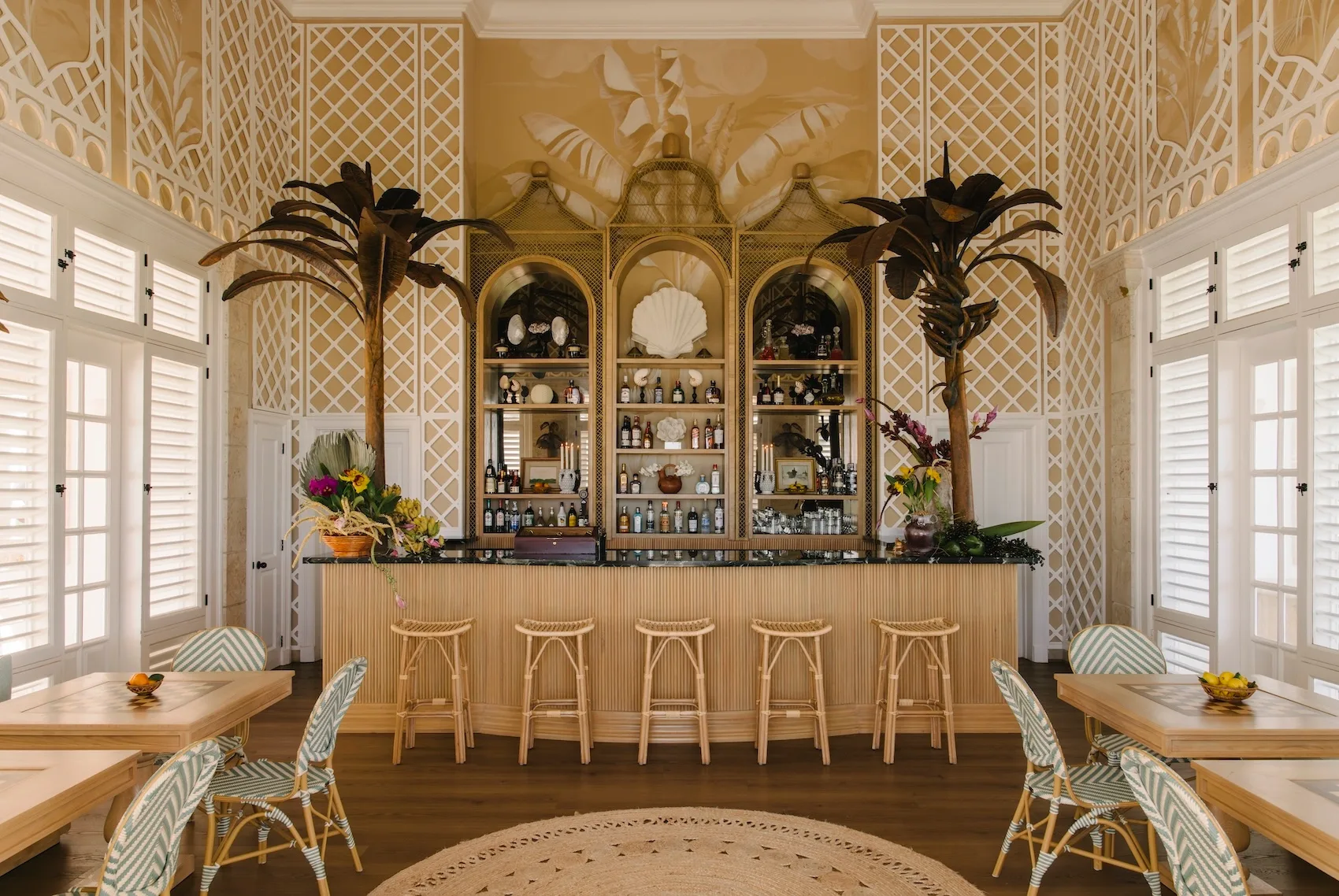
The redesign also strengthens the relationship between architecture and landscape. Interiors flow more seamlessly into exterior spaces, reinforcing a sense of continuity with the Caribbean environment. The experience becomes less about rooms and more about atmosphere, where light, air, and material operate in concert.
At the Casa Club at La Cana Golf & Beach Club, this approach expands into a social dimension. The space is conceived as a point of convergence, where design, gastronomy, and community intersect, reflecting a broader vision of the Puntacana lifestyle.
To understand Tortuga Bay Puntacana today is to recognize its resistance to excess. It does not rely on spectacle, nor does it attempt to redefine Caribbean luxury through scale or novelty. Its distinction lies in clarity of vision.
Tortuga Bay Puntacana has evolved without losing its identity. It continues to operate within the parameters set by de la Renta, while allowing new voices, such as Brown Cott, to refine and expand that narrative.
Tortuga Bay Puntacana website
Photography courtesy of the property


