
Miiro Spittelberg, Archisphere's second Vienna property for the lifestyle hotel brand, sits just behind the MuseumsQuartier in the 7th District - a neighborhood whose cobbled streets and artisan heritage made it a center of craft production long before it became one of the city's most concentrated pockets of contemporary gallery culture. The decision to anchor here, rather than extending the Old Town footprint of Miiro's first Vienna property, reflects a hospitality strategy that trades landmark adjacency for neighborhood immersion. At 132 rooms, the hotel reads as a calibrated response to its context: the design leans into the district's layered character rather than imposing a hermetically sealed environment onto it.
Photography by James McDonald
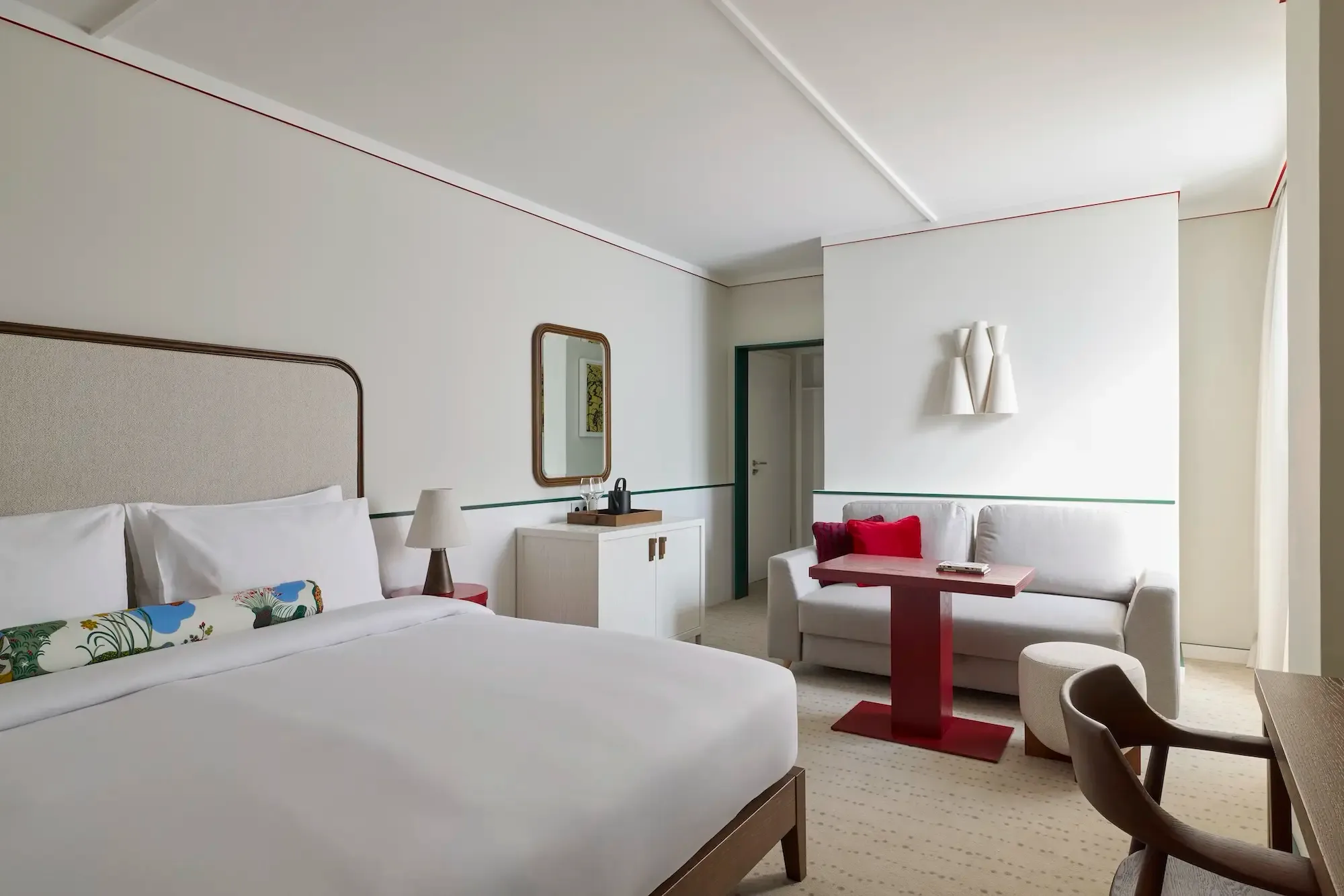
Archisphere's interiors work through contrast managed at close range. Warm neutrals carry the rooms architecturally, while deliberate punctuations of color - absorbed into soft furnishings and accent objects rather than applied to walls - keep the palette from settling into the kind of beige neutrality that plagues European boutique hotels working in a similar register. Natural textures and mood-tuned lighting compound this, and locally sourced artwork in each room grounds the scheme in something geographically specific rather than generically curated. The six room categories culminate in the Spittelberg Suite, where a standalone tub and courtyard-facing lounge area give the guest a spatial experience closer to a pied-a-terre than a hotel room.
Photography by James McDonald
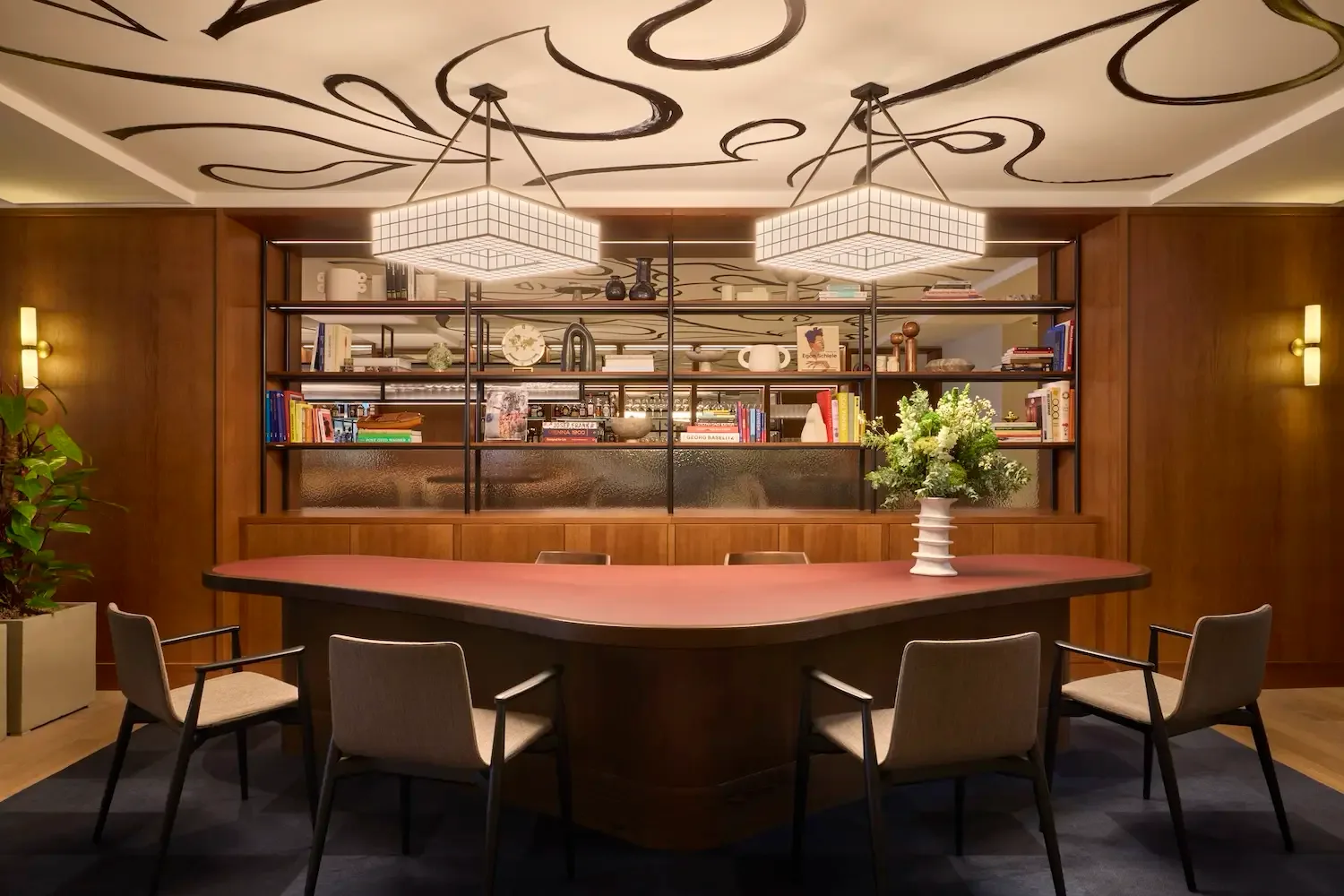
The most ambitious design gesture in the building belongs to Vienna-based artist FLOW SO FLY, whose hand-painted ceiling mural across the hotel's primary public space represents his largest commission to date. The work operates in precise black-and-white line work, a mode that sits interestingly against the warmer residential palette of the guest floors above. Abstract and interpretively open, the mural functions as the hotel's conceptual anchor - a piece of work that rewards sustained looking rather than delivering its meaning on first glance. It joins a collection that spans Christian Ludwig Attersee, Josef Mikl, Heimo Zobernig, and Cornelius Kolig, pulling together threads from post-war Austrian modernism, expressive abstraction, and the more recent conceptual practices that have defined Vienna's gallery scene since the 1980s.
Photography by James McDonald
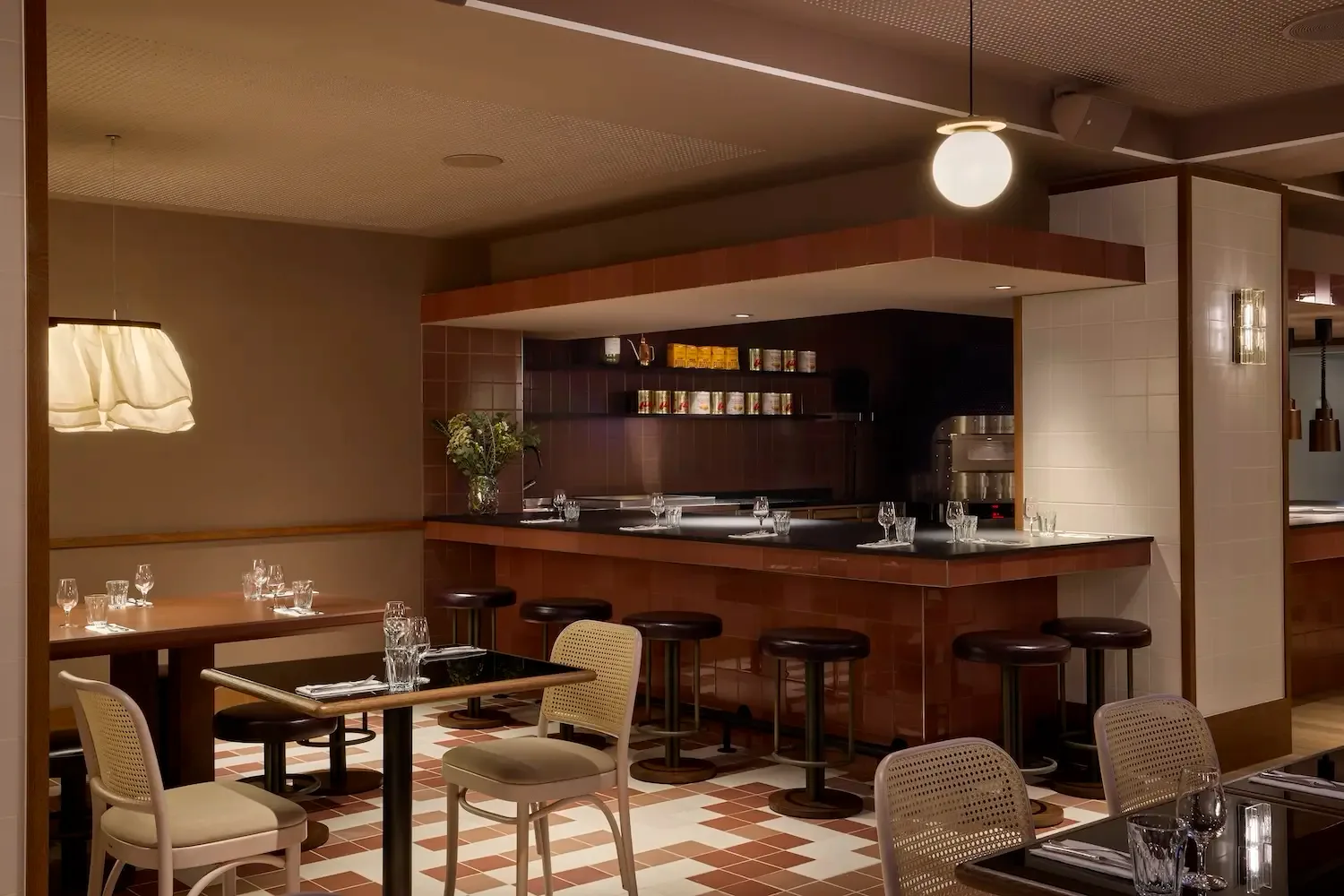
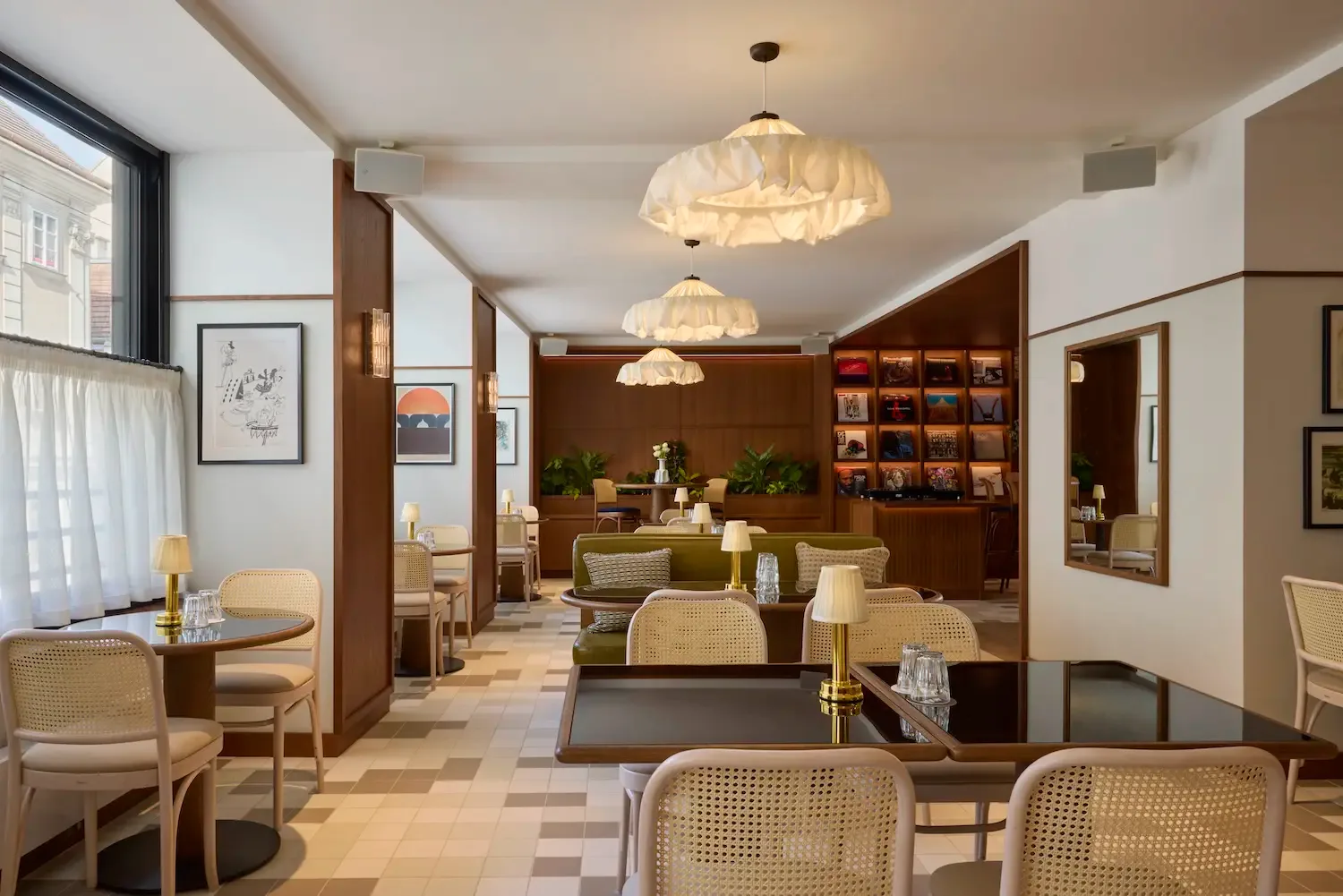
At street level, Poco - the hotel's Italian-leaning pizzeria and bar - is a joint venture with London restaurateurs Jake Bucknall and Jacob Stuttard of D4100, who bring an understanding of how neighborhood dining rooms actually function: as places that absorb the day rather than segment it. The Margherita and Diavola anchor the menu, while the house SpittelBerg pizza - yellow tomato, fior di latte, salsiccia, 'nduja, caramelized onion - reads as a deliberate local act of naming. The bar program runs from Spritz variations through to natural wine, with the Pisco Spritz and Agave Basil Smash signaling a willingness to drift from the canonical aperitivo roster. The name itself - Italian for "a little" - sets a tone that resists the self-seriousness that can undermine hotel F&B ventures when they try to compete with destination restaurants on their own terms.
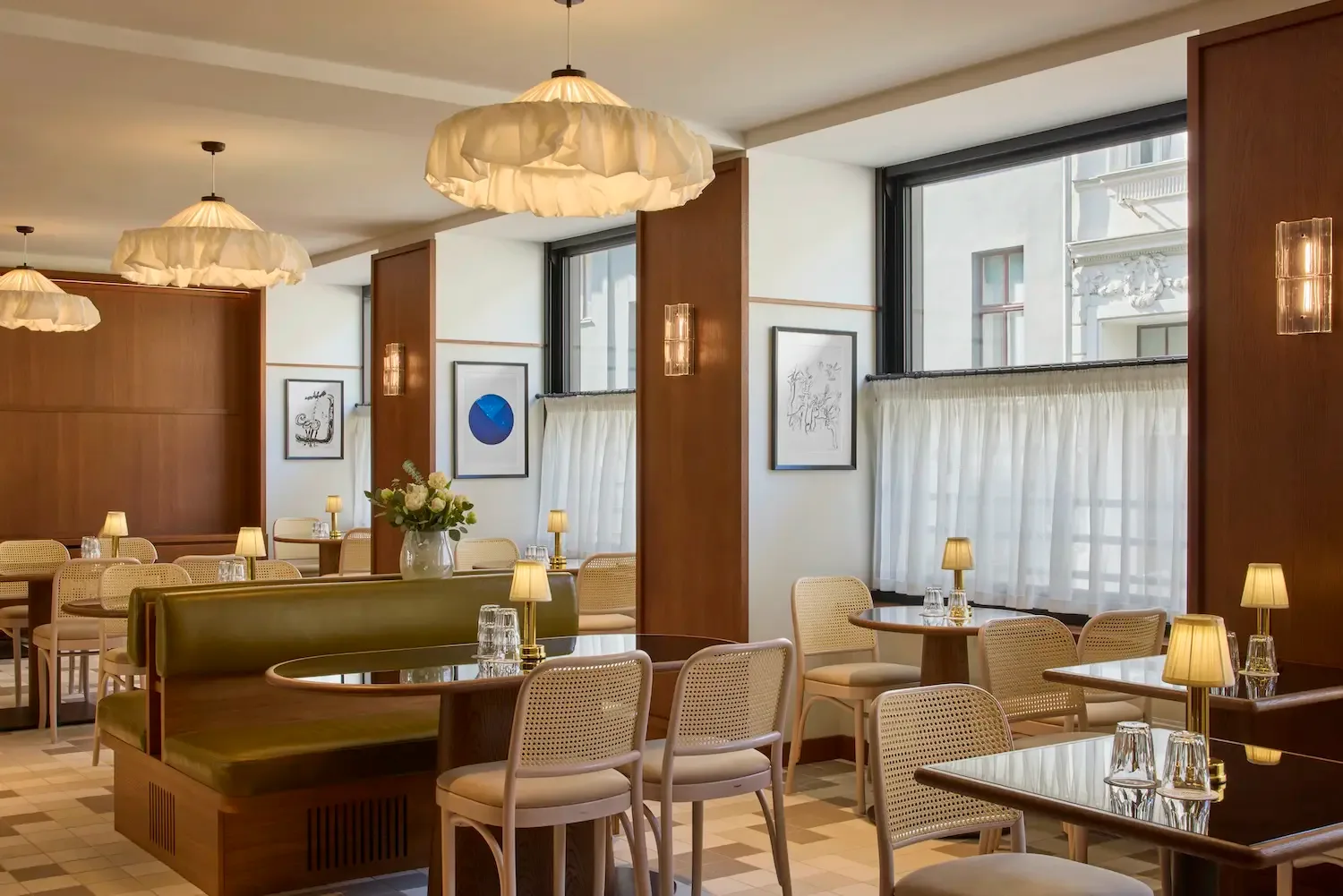
Photography by James McDonald
The Refresh Room, a recurring concept across Miiro properties, addresses one of the underdesigned moments in hotel hospitality: the hours before check-in and after checkout, when guests are technically displaced. Providing showers, toiletries, changing facilities, and luggage storage in a dedicated space converts a logistical inconvenience into something that actually extends the guest's relationship with the building. The 24-hour gym, equipped by NOHRD - a German manufacturer whose wood-finished training equipment has become something of a shorthand for wellness spaces that take material quality seriously - completes the amenity floor.
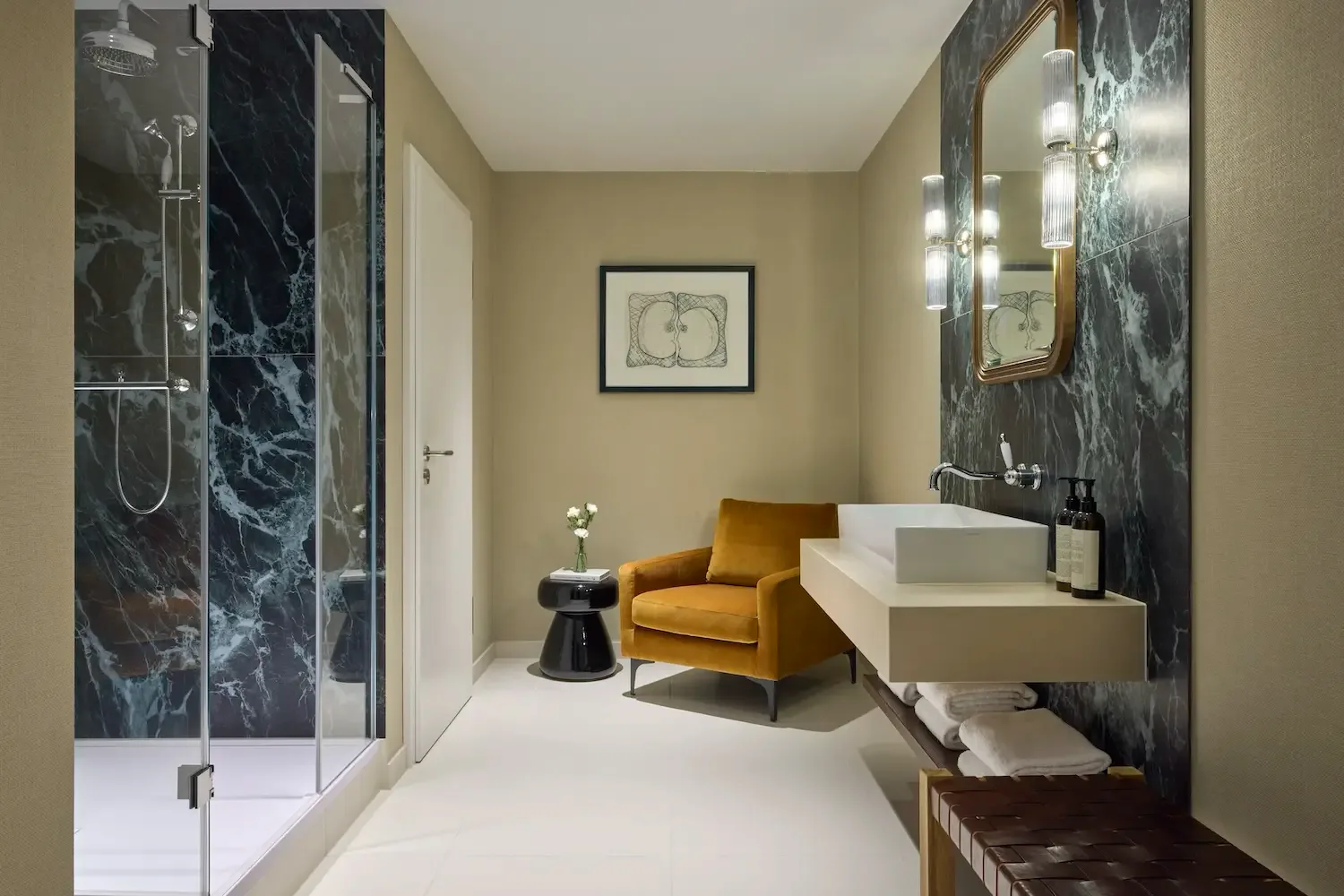
Photography by James McDonald
Miiro Spittelberg
Kirchberggasse 6, 1070
Wien, Austria
Visit Website


