
Clarification as a design philosophy is rare in cocktail culture. Most bars build identity through accumulation - layered visual noise, branded glassware, the theater of garnish. MUSAEK, the K-Town cocktail bar from Urimat Hospitality, inverts this entirely. Its name means colorless in Korean, and that single conceptual anchor governs everything from the drinks program to the spatial atmosphere to the logo itself, whose arched form mirrors the curve of the U-shaped bar below - an open form, literally and philosophically.
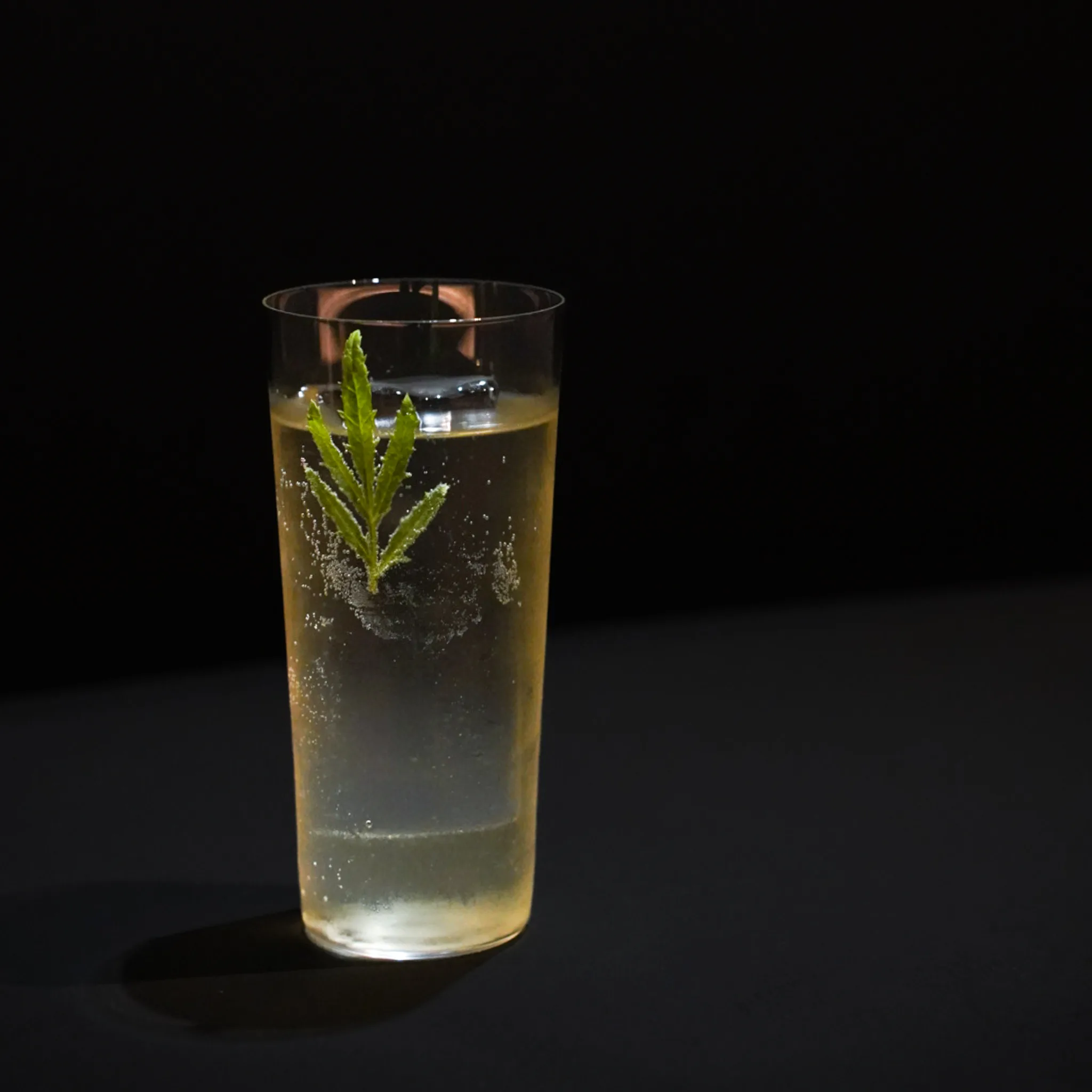
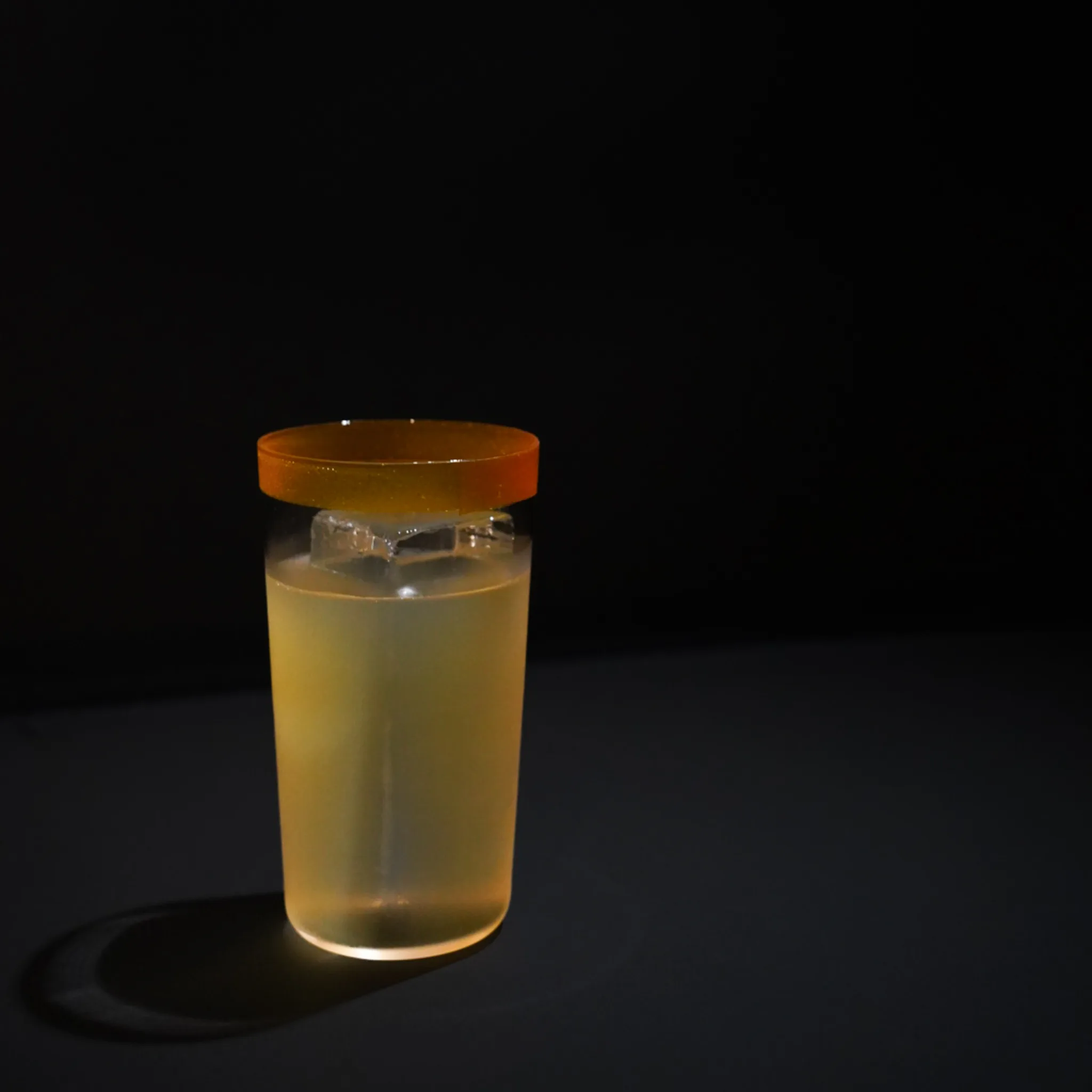
The clarified cocktail program is where this philosophy becomes most tangible. Each batch requires 8 to 10 hours of preparation, a timeline that signals process-as-craft rather than efficiency. Clarification - typically achieved through milk washing or fine filtration - strips a cocktail of its pigment while preserving and often intensifying the aromatic compounds that define its character. The result is a liquid that looks like water but carries the full structural complexity of its ingredients. Mango & Nurungji (the toasted rice crust scraped from the bottom of a stone pot) pairs gin and rum with coconut milk and lime, the clarification collapsing tropical richness into something translucent and precise.
Korean Pear & Gochujang brings tequila and Grand Marnier Bergamot into contact with the slow, building heat of fermented pepper paste - a combination that would read as volatile in an unprocessed form but arrives here in studied equilibrium. The ingredients throughout are distinctly Korean: boricha (barley tea), maesil (green plums), hallabong citrus from Jeju island - a roster that positions Korean pantry staples not as novelty flavoring but as genuine structural ingredients.
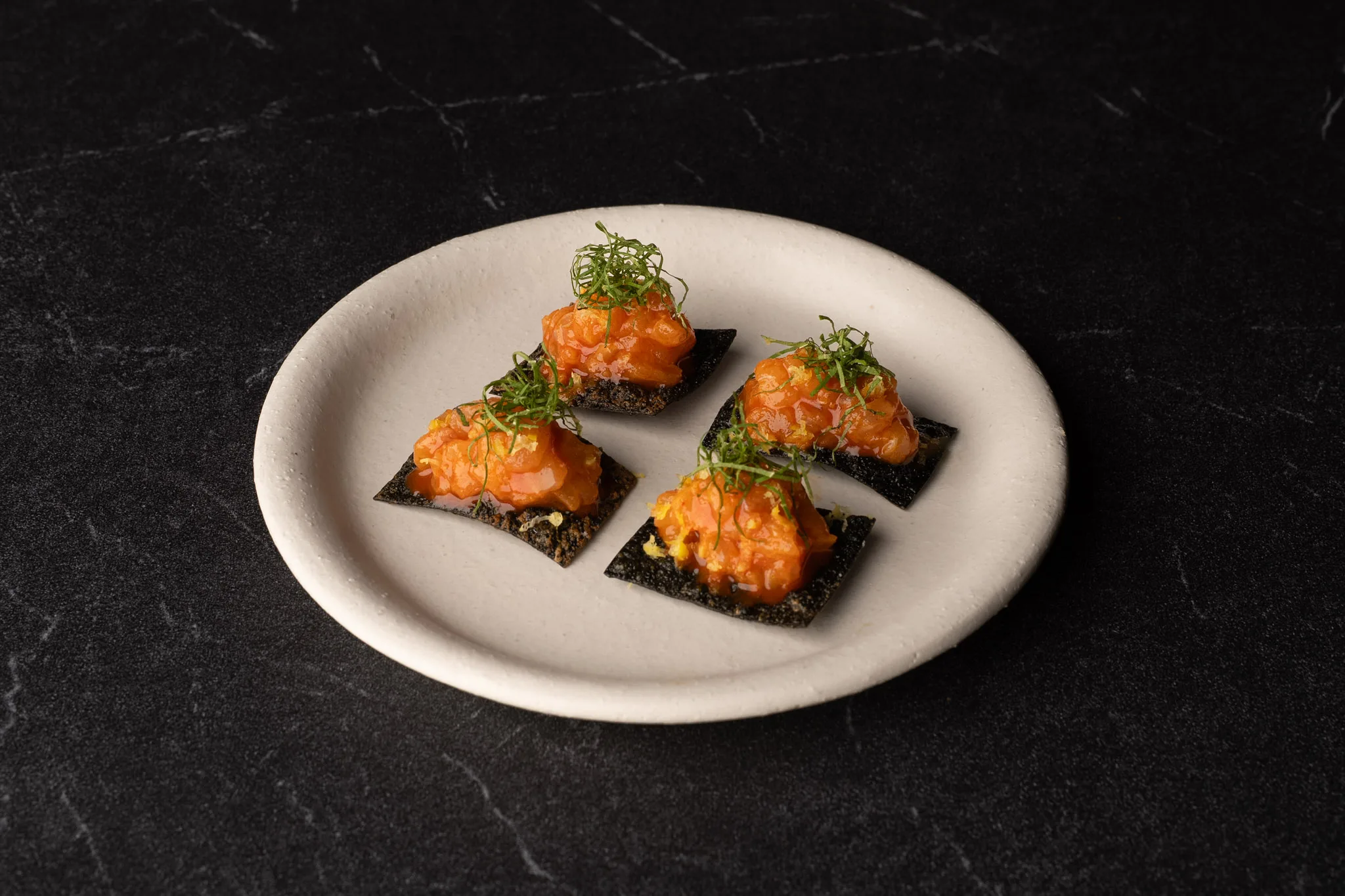
Chef Lenny Moon's food menu applies the same logic spatially. The kitchen is framed around Korean coastal traditions - hwe, the Korean equivalent of Japanese sashimi, served as a platter of amberjack, striped jack, yellowtail, red snapper, and fluke. Raw Yeosu shrimp, named for a city on Korea's southern coast historically associated with fishing culture, are marinated for two full days in a 13-ingredient house soy sauce, the extended time serving a similar function to the cocktail clarification process: patience as a technique for achieving depth rather than complexity. The Uni Bibimbap folds tobiko, seaweed, pickled red cabbage, radish kimchi, and quinoa into a dish whose color and texture contrast stands in deliberate visual opposition to the transparent drinks program - the food earns its saturation where the cocktails refuse it.
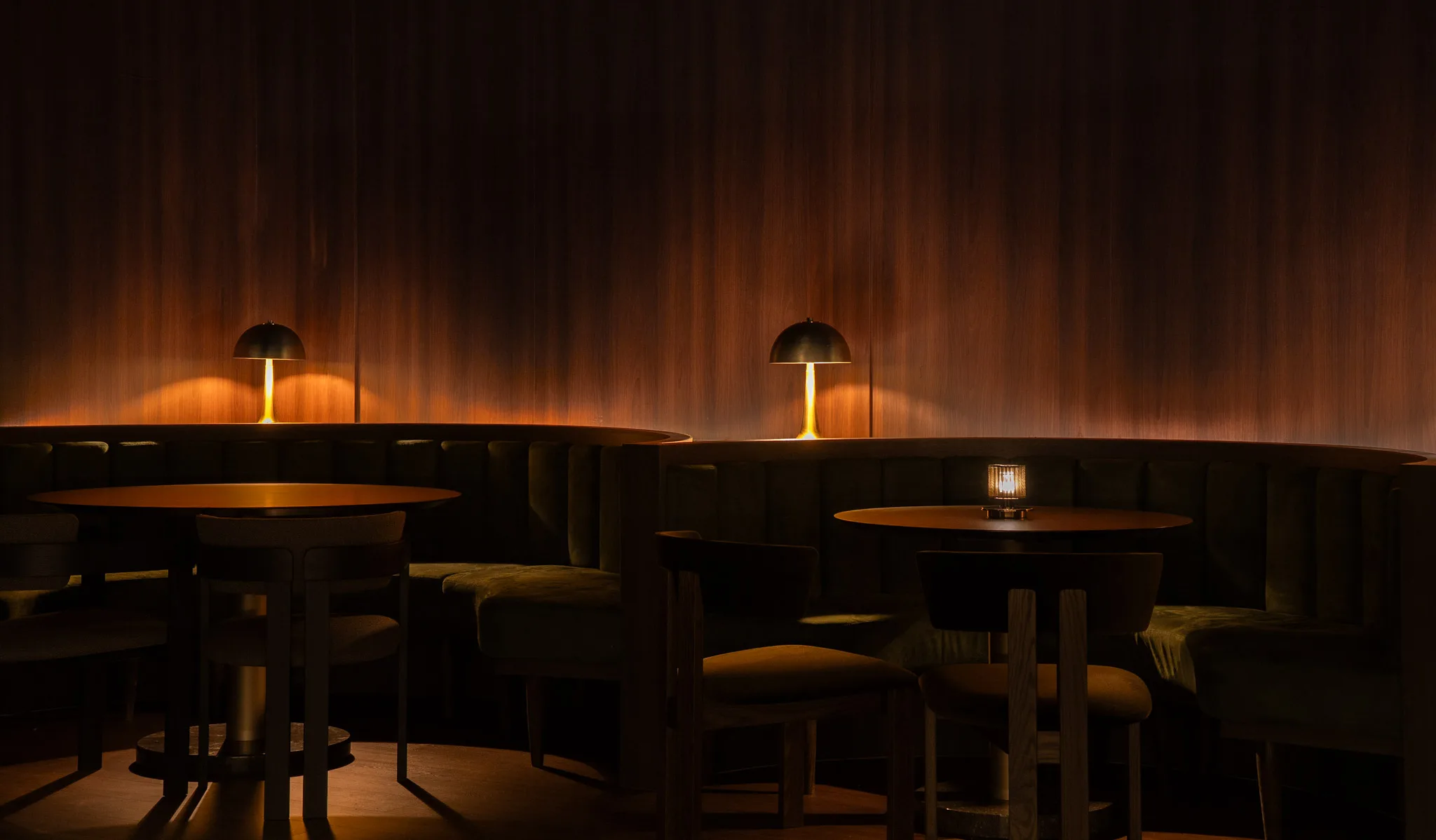
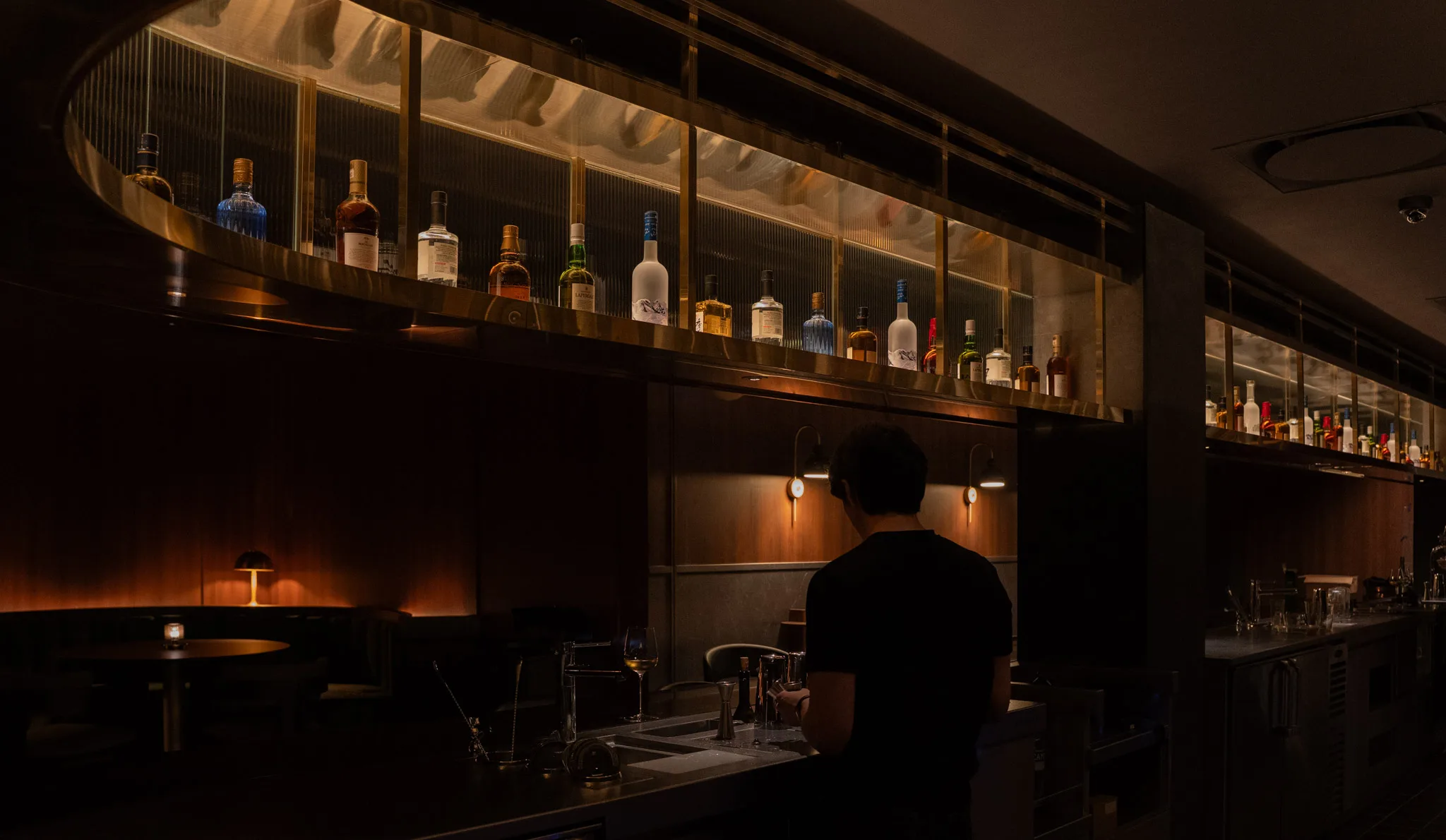
The 12,000-square-foot space beneath sister concepts HOWOO and DubuHaus keeps ambient light low, letting the warm tones of the woodwork hold the room together without competing for attention. It is a considered restraint that feels consistent with the broader editorial position of the venue: subtract until only the essential remains, then trust those essentials completely.
MUSAEK
6 E 32nd St Lower Level,
New York, NY 10016
Website


