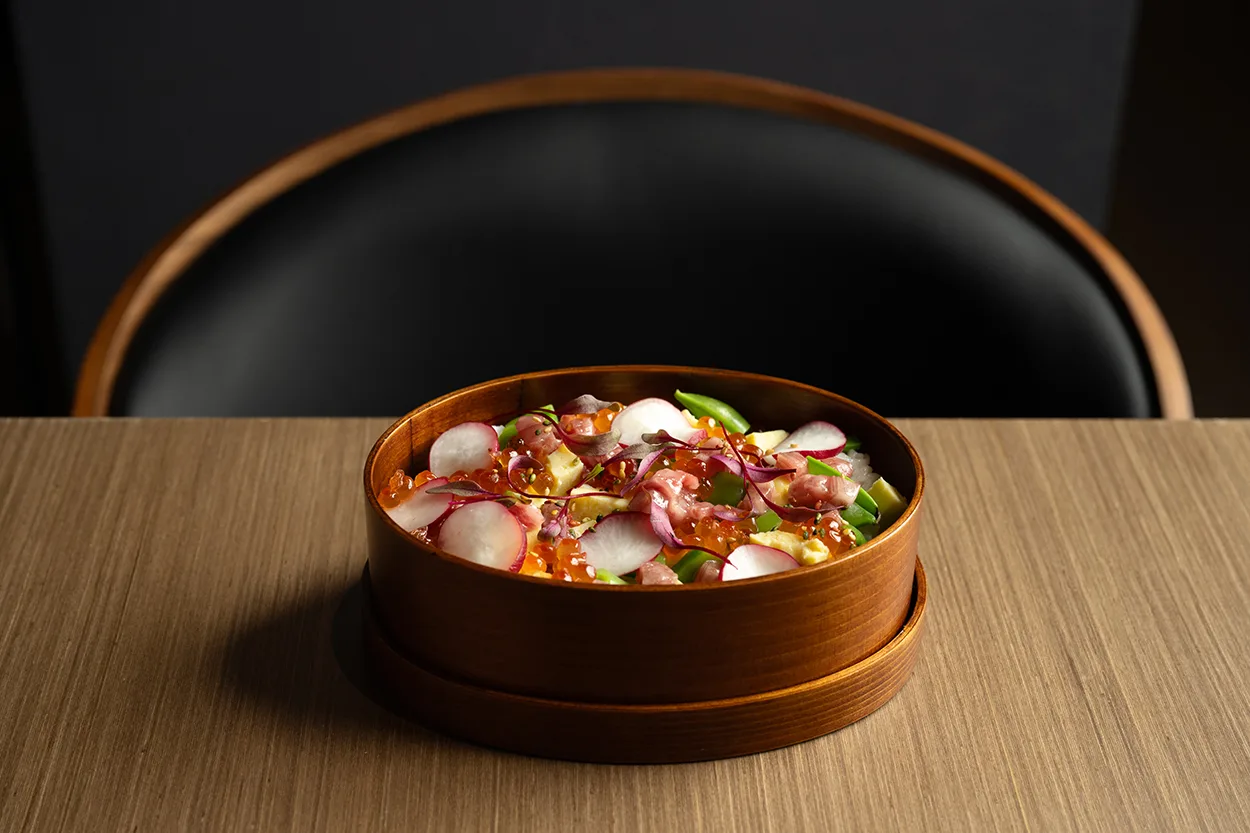
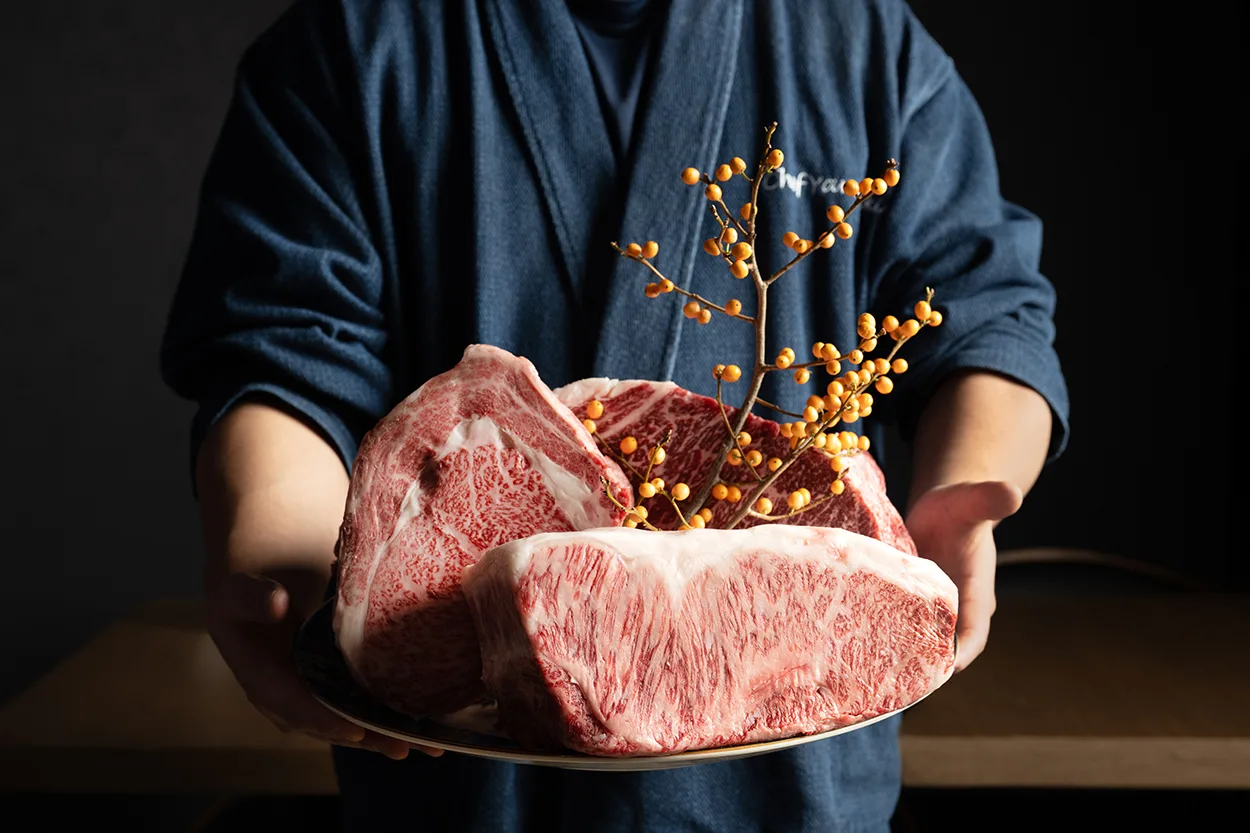
Togyushi operates from a premise that most wagyu restaurants in New York avoid: the supply chain is the concept. Rather than treating beef provenance as a footnote on the menu, the restaurant has built its entire identity around a single source - Zao Wagyu, raised on a family farm in Yamagata Prefecture and previously unavailable outside Japan. The exclusivity is real and quantifiable: 100 female cattle annually, GI-grade certification (Japan's highest designation), and a BMS marbling score that routinely exceeds 10. Togyushi holds the only U.S. export partnership with the farm, which means the restaurant is not competing on technique alone - it controls access to something that cannot be replicated elsewhere.
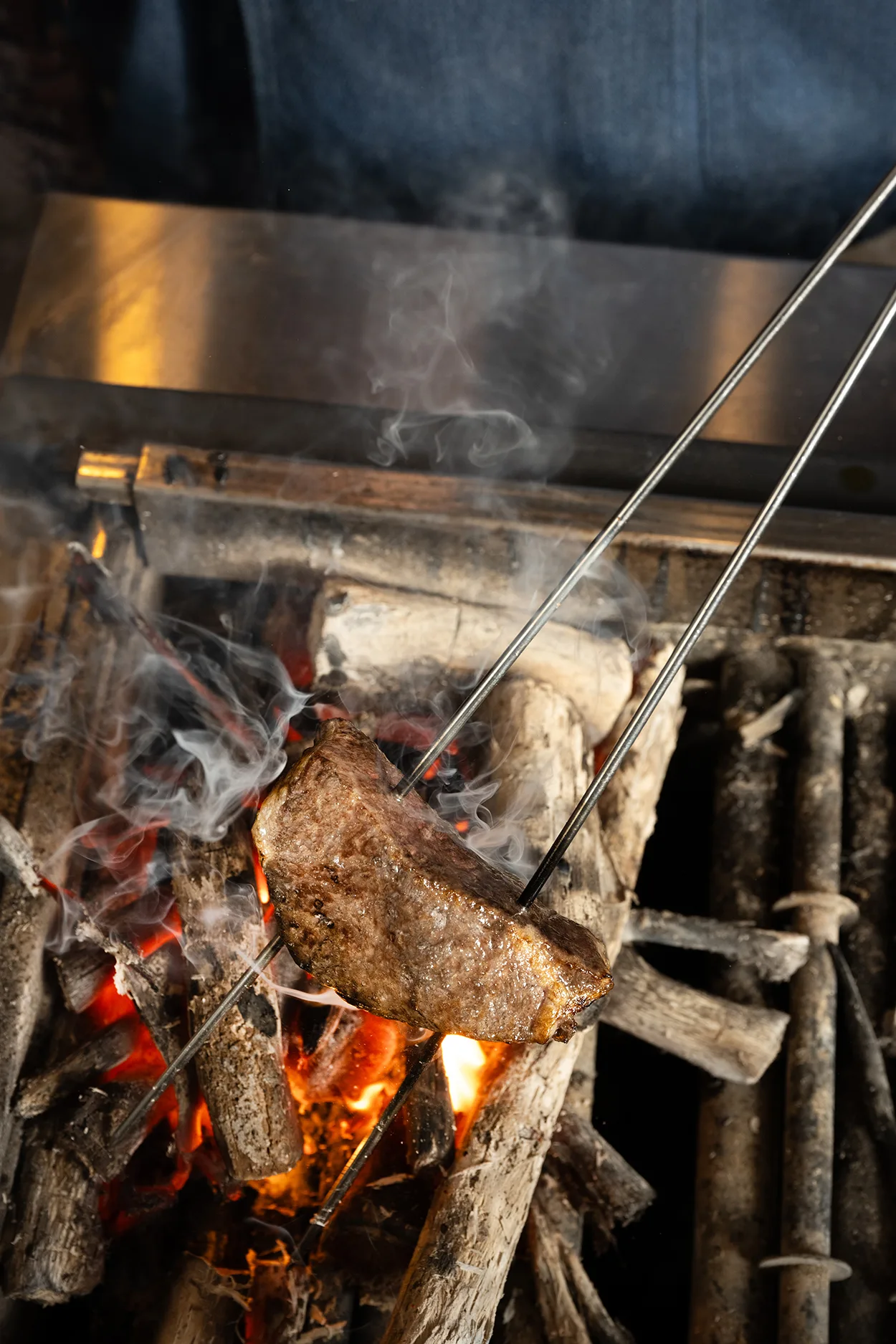
Executive Chef Kenichiro Yamasaki brings context that goes beyond credential. His family ran a wagyu cattle farm in Kyoto, and that background shapes how the kitchen approaches the ingredient - less as a luxury product to be showcased and more as an agricultural tradition to be understood. Among the 11 certified Wagyu Masters globally, Yamasaki is the only one certified to perform warayaki in New York City: wagyu seared over imported rice straw at temperatures exceeding 1,000 degrees, a technique from Kochi Prefecture that produces a thin crust with a specific smokiness unavailable through conventional high-heat methods. The straw combusts fast and hot, and the contact time is measured in seconds - precision that requires both the certification and the physical material, which Yamasaki imports directly.
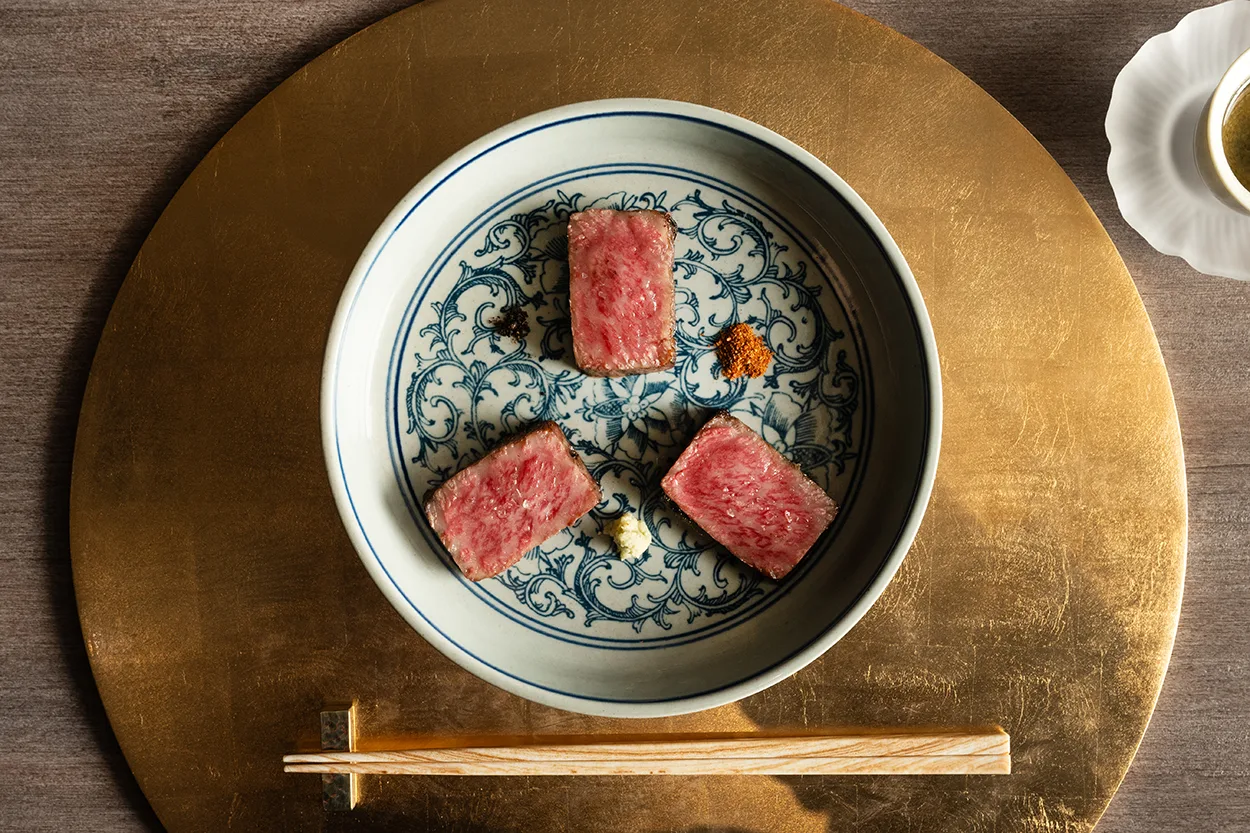
The nine-course omakase at $195 per person builds around Zao Wagyu across multiple preparations, with nukazuke marination - curing in fermented rice bran - appearing alongside the warayaki work. Nukazuke is traditionally associated with vegetables in Japanese preservation culture; applying it to wagyu introduces lactic fermentation and a layered depth that changes how fat renders and how the meat reads against the palate. The Yakiniku course takes three cuts of Zao and prepares each through a different technique - binchōtan charcoal, rice straw, and nuka - so the structural tasting logic makes the ingredient's range legible rather than simply impressive.
Each cut arrives with its official birth certificate from the farm. The gesture is not purely theatrical: it mirrors traceability practices developed in the Japanese wagyu industry after the 2001 BSE crisis, when Japan introduced mandatory cattle ID tracking. Here the certificate functions as an educational object, reinforcing the connection between animal husbandry and flavor in a way that written menu descriptions cannot.
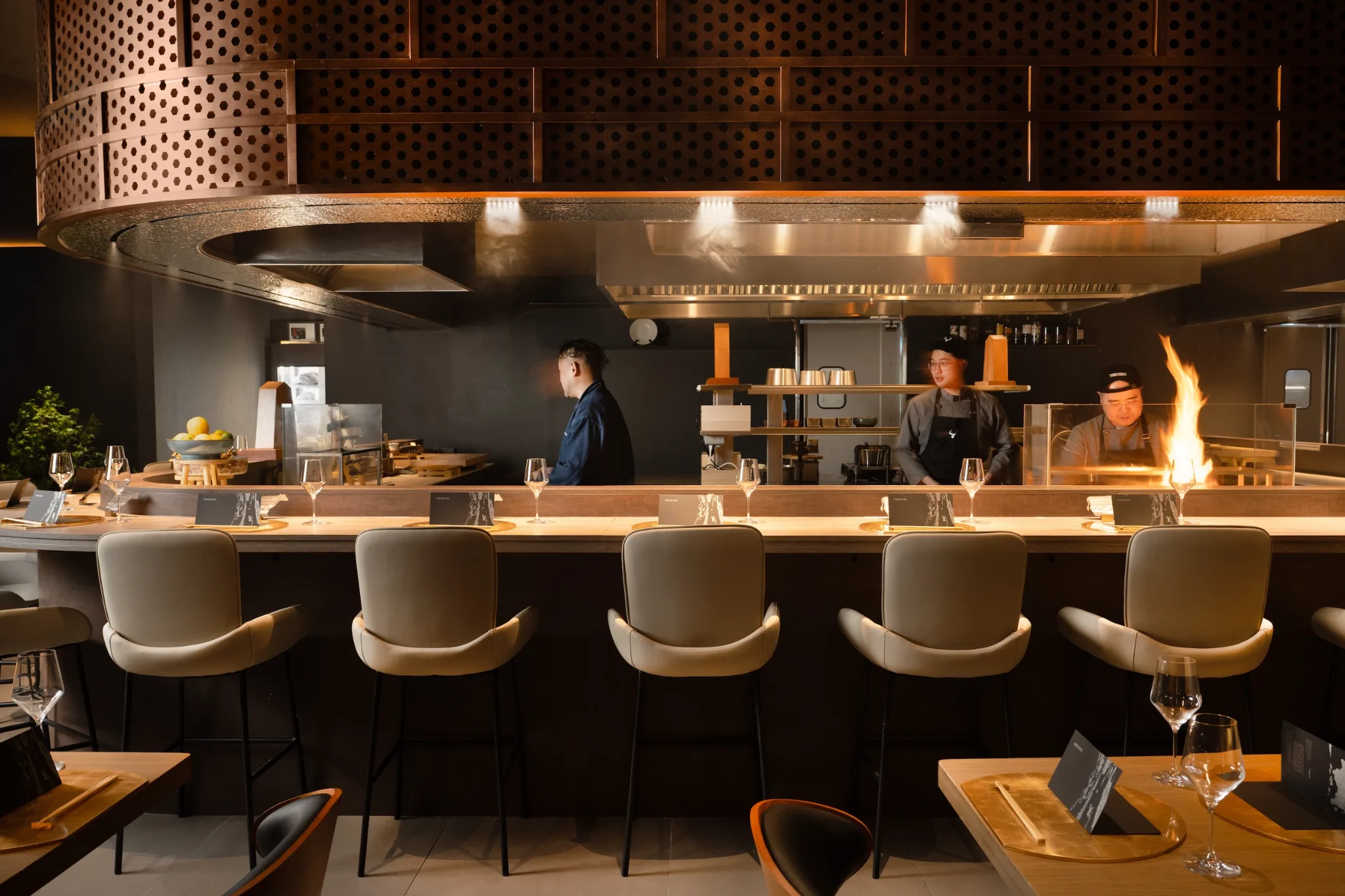
The space, designed by Chinese architect Wu Huihai, separates the omakase counter from a Wagyu Bistro Bar through contrasting material registers - a bright, refined dining room against a warm, dimly-lit lounge using perforated metal and wood. The counter seats 28, with table service for 18 and the bar accommodating 30, plus three private rooms totaling 14. Beverage Director Fedjy Charles runs a cocktail program that draws the kitchen's material logic into the glass: the signature cocktail is smoked with the same imported rice straw Yamasaki uses at the counter, and the Zao Wagyu Old Fashioned uses fat-washing with GI-grade beef fat - a technique borrowed from Harold Dieterle-era American restaurant bartending that extracts fat-soluble flavor compounds into spirits before straining them clean.